HOW TO QUICKLY IMPROVE PAGE SPEED FOR YOUR WEBSITE – SARMLife

To improve page speed for your website, one of the first steps is to consider the type of content you have and how you can reduce its size.

To improve page speed for your website, one of the first steps is to consider the type of content you have and how you can reduce its size.

The page speed of your website affects your bounce rates, average time per session, conversion rate, and, ultimately, your position in SERPs. Hence, your website speed is a crucial aspect of any SEO strategy.

In this post, I’ll show you how you can quickly improve page speed for your website for more traffic and increased growth.

How Page Speed Affects SEO

a. Direct ranking factor

Google has confirmed that page speed is a direct ranking factor for mobile and desktop searches, meaning faster pages tend to rank higher in search results. Google wants to provide its users with the best possible experience, and faster pages are generally more user-friendly.

b. Better user experience

Users are more likely to stay on a website that loads quickly. Slow-loading pages can lead to frustration and increase bounce rates. A study by Google found that the average user will wait only three seconds for a page to fully load before leaving.

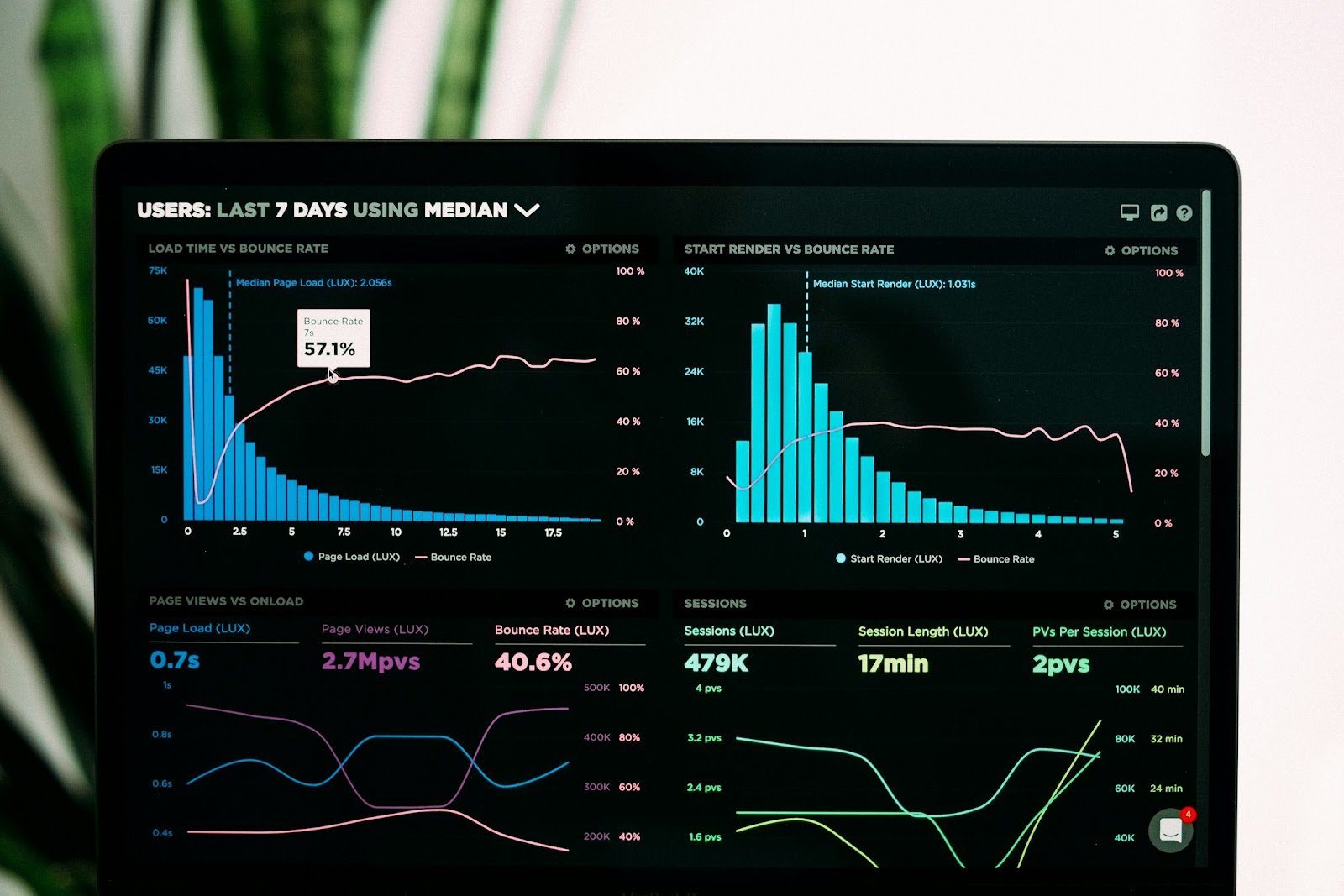
Concept of improving website loading speed
Photo by grinvald on iStock

c. Mobile optimization

More people are using their mobile devices to access the Internet. Google has prioritized mobile indexing, which means your website’s mobile version is the primary version that Google considers when ranking your pages. 

This makes it even more important to have a fast-loading mobile website because mobile users have less patience; they want it fast and quick.

d. Page indexing

Google uses bots to crawl the internet and index websites, and they can only crawl a limited number of pages per day. If your website is slow, it may take longer for Google bots to index your pages. 

It might lead to a longer time for your new pages to appear in search results.

e. Lower ranking for competitive keywords

If you are competing for competitive keywords, a slow page speed can put you at a disadvantage. Even a slight difference in page speed can make a big difference in rankings.

f. Featured snippets and rich results

Featured snippets and rich results are special snippets of information that appear at the top of search results. Google is more likely to display featured snippets and rich results from websites with fast page speeds.

g. Conversion rate

Page speed can also affect your conversion rate. A study by Amazon found that every 100ms increase in page load time resulted in a 1% decrease in conversion rate.

h. Local SEO

Google considers page speed when ranking local businesses in search results. A fast page speed can give you an advantage over your competitors in local search results.

i. Mobile-first indexing

As mentioned earlier, Google has prioritized mobile indexing. When ranking your pages, Google now considers your website’s mobile version the primary version, making it more important to have a fast-loading website and optimize it for mobile devices.

RELATED POSTS:

How to Improve Page Speed for Your Website

Now that you have a good grasp of how page speed affects the health of your website, here are some ways you can improve the page speed of your website:

1. Optimize images.

Images and most media are often one of the largest components of a web page, so optimizing them can significantly impact page speed. 

Here are a few tips for optimizing your images:

i. Use efficient image formats.

WebP is a newer image format that can significantly reduce file size without sacrificing quality. 

If your website supports WebP, you should use it for all your images. JPEG is another good option for most images, but use PNG for images with text or transparent backgrounds.

ii. Resize your images to the appropriate size.

There is no need to upload a 3000px wide image if it will only be displayed at 500px wide. 

Resize your images to the appropriate size before uploading them to your website.

iii. Compress your images.

Many image compression tools are available that can reduce the file size of your images. Some popular image compression tools include TinyPNG, Smush.it, and ImageOptim.

2. Enable browser caching.

Browser caching allows the browser to store copies of your website’s files locally. The browser does not have to download the files from your server whenever a visitor visits your website.

i. Set expiration headers.

Expiration headers tell the browser how long to cache your website’s files. You can set expiration headers for individual files or entire directories.

ii. Use a caching plugin.

If you are using a CMS like WordPress or Drupal, there are plugins available to help you enable browser caching.

iii. Use a CDN. 

A CDN (content delivery network) can help deliver your website’s files quickly and efficiently to visitors. CDNs are networks of servers that distribute data from a source to users within proximity.

For example, a blogger in San Francisco can use a CDN in Africa to quickly load their web pages for people accessing the website from Africa. Instead of loading directly from San Francisco, they load from the CDN server in Africa.

3. Minimize HTTP requests.

Every time a browser loads a web page, it has to send a separate HTTP request for each file. This can add up, especially for pages with many images or other resources.

To improve page speed for your website, you have to reduce these requests by:

i. Combining CSS and JavaScript files

If you have multiple CSS and JavaScript files, you can combine them into fewer files. This strategy will reduce the number of HTTP requests the browser has to make.

ii. Using a CSS preprocessor

A CSS preprocessor can help you write more efficient and organized CSS, leading to fewer CSS files and HTTP requests.

iii. Using a CDN

A CDN can reduce the number of HTTP requests by delivering your website’s files from multiple servers worldwide.

To effectively use a content delivery network (CDN), you have to make sure that:

  • You choose a CDN that is reliable and has a good track record.
  • Your CDN supports your needed features, such as WebP and HTTP/2.
  • You configure your CDN to deliver your website’s files from the server closest to your visitors.

These steps will enable the best possible use of your CDN.

Screen of flutter application developing code. Lines of code on computer screen abstract
Photo by photo_pawel on iStock

4. Enable GZIP compression.

GZIP compression is a technique that reduces the size of web page resources such as HTML, CSS, and JavaScript. It works by compressing these files before sending them over the Internet, resulting in faster loading times for your website.

To enable GZIP compression, you will need to configure your web server. 

According to HubSpot, here’s the code you need to add to enable GZIP compression for all HTML, XML, CSS, JavaScript, and font files:

Most web servers support GZIP compression by default, but you may need to check your documentation to see how to enable it.

Once you’ve enabled GZIP compression, your web server will automatically compress all supported files before sending them to users’ browsers. 

This strategy can reduce the size of your web pages by almost 70%, resulting in significant speed improvements.

5. Minimize render-blocking resources.

Render-blocking resources are CSS and JavaScript files that prevent the browser from rendering the page content until it has been fully downloaded and processed. 

To minimize render-blocking resources, you can try the following:

i. Load CSS files in the head of the HTML document.

This will allow the browser to start rendering the page content sooner.

ii. Load JavaScript files asynchronously.

Loading JavaScript files at different times will allow the browser to render the page content without waiting for all the JavaScript files to load.

iii. Combine CSS and JavaScript files.

If you have multiple CSS and JavaScript files, you can combine them into a single file. It will reduce the number of HTTP requests made by the browser.

iv. Defer non-critical CSS and JavaScript files.

If you have CSS and JavaScript files that are not critical for rendering the page, you can defer them until after the page has loaded. This will allow the browser to start rendering the page sooner.

v. Use inline CSS and JavaScript.

You can also use inline CSS and JavaScript to avoid render-blocking. However, this is only recommended for a small amount of CSS and JavaScript, as it can make your code more difficult to maintain.

Many plugins and tools are available to help you minimize render-blocking resources. 

For example, the WP Smush plugin for WordPress can combine and minify CSS and JavaScript files.

6. Use lazy loading.

Lazy loading is a technique that defers the loading of images and other embedded resources until they are needed. 

This can improve page load times by preventing the browser from waiting for all the resources to load before rendering the page.

You can use a JavaScript library such as lazysizes.js to implement lazy loading. 

This library will automatically defer loading images and other embedded resources until needed.

SARMLife - Best SEO Company | Jacksonville, Florida
Photo by Chromium blog

7. Optimize server response time.

Server response time is the time it takes for your web server to generate and send a response to a user’s request. 

Server response time can be affected by several factors, including:

  • your web server configuration,
  • the number of concurrent users,
  • the complexity of your web pages, etc.

Here are some things you can do to optimize server response time:

  • Use a caching plugin to store static resources locally on the user’s browser.
  • Use a content delivery network (CDN).
  • Optimize your database queries.
  • Optimize your server configurations.
  • Use a lightweight web server.

8. Reduce redirects.

​​Redirects occur when a user visits one URL but is automatically sent to another URL. 

Redirects can cause pages to load more slowly, especially if multiple redirects are in a chain.

To reduce redirects, you should:

  • Use canonical URLs to tell Google which URL is the preferred version of a page.
  • Eliminate unnecessary redirects from your website.
  • Fix any broken redirects.

9. Minimize third-party scripts.

Third-party scripts are loaded from other websites, such as social media widgets and analytics scripts. 

Third-party scripts can slow down your website because your browser needs to download and execute them before your page can load.

To minimize third-party scripts, you should:

  • Only use third-party scripts that are essential to your website.
  • Load third-party scripts asynchronously so they don’t block the rendering of your page.
  • Use a content delivery network (CDN) to serve third-party scripts.

10. Prioritize critical rendering path.

The critical rendering path is the sequence of resources that must be loaded and executed for a web page to start rendering. 

By prioritizing the critical rendering path, you can ensure that the most important parts of your page load quickly.

To prioritize the critical rendering path, you should:

  • Inline critical CSS in your HTML.
  • Defer non-critical CSS and JavaScript.
  • Use lazy loading for images.

11. Optimize above-the-fold content.

Above-the-fold content is the content that is visible to the user without having to scroll down. 

By optimizing above-the-fold content, you can ensure that users have a good first impression of your website and that they can start interacting with your content as quickly as possible.

To optimize above-the-fold content, you should:

  • Keep the amount of above-the-fold content to a minimum.
  • Use clear and concise fonts.
  • Use a readable font size.
SARMLife - Best SEO Company | Jacksonville, Florida
Photo by semrush

FINAL THOUGHTS

Following the tips in this blog post can help to improve your website’s page speed quickly, leading to a better user experience, higher conversion rates, and improved search engine rankings.

Optimize your images, reduce HTTP requests, enable browser caching, and use a content delivery network (CDN) to improve your page speed. 

Suppose you need help figuring out how to start and where to start. In that case, several tools and plugins are available to help you optimize your website’s page speed, like Google’s PageSpeed Insights tool, to test your page speed and get personalized recommendations for improvement.

READ ALSO: 8 Easy Ways You Can Improve Core Web Vitals of Any Site – SARMLife

A SIMPLIFIED SUMMARY OF 2024 GOOGLE’S RECENT SEO UPDATES – SARMLife

However, by understanding the basics of Google’s recent SEO updates, you can ensure your website is well-positioned to rank well in search results.

Google is constantly updating its search algorithm to improve the quality of its search results, making it difficult for website owners to keep up with the latest trends and best practices. 

However, by understanding the basics of Google’s recent SEO updates, you can ensure your website is well-positioned to rank well in search results.

In this blog post, I’ll update you on these recent SEO updates and why they are important.

You’ll also see the most recent SEO updates from Google, how these updates impact SEO, and what you, as a website owner and SEO professional, can do to adapt to these updates.

Types of major updates made by Google

Google makes several major and minor updates yearly, and Google has been able to categorize its major updates into these different types:

  • Core Updates help rank websites that are more relevant and helpful to users higher in search results. Google’s core updates are released more frequently and usually reflect some changes in ranking signals.
  • Spam Updates help remove spammy websites from search results. These updates are usually more targeted at specific spammy techniques that are becoming popular, like when link stuffing was rampant, and Google had to release a spam update to address it.
  • Helpful Content Updates are used to rank websites that produce high-quality content that is helpful to users higher in search results.
  • Product Reviews Update can help to rank product reviews that are more helpful and informative higher in search results.
  • Page Experience Update ranks websites with a good user experience, such as fast loading times and mobile-friendly design, higher in search results.

In addition to these major updates, Google makes many smaller changes to its search algorithm throughout the year. 

These minor changes are typically not announced publicly, but they can still significantly impact website rankings.

Why are SEO updates being made constantly?

SEO Word gram
Photo by Merakist on Unsplash

As a blogger or SEO expert, these changes can become burdensome to the extent of asking what the purpose is.

  • To improve the quality of search results

Google aims to provide users with the most relevant and high-quality search results. By updating its algorithm, Google can improve the accuracy of its search results and make it easier for users to find the information they seek.

  • To keep up with the changing web

The web constantly evolves, and new websites and content are always created. Hence, Google updates its algorithm to ensure it can index and rank this new content effectively.

  • To combat spam

Spammers are constantly developing new techniques to manipulate Google’s search results. Google needs to update its algorithm to stay one step ahead of spammers and ensure that spammy websites do not pollute their results.

  • To improve the user experience

Google wants to provide users with the best possible search experience. By updating its algorithm, Google can improve the relevance of its search results, make it easier for users to find the information they seek, and reduce the time it takes for pages to load.

RELATED POSTS:

Google’s recent SEO updates

November 2023 Core Update

This last core update is the fourth core update in 2023, and it closely follows the release in November, which is a rare thing for Google to do. 

The Google November 2023 Core Update is notable for its speed and volatility, with some websites seeing significant ranking fluctuations in a short period.

Like the other core updates, the November update aimed to improve the relevance and quality of search results. 

According to Google, the update is an improvement to a different core system than the October update, but the overall guidance for core updates remained the same.

Websites focusing on creating high-quality content were not negatively affected by the update. However, some websites that the October update had positively impacted experienced some negative effects.

If your website experienced some negative effects from the update, you should focus on improving its content and overall quality.

Glasses, reflection code and business man with software engineer information technology and coding research for web and html analytics. Hacker IT developer geek reading data for online system update
Photo by Kobus Louw on iStock

October 2023 Core Update

The October 2023 Core Update is the third core update of the year, following the March and August Core Updates. Google announced the update on October 5 and completed it within 13 days and 23 hours.

The October 2023 Core Update is expected to impact website rankings significantly, so SEO professionals must be aware of it and make any necessary website changes.

Google has not released any specific information about the October 2023 Core Update, but based on previous core updates, we can expect it to focus on the following areas:

  • Content quality: 

Google will continue prioritizing websites with high-quality, informative, and relevant content for users’ search queries.

  • User experience: 

Google will also prioritize websites that provide a good user experience, including page loading speed, mobile-friendliness, and security.

  • Relevance: 

Google will keep prioritizing websites that are relevant to users’ search queries. This means websites should focus on creating content targeted to their specific audience that addresses their users’ needs.

Google has only disclosed a little. However, some general trends have been observed. 

For example, websites that provide high-quality, informative content and a good user experience seem to have performed well in the update.

SEO professionals can focus on the following to improve their website’s performance in the October 2023 Core Update and future core updates:

  • Create high-quality, informative content that is relevant to users’ search queries.
  • Improve the user experience on their website, including factors like page loading speed, mobile-friendliness, and security.
  • Avoid spammy practices, such as keyword stuffing and link-building schemes.
  • Review your previous content and re-optimize.

October 2023 Spam Update

The October 2023 Spam Update was a significant algorithm update designed to target and remove spammy websites from search results. Google announced this update on October 4, 2023, and began rolling it out on the same day. Google completed the rollout on October 10, 2023.

The October 2023 Spam Update targeted a wide range of spammy tactics, including:

  • Cloaking: Cloaking is a technique where a website presents different content to users and search engines. For example, a website might cloak low-quality content to search engines to rank higher in search results.
  • Hacked content: Hacked content is content that has been added to a website without the owner’s knowledge or consent. Hackers often add spammy links or content to hacked websites to redirect users to malicious websites or promote their products or services.
  • Auto-generated content: Auto-generated content is content created using software algorithms. Auto-generated content is often low-quality and uninformative and often used to spam search results.
  • Scraped content: Scraped content is content that has been copied from another website without permission. Scraped content is often low-quality and unoriginal and often used to spam search results.

The October 2023 Spam Update also targeted spammy behavior in specific languages, including Turkish, Vietnamese, Indonesian, Hindi, Chinese, and others.

The October 2023 Spam Update had a significant impact on many websites. Some websites using spammy tactics saw their rankings drop significantly due to the update. 

Other websites that followed Google’s guidelines saw their rankings improve.

SEO professionals should be aware of the October 2023 Spam Update and should take steps to avoid using spammy tactics on their websites. 

If your website was affected by the spam update, Google recommends reviewing its spam policies to ensure you have not violated any.

September 2023 Helpful Content Update

The September 2023 Helpful Content Update is a significant algorithm update from Google designed to reward websites with high-quality content that is helpful and informative to users. 

This update aims to make it easier for users to find the information they seek by promoting websites that are providing value to users rather than websites that are simply trying to rank well in search results.

Google has identified several factors it considers when determining whether or not a website is producing helpful content; these factors include:

  • The quality and expertise of the content: Google wants to see content written by experts based on factual information.
  • The originality of the content: Google wants unique content, not a copy of what other websites have.
  • The usefulness of the content: Google wants to see helpful and informative content that will benefit users.
  • The purpose of the content: Google also wants content created to help users rather than content created primarily for search engine optimization (SEO) purposes.

Websites that produce helpful content are more likely to rank higher in search results. Conversely, websites that are found to be creating unhelpful content may see their rankings decline.

August 2023 Broad Core Update

The August 2023 Broad Core Update was a major algorithm update from Google that impacted websites across all niches. It was the second broad core update of the year, following the May 2023 Core Update.

Google did not release specific details about what changed in the August 2023 Broad Core Update, but SEO professionals reported seeing a wide range of ranking movements. Some websites saw their rankings improve significantly, while others saw their rankings decline.

The August 2023 Broad Core Update has been focused on improving the quality of search results for medical and health-related queries. However, it is important to note that this update potentially impacted all websites.

April 2023 Reviews Update

The April 2023 Reviews Update was a significant update to Google’s algorithm focused on improving the quality of reviews in search results. 

The update affected websites that publish reviews of products, services, destinations, media, and other topics.

Google also announced that the April 2023 Reviews Update would incorporate the extra “E” into the acronym for its quality guidelines, which is now “E-E-A-T” (Experience, Expertise, Authoritativeness, and Trustworthiness). 

This means Google now considers the reviewer’s experience when evaluating the quality of a review.

Google released that this update utilizes some signals to evaluate and determine if what is being reviewed has been handled, tested, and used.

These signals include:

  • Visual evidence: This signal includes images or videos that show the reviewer is using the product.
  • Audio: This signal might not apply to all products besides those requiring audio as a sign of authenticity.
  • Links to evidence of experience: This implies having links to prove an experience with the product if needed.
  • Quantitative measurements: This concerns the performance measurement of what is being reviewed.

The April 2023 Reviews Update significantly impacted many websites that publish reviews.

March 2023 Core Update

The March 2023 Core Update was a major algorithm update from Google released on March 15, 2023. It was the first broad core update of the year and the first one in over six months.

Core updates are Google’s largest and most comprehensive algorithm updates. They are designed to improve the overall quality of search results by rewarding websites that are high-quality, informative, and relevant to users’ search queries.

The March 2023 Core Update was reported to be one of the more volatile core updates in recent memory, with many websites experiencing significant ranking fluctuations. 

However, as with all core updates, the overall goal of the update was to improve the quality of search results and provide a better user experience.

  • Google is still prioritizing E-E-A-T. 

E-E-A-T stands for Experience, Expertise, Authoritativeness, and Trustworthiness. Google has long stated that E-E-A-T is a critical factor in its ranking algorithm, and the March 2023 Core Update further emphasized its importance.

  • High-quality content is still king. 

Google will always prioritize websites with high-quality content. 

  • User experience matters. 

Google wants to provide users with the best possible search experience. This includes factors such as page loading speed, mobile-friendliness, and ease of use. The update rewarded websites that provided a good user experience.

  • Spammy websites were penalized. 

Google is constantly working to improve its ability to detect and penalize spammy websites. Websites that engaged in spammy practices were penalized by the update.

Overall, the March 2023 Core Update was a significant algorithm update that impacted many websites.

February 2023 Product Reviews Update

The February 2023 Product Reviews Update was a broad core update to Google’s search algorithm specifically focused on improving the quality of product reviews in search results. 

The update was released on February 21, 2023, and took approximately two weeks to roll out fully.

Google’s definition of a high-quality product review includes the following factors:

  • Expertise: The reviewer should have expertise in the product or the category they are reviewing.
  • Trustworthiness: The reviewer should be trustworthy and unbiased.
  • Completeness: The review should be comprehensive and informative.
  • Originality: The review should be original and not copied.

Google also updated its guidance on product reviews. The guidance now has new ranking signals that will be used to evaluate product review content. 

These ranking signals include:

  • The reviewer’s expertise: 

Google will consider the reviewer’s expertise in the product or category of products that they are reviewing. This can be determined by factors such as the reviewer’s education, experience, and reputation.

  • Trustworthiness:

Google will consider the trustworthiness of the reviewer and the review itself. Factors such as the reviewer’s disclosure of any conflicts of interest, the accuracy of the information in the review, and the reviewer’s overall reputation play a huge role.

  • The quality of the content: 

Google will consider the quality of the review content itself determined by factors like the completeness of the review, the originality of the content, and the helpfulness of the review to users.

However, you should consider an observation made by Mordy Oberstein in an article where he noticed a pattern in some individual performances on Google’s SERP after this update was rolled out.

According to him, Google prioritized reviews where the reviewer had experienced the product first-hand rather than those who wrote their reviews in generic tones.

FINAL THOUGHTS

Google’s recent SEO updates have focused on improving search results’ quality and rewarding websites that provide helpful content to users. 

If you want your website to stay competitive in search, follow these updates closely and focus on creating high-quality content relevant to your target audience.

In addition, follow industry experts to ensure you’re always aware of the latest changes to Google’s SEO algorithms and how they may impact your website.

If you want to stay up-to-date on the latest Google SEO updates, I recommend following the Google Search Central blog and the Google Search Central Twitter account.

How do you currently keep up-to-date with industry news and SEO updates?

8 EASY WAYS YOU CAN IMPROVE CORE WEB VITALS OF ANY SITE

The good news is there are easy and actionable ways to improve Core Web Vitals for your website and ensure it’s not only user-friendly but also favored by search engines.

Regarding how Google ranks websites, various lists and schools of thought exist. 

However, all SEO experts can agree that Core Web Vitals play a significant role in Google’s ranking system.

Core Web vitals are a set of crucial performance metrics defined by Google and have become a game-changer in the SEO world. When the Core Web Vitals of your website are low, it reduces your ranking.

The good news is there are easy and actionable ways to improve Core Web Vitals for your website and ensure it’s not only user-friendly but also favored by search engines.

What Are Core Web Vitals?

Core Web Vitals are a set of factors that measure critical aspects of your website relevant to accessing a positive user experience.

It evaluates a website’s actual user experience regarding visual stability, interaction, and loading speed, influencing a page’s position in search results.

As crucial as Core Web Vitals are to SEO, it is important to note that it is just one of the several other important ranking factors Google has.

So, focusing on ONLY your Core Web Vitals will not automatically push you to the top of SERPs.

However, you need to combine several SEO strategies to get on the top page of Google. 

SARMLife - Best SEO Company | Jacksonville, Florida
Photo by WPsoul.com

RELATED POSTS:

Why Core Web Vitals Matter to SEO

The primary importance of optimizing your Core Web Vitals will be to improve your SEO score and rankings in SERPs. 

However, there are other benefits of improving Core Web Vitals relative to this importance. They include:

Improved user experience

The metrics that indicate a good Core Web Vital are closely related to metrics focusing on user experiences. 

When you improve your Core Web Vitals, you also invest in a positive user experience on your website, which is an influential ranking factor.

Higher page rankings

Of course, Google will favor a site with good Core Web Vitals.

Users anticipate being taken to a website that loads rapidly, keeps a consistent layout, and reacts to their interactions immediately when they click on a search result. 

Google ensures users have a seamless and positive browsing experience by prioritizing websites that excel in these areas.

Mobile search performance 

Working on your Core Web Vitals is vital for outstanding mobile search performance. It means that your website will do well in mobile searches.

SERP special feature eligibility

Improving your Core Web Vitals can lead to inclusion in special search features like featured snippets, voice search results, image packs, knowledge packs, etc.

The websites featured in these special spots are fully optimized with updated and relevant content and good website performance.

SARMLife - Best SEO Company | Jacksonville, Florida
Photo by Merakist on Unsplash

Competitive edge

A good Core Web Vital performance will give you a competitive edge over other websites in your niche because you are more likely to rank for mobile results, be included in voice search results, show up in special features on a search engine result page, and so many other benefits.

More page views

When a page loads quickly, is responsive to user input, and has great UX design, users will likely stay on the page longer. 

This increases the likelihood of reading more content, clicking on more links, and engaging with the page in other ways, increasing your page views.

Core Web Vital Metrics

1. Largest Contentful Paint (LCP)

LCP is the time it takes for the largest content element on a page to load. This metric is important because it reflects the perceived loading performance of a page. When a page loads quickly, it gives users a sense that it is responsive and ready to interact.

improve core web vitals of your site by checking your largest contentful paint
Photo by accesto

A good LCP is below 2.5 seconds. If a page has a high LCP, it means the largest content element takes too long to load, making the page feel slow and unresponsive to users.

2. First Input Delay (FID)

FID is the time it takes for a user to interact with a page for the first time, such as clicking on a specific link or tapping a button. This metric measures the responsiveness of a page. When a page is responsive, it is ready to respond to user input quickly, making it feel more fluid and interactive.

A good FID is below 100 milliseconds. If a page has a high FID, it means the browser takes too long to respond to user input.

SARMLife - Best SEO Company | Jacksonville, Florida
Photo by nitropack.io

3. Cumulative Layout Shift (CLS)

CLS measures the amount of movement of the main content on a page after it has started loading. It measures the visual stability of a page. When a page is visually stable, it means its layout does not shift after it has started loading, making the page more consistent and predictable for users.

A good CLS is below 0.1. If a page has a high CLS, it means the layout shifts too much after loading, making the page feel unstable and jarring for users.

SARMLife - Best SEO Company | Jacksonville, Florida
Photo by Quattr

These metrics are summarized in the table below:

MetricDescriptionTarget
Largest Contentful Paint (LCP)The time it takes for the largest content element on a page to loadBelow 2.5 seconds
First Input Delay (FID)The time it takes for a user to first interact with a pageBelow 100 milliseconds
Cumulative Layout Shift (CLS)The amount of movement of the main content on a page after it has started loadingBelow 0.1 second

Easy Ways to Improve Core Web Vitals

1. Optimize images and videos.

Optimizing images and videos is crucial for improving Core Web Vitals, particularly Largest Contentful Paint (LCP), the time it takes for the largest content element on a page to load. 

Since images and videos often constitute a significant portion of a page’s content, optimizing them can substantially enhance page load speed and the overall user experience. 

Here’s a checklist for optimizing images and videos for better Core Web Vitals:

  • Choose the proper image format.
  • Compress images.
  • Resize images to fit.
  • Utilize lazy loading.
  • Employ image sprites
  • Optimize video formats and dimensions.
  • Compress videos.
  • Transcode videos for different devices.
  • Utilize video hosting services.
  • Implement video preloading.

Images and videos can be a significant source of page load time, so optimizing them for size and quality is essential.

2. Minimize server response time.

Server response time is the time it takes for servers to respond to requests from the user’s browser. 

This can be affected by several factors, such as the amount of traffic on the server and the efficiency of the server software. 

Minimizing server response time is crucial for improving Core Web Vitals, particularly Largest Contentful Paint (LCP) and First Input Delay (FID).

Here are some actionable steps to minimize server response time:

  • Choose a reliable hosting provider.
  • Utilize a content delivery network (CDN).
  • Optimize database queries.
  • Implement caching mechanisms.
  • Minimize unnecessary code execution.
  • Regularly monitor server performance.
  • Update server software and firmware.

These strategies help you minimize the server response time, contributing to improved Core Web Vitals scores, a better user experience, and potentially higher search engine rankings.

3. Optimize your web fonts.

Web fonts can enhance a web page’s visual appeal and overall aesthetic. However, they can also contribute to slower page loading, resulting in a negative user experience. 

By optimizing your web fonts and how they are loaded, you can improve Core Web Vitals and enhance your website’s performance.

Here are some effective strategies for efficiently loading web fonts:

  • Subset your fonts.
  • Use a font-weight stack.
  • Use a font hosting service.
  • Prioritize font loading.
  • Optimize font file formats.
  • Preload your fonts.
  • Utilize font embedding.
  • Manage font variations.
  • Monitor and optimize font performance.

These tips can help you effectively load web fonts without compromising the visual appeal of your website while improving Core Web Vitals and overall page performance.

4. Minimize JavaScript execution time.

Minimizing JavaScript execution time is crucial for enhancing Core Web Vitals and delivering a seamless user experience. 

JavaScript is a powerful scripting language that adds interactivity and dynamic elements to web pages. 

However, excessive or inefficient JavaScript usage can significantly impact page load times and overall performance. 

Here are some steps to minimize JavaScript execution time and improve Core Web Vitals:

  • Identify and prioritize critical JavaScript.
  • Defer and async loading.
  • Minify JavaScript.
  • Bundle multiple JavaScript files. 
  • Utilize web workers.
  • Avoid unnecessary DOM manipulations.
  • Utilize caching. 
  • Regularly optimize JavaScript. 

5. Prioritize interactive elements.

Interactive elements on your website, like buttons and links, are necessary for a positive user experience. 

They enable users to engage with a website and perform desired actions. 

Ensuring that interactive elements load and respond promptly can help create a more engaging and enjoyable experience for your website visitors. 

Here are some ways to prioritize interactive elements and improve Core Web Vitals:

  • Identify and prioritize your key interactive elements.
  • Optimize interactive element loading.
  • Reduce JavaScript execution time.
  • Utilize CSS custom properties.
  • Monitor and optimize interactive element performance.
  • Prioritize interactive elements in mobile responsiveness.
  • Leverage browser APIs.
  • Perform A/B testing for different approaches.

Prioritizing interactive elements is crucial for optimizing Core Web Vitals, particularly First Input Delay (FID).

6. Eliminate render-blocking resources.

Eliminating render-blocking resources is a crucial step towards improving Core Web Vitals, as it directly impacts a web page’s loading performance and perceived responsiveness. 

Render-blocking resources on your website prevent the browser from rendering/displaying the page until fully loaded. This can include CSS stylesheets, JavaScript files, and images.

Here are some effective strategies to eliminate render-blocking resources and enhance Core Web Vitals:

  • Inline critical CSS.
  • Defer non-critical CSS.
  • Use asynchronous JavaScript.
  • Minimize JavaScript.
  • Use a CDN.
  • Optimize images.
  • Prioritize critical resources.
  • Utilize browser caching.

These steps will enhance the loading performance of your web pages, directly affect the Largest Contentful Paint (LCP) and First Input Delay (FID) units of your website, and ultimately lead to a better user experience, increased engagement, and improved SEO rankings.

7. Manage content stability.

Content stability refers to how much the content on a page shifts or moves after it has started loading. 

This can be due to several factors, such as images loading late, CSS animations, or JavaScript that changes the page layout.

Content shifts can be a bad user experience, making it difficult for users to read and navigate the page. They can also make the page feel “jumpy” or unstable.

To improve content stability, follow these essential tips:

  • Use responsive designs.
  • Avoid excessive use of CSS animations.
  • Use preloading for images and videos.
  • Use a font-loading strategy.
  • Test your page on different browsers and devices.

By following these tips, you can improve content stability on your pages and provide a better user experience for your visitors.

8. Avoid intrusive interstitials.

Avoiding intrusive interstitials is crucial for enhancing Core Web Vitals and providing a positive user experience. Intrusive interstitials are pop-ups or overlays that appear over the content of a page, often obstructing the user’s view of the website’s primary content. 

They can be disruptive and annoying, leading to user frustration and a decreased willingness to engage with the website. Also, intrusive interstitials can negatively impact page load times and interactivity, diminishing user experience.

Here are some helpful tips:

  • Use considerate pop-ups: If you must use pop-ups, make them non-intrusive, easily closable, and relevant to the user’s context.
  • Prioritize user experience: Evaluate the necessity of each interstitial and consider alternative ways to convey the message.
  • Provide clear opt-out options: Allow users to close or opt out of interstitials easily to avoid frustration.
  • Limit frequency and timing: Avoid bombarding users with multiple interstitials at once or inopportune times.
  • Consider user preferences: Respect user preferences for interstitial blocking and provide clear privacy controls.

Minimizing these disruptions can enhance user engagement, improve SEO performance, and ultimately achieve your business goals.

Overwhelmed person receiving dozens of e-mails on GDRP regulations, GDPR and data safety concept
Photo by Darwel on iStock

FINAL THOUGHTS

You can easily improve the Core Web Vitals of your website by following the tips in this blog post.

This will help to improve your website’s SEO performance and make it more user-friendly. As a result, you will attract more visitors and improve your conversion rate.

Remember, Core Web Vitals are an ever-evolving area of SEO. As search engines like Google release new algorithm updates, staying up-to-date on the latest best practices for optimizing these metrics is important.

How do you optimize your website for optimal user experience?

MOBILE SEO BEST PRACTICES TO OPTIMIZE YOUR WEBSITE – SARMLife

In 2014, Google announced it would give websites the ‘mobile-friendly’ label and possibly make mobile-friendliness a ranking factor. Since then, mobile optimization has been an essential part of SEO. 

As crucial as mobile SEO is, some website owners are still not getting it right with their optimization. There are essential mobile SEO best practices you must follow. For example, mobile SEO strategies for regular blog websites differ slightly from mobile SEO practices for e-commerce websites.

In this blog post, I will show you how to optimize your website for mobile devices while still maintaining a balance with other devices like desktops and tablets.

As crucial as mobile SEO is, some website owners are still not getting it right with their optimization. There are essential mobile SEO best practices you must follow.

What is mobile SEO optimization?

Mobile SEO optimization is the entire process of optimizing your website to improve its performance in mobile search results. 

It includes ensuring your website is easy to use and navigate on mobile devices and that your content and technical elements are optimized for mobile search engines.

Mobile SEO optimization is important because more people use their smartphones and tablets to access the Internet. 

Also, mobile search accounts for over half of all internet search traffic, so if you haven’t optimized your website for mobile, you are missing out on many potential visitors.

RELATED POSTS:

Why is mobile SEO optimization important for SEO?

i. Mobile-first indexing

Google now uses the mobile version of a website to index and rank, including desktop searches; this is why it’s called mobile FIRST indexing. This means it is more important than ever to ensure your website is mobile-friendly.

SARMLife - Best SEO Company | Jacksonville, Florida

ii. Improved search engine rankings

When your website is optimized for mobile, it will likely rank higher in search results, both on mobile and desktop devices, because Google prioritizes mobile-friendly websites in its rankings.

iii. Increased traffic

When your website is mobile-friendly, it will be more accessible to a broader range of users.

iv. Improved user experience

Improved user experience is essential for any website, but it is crucial for mobile websites. Mobile users have smaller screens and shorter attention spans, so it is important to make your website easy to use on mobile devices.

v. Reduced bounce rate

Reduced bounce rate measures how many users leave your website after viewing only one page. A high bounce rate indicates your website is not providing a better user experience. Mobile optimization can reduce your bounce rate by making your website more user-friendly on mobile devices.

vi. Increased conversions

Increased conversions are the ultimate goal of any website. Mobile optimization can increase conversions by making it easier for users to find the necessary information and take the desired action.

vii. Local searches

Local searches are more likely to be conducted on mobile devices, which means that if you are a local business, mobile optimization is essential for appearing in local search results.

For example, a local restaurant that optimizes its website for mobile will likely appear in search results when a potential customer searches for “restaurants near me” on their smartphone.

Internet browser search bar with magnifier on computer screen with text Search
Photo by igoriss on iStock

Mobile SEO best practices

Here are some of the best practices for mobile optimization:

1. Use responsive web design.

Responsive web design (RWD) is an approach that makes websites look good and function well on all devices, regardless of screen size. It is important for mobile SEO because it ensures your website will be easy to use and navigate for mobile users.

Here are some benefits of using RWD for mobile SEO:

Improved user experience: 

RWD websites are easier to use and navigate on mobile devices because the content and design adapt to the screen size. Mobile users won’t have to zoom in and out or scroll horizontally to view your website.

Improved search rankings: 

Mobile-friendly websites are given priority when it comes to ranking. This goes for Google and other search engines. If your website is responsive, you’ll rank higher in mobile search results.

Increased traffic: 

By making your website responsive, you’re ensuring it’s accessible to a broader range of users.

To implement RWD for your website, you need to use a responsive theme, or you outsource a web developer to create a custom responsive design. 

Once your website is responsive, you’ll need to test it using several mobile devices to confirm it looks good and functions well on all of them.

2. Optimize your page speed.

The time it takes for a web page to load is called page speed. It is an important factor in mobile SEO because mobile users have shorter attention spans than desktop users. If your website takes too long to load, mobile users will likely bounce back to the search results.

There are many things you can do to optimize your page speed for mobile SEO, including:

Optimize your images: 

Resize and compress your images for mobile devices. It will help to reduce the size of your web pages and improve their loading speed.

Use a content delivery network (CDN): 

A CDN is defined as a network of servers that delivers the content of your website to users using the closest server to them. This can help to improve your website’s loading speed for mobile users all over the world.

Minify your code: 

Minifying your code involves removing unnecessary whitespace and comments from your HTML, CSS, and JavaScript files. This can reduce the size of your web pages and improve their loading speed.

Enable browser caching: 

Browser caching allows users’ browsers to store copies of your website’s files on their devices. It means when users return to your website, their browsers won’t have to download the files again, improving the loading speed of your website.

Use a lightweight theme or template: 

If you are using WordPress or another CMS platform, choose a theme or template that is designed for mobile and is lightweight and fast-loading.

You can use Google PageSpeed Insights to test your website’s loading speed and identify improvement areas.

3. Use mobile-friendly navigation.

Mobile-friendly navigation is a critical component of mobile SEO. Mobile users have smaller screens and shorter attention spans than desktop users, so it is crucial to make your website easy to navigate on mobile devices.

Here are some tips for creating mobile-friendly navigation:

Use a hamburger menu: 

A hamburger menu is a small icon with three horizontal lines. When users tap the hamburger menu, it reveals a list of navigation options. Hamburger menus are an excellent way to save space on mobile screens.

Use large fonts and buttons: 

Ensure your navigation fonts are large enough to be tapped with a finger rather than having to zoom in first.

Use clear and concise labels:

Avoid using jargon or technical terms in your navigation labels. Use clear and concise language that users can easily understand.

Use a consistent navigation structure: 

Keep your navigation structure consistent throughout your website. It will make navigation easier for mobile users.

Test your navigation on real devices:

Once you have created your mobile navigation, test it on real mobile devices to ensure it is easy to use.

4. Optimize images and media.

Optimizing images and media is an integral part of mobile SEO. 

Mobile devices generally have small screens and slow internet connections compared to desktop computers, so your images and media should load quickly and look good on mobile devices.

Here are some tips for optimizing images and media for mobile SEO:

Resize images: 

Resize your images to the appropriate dimensions for mobile devices. This will help to reduce the size of your web pages and improve their loading speed.

Compress images: 

Compress your images using a lossless compression format that allows them to retain their quality after compression, such as PNG or JPEG 2000.

Use lazy loading: 

Lazy loading is a technique used to delay the loading of images until they are needed. It can help to improve the loading speed of your web pages, especially for pages with several images.

Use responsive videos: 

Responsive videos automatically resize to fit the device’s screen they are viewed on. This ensures your videos look good and function well on all devices.

5. Use structured data.

Structured data is a way of marking up your website content so that search engines can better understand it. Structured data can provide information about your website’s content, such as the type of content, the author, the publication date, and more.

Search engines use structured data to improve the accuracy and relevance of their search results. This means that if you use structured data on your website, you’re more likely to rank higher in mobile search results.

You can also use structured data to generate rich snippets, which can make your website’s search results more appealing to mobile users and encourage them to click on your website. 

Rich snippets are enhanced search results with additional information, such as star ratings, reviews, and event listings. 

6. Include jump links.

Jump links allow users to jump to a specific section of your web page. They are also known as anchor links or table of contents links.

They are typically placed at the top of a page and are often used on long pages to help users quickly find the information they seek.

Jump links are an essential mobile SEO best practice because they can improve the user experience for mobile users. 

To implement page jump links on your website, you can use the following HTML code:

<a id=“section-1”></a>

<h1>Section 1</h1>

<a id=“section-2”></a>

<h1>Section 2</h1>

<a id=“section-3”></a>

<h1>Section 3</h1>

You can then create links to these sections from anywhere on your page using the following HTML code:

<a href= “#section-1”>Section 1</a>

<a href=“#section-2”>Section 2</a>

<a href= “#section-3”>Section 3</a>

You can also use JavaScript to create jump links. This can be useful to create more dynamic and interactive jump links.

Here are some tips for using jump links for mobile SEO:

  • Use clear and concise labels for your jump links. It will help mobile users to understand what each link will take them to.
  • Place your jump links in a prominent location at the top of your page so mobile users can find them effortlessly.
  • Use a consistent style for your jump links to show your website as professional and polished.

Once you have created your jump links, test them on real mobile devices to ensure they are easy to use.

Here’s SARMLife’s Table of Content with Page Jump Links

SARMLife - Best SEO Company | Jacksonville, Florida

7. Use mobile-friendly pop-ups.

Pop-ups are an effective way to capture email addresses, promote special offers, and generate leads. However, it’s best to use mobile-friendly pop-ups optimized for mobile devices.

Mobile-friendly pop-ups are designed to look good and function well on mobile devices. They are typically smaller and simpler than desktop pop-ups, and they are easy to close with a single tap.

Here are two major reasons for using mobile-friendly pop-ups for mobile SEO optimization:

Improved user experience: 

Mobile-friendly pop-ups are less intrusive and annoying than traditional pop-ups. This is important for mobile users, who have smaller screens and shorter attention spans.

Increased conversions: 

Mobile-friendly pop-ups can be just as effective as desktop pop-ups at converting users. Some studies have shown that mobile-friendly pop-ups can be even more effective than desktop pop-ups.

8. Accelerated Mobile Pages (AMP).

Accelerated Mobile Pages (AMP) is an open-source initiative that aims to create web pages that load quickly on mobile devices. It provides a better user experience for mobile users, increasing engagement and conversions.

AMP pages use a stripped-down version of HTML and CSS, as well as several other optimizations, to load significantly faster than traditional web pages.

Google now gives preference to AMP pages in its mobile search results. If your website has AMP pages, it increases your chance of ranking higher in mobile search results.

9. Avoid Flash.

Flash is a multimedia platform for creating animations, videos, and interactive content. 

However, many mobile devices do not support Flash, so it is best to avoid using it on your website to improve your mobile SEO.

Several alternatives to Flash include HTML5 and CSS3

If you have Flash content on your website, consider using a fallback option for mobile users. This could be a simple text-based explanation of the content or a link to a non-Flash version.

10. Test across devices.

Once you have made changes to your website to improve its mobile SEO, you should test it across various mobile devices to ensure it looks good and functions well on all devices. 

You can use Google’s Mobile-Friendly Test to test your website.

FINAL THOUGHTS

Regarding your website’s responsiveness, Google expects an optimal website where users across different devices can have a smooth experience. 

Google’s primary focus is on user experience, and all other direct or indirect factors that affect this smooth experience, as seen in all recent Google algorithm updates.

Hence, the importance of understanding all mobile SEO best practices and implementing them cannot be over-emphasized. 

Optimizing your website for mobile devices is another way to improve the user experience metrics on your website because, when you optimize for mobile devices, you indirectly optimize for mobile speed. It can also impact the bounce rate of your website and the average time per session.

What other mobile SEO best practices do you implement on your website?

READ ALSO: How to quickly improve your website loading speed (Coming soon)

7 FOOLPROOF WAYS TO INCREASE DOMAIN AUTHORITY ON SEARCH ENGINES – SARMLife

I’ll show you (7) tried and tested ways to increase domain authority and adequately understand what it is, how it works, and how to make it work for you.

The English language defines authority as having legitimate power or influence over something. 

In other words, it means earning the right to have dominion over something or someone. 

This term also applies to the SEO world because websites with a reputation for good, trustworthy, and reliable content are held in high esteem and ranked higher than the rest.

In SEO, this term is ‘Domain Authority (DA).’ 

A well-known and well-published website like “The Wall Street Journal” or “The Times” will most likely get higher rankings when they write and publish content on the Internet, as opposed to a freelance writer just starting their blogging journey.

In this blog post, I’ll show you (7) tried and tested ways to increase your domain authority and adequately understand what it is, how it works, and how to make it work for you.

What Is Domain Authority?

It is vital to understand what domain authority (DA) is and isn’t to know how to increase domain authority for your website.

DA is a metric developed by the Seattle-based software company “Moz” that reflects the likelihood and dominance of a website on search engine result pages (SERPs).

In simpler terms, it is a scoring system to show how high or low a website will likely rank as an answer to a user’s query.

Domain authority, however, is not a metric Google uses to determine a website’s SERP ranking. It works independently of Google rankings and does not interact with SERPs in any way. 

Google does not consider domain authority when ranking websites, whereas Moz shows how well your website will likely rank on search engines based on your SEO efforts.

How Is Domain Authority Calculated? 

Tools like Moz and Ahrefs calculate DA by combining multiple factors, including link profile, referring domains, content quality, and so on, into a single domain authority score. 

This score can be used for competitive analysis or tracking a website’s “ranking strength” over time. 

However, it is important to note that domain authority is calculated relative to other websites in the same niche.

For example, suppose a food blogging website suddenly gains many backlinks or becomes more popular with searchers due to external factors that cause its domain authority to rise. In that case, it will likely cause a decline in the domain authority of other food blogging websites that revolve around the same content.

How to Check Your Website’s Domain Authority

Moz allows you to conduct a limited number of monthly free domain authority queries. Its free tool shows the DA level, number of links, and top pages for the site.

To start, type in your domain name. You’ll then be prompted to make a free account. Once you’re done, click on the activation email to get started.

When checking your website’s domain authority using tools on the web, there are different tools to use to check your DA, and the results from each one may vary.

Now that you know how domain authority is calculated, you may wish to determine your website’s score using any of these tools. Still, it is crucial to consider the following factors when choosing a tool to check your DA score:

  • Index size: How many URLs are contained within the software’s index?
  • Frequency of index crawling: How often is the index refreshed?
  • Correlation with actual rankings: Does a higher domain score equate to better rankings?

What Is a Good Domain Authority Score, and What Isn’t?

The truth is that the answer to this question is relative.

It is easy to think of DA as a grade from 1 to 100, and it may seem reasonable to aim for the highest score possible. Still, as mentioned before, domain authority measures your “rankability,” so you need a score higher than your competitors.

For example, a 78 DA score may not hold weight in a niche where the average DA score is 86, but a score of 35 may be celebrated in a space where the average DA is 20. So, when checking your DA, always compare it with your competitors.

Why Is Domain Authority Important?

According to Wildfireconcepts, a recent study found that domain ratings and keyword rankings are closely linked, proving that domain authority can be helpful when estimating if a website will appear in SERPs.

Understanding your site’s organic traffic and how likely it will rank in SERPs makes you more equipped to build your brand and create an engaging website. It also shows areas where your SEO efforts are lacking and what you can do to improve them.

Regularly checking your DA is an excellent way to monitor the effect of your other SEO efforts and ensure you are heading in the right direction.

How to Increase Domain Authority on Search Engines

There are several ways to increase DA, but here are seven (7)  tried, tested, and foolproof methods to increase your domain authority:

1. Acquire high-quality backlinks.

Your link profile is the most crucial metric for your domain authority. If your website has a strong link profile, it is likely to get a higher DA score than one that doesn’t. 

A website is said to have a good link profile when:

  • It has incoming links (backlinks) from high-authority websites.
  • Incoming links are from related websites.
  • It doesn’t have low-quality links.
  • It has links from several unique domains.

There are several ways you can strengthen your link profile by getting backlinks. First, you can look at your top referral sources and find similar sites for backlink opportunities.

You could also contact businesses with websites posting content similar to yours to build relationships with them and encourage mutual linking to each other’s content for mutual benefit.

2. Write good, quality content. 

While domain authority is not necessarily part of the usual SEO strategies, it still relies on the same fundamentals as the others to rate websites.

Writing content that is accurate, current, easy to understand, and relevant is a surefire way to build your credibility online, which may, in turn, lead to other blog posts linking back to you for their readers to get more insight into what they’re writing about; this upgrades your link profile and domain authority.

Also, correctly formatting and optimizing your content are helpful tips to keep in mind. 

The list below helps to have your website properly indexed and generally makes your work seem more appealing to the searcher, which is the primary goal of SEO:

3. Make sure your website is mobile-friendly.

One of the factors to consider when calculating domain authority (DA) is your site’s structure and mobile friendliness.

If your website is optimized for mobile devices, Google and other search engines can easily crawl and index it.

In fact, with Google’s new mobile-first indexing policy, having a mobile-friendly website is no longer an option but a mandatory task to achieve your SEO dreams.

4. Become an industry expert/authority.

You can strengthen your brand identity by boosting your reputation as an expert in your niche. This strategy will help increase traffic and the number of external links. 

By becoming known in the real world, people respect you and your brand and will prefer your content over others, increasing your CTR, domain authority, and, ultimately, your rankings on SERPs.

5. Technical SEO.

Once you get your technical SEO right in the early stages of your blog, you won’t have to bother about it again.

However, bad technical SEO, or one that isn’t correctly done, can harm your domain authority and ranking.

Here are a couple of things you can do to improve your technical SEO:

Utilizing these few tips will help maximize your domain authority.

6. Audit your site and remove harmful links.

Regarding SEO generally, link building is an essential strategy because your domain authority, ranking potential, and sustainability depend on the strength of your link profile.

However, as important as it is, having many low-quality and spammy links can do more harm than good to any website. It is better to have fewer good links than numerous harmful ones.

Google practically analyzes every link from and to your website, and having links from a spammy website can reduce your domain authority or, in a worst-case scenario, get you penalized by Google.

You should check your website for harmful links and eliminate them immediately. 

You can use several SEO tools to check for harmful links. The first step is to analyze your website’s link profile.

If you cannot remove the links, you can disavow or ignore them, which means that web crawlers won’t consider unnatural or spammy backlinks when indexing your website.

7. Improve your internal links.

Another way to increase your domain authority is to improve your internal link structure. You can keep your visitors engaged by providing links to other informative web pages on your site.

In addition to helping index your pages, internal links facilitate search engine bots’ crawling of your website.

An additional benefit of having a well-thought-out internal link structure is the flow of link juice between pages.

Link juice refers to the SEO value of a page passed to other web pages. It validates your website for the search engines, as more links pointing toward a page show that it’s trustworthy. 

All of these add up to increase your site’s domain authority.

Several SEO plugins are available to help with these strategies, like keyword research, link building, mobile friendliness, etc.

For instance, the Link Assistant addon from AIOSEO will automatically create an internal link report for your website and recommend relevant pages you can link to. 

SARMLife - Best SEO Company | Jacksonville, Florida
Photo by Aioseo .com

FINAL THOUGHTS

Now that you understand how domain authority works, its effect on your website, and how to calculate and improve yours, you can use this knowledge to take your SEO strategies to a different level.

Domain authority can be challenging to understand initially, but keeping it in mind when going about your other SEO activities is foolproof to increase your ranking and your website’s exposure to searchers.

CTA: What is your current domain authority? What steps will you take to improve it?

READ ALSO: 9 TOP WAYS TO BUILD QUALITY BACKLINKS FOR SEO IN 2024

9 TOP WAYS TO BUILD QUALITY BACKLINKS FOR SEO IN 2024

This blog post will show you how to build quality backlinks even if you don’t have much SEO experience and also emphasize strategies that will increase your backlink profile and SERP position.

Everyone who knows something about SEO can understand the difference between plain and quality backlinks and why it is essential to focus on selecting and building an effective backlink strategy for your website.

This blog post will show you how to build quality backlinks even if you don’t have much SEO experience and also emphasize strategies that will increase your backlink profile and SERP position.

Let’s get right down to it.

What are backlinks?

Backlinks are called ‘inbound links,’ ‘incoming links,’ ‘external links,’ and so on. They are hyperlinks from another website, connecting to a page on your website through an anchor text.

When determining a page’s prominence, search engines use measurement metrics, and the website’s backlink profile is highly considered. 

The quantity and quality of backlinks that point to a website are important ranking signals for most search engines, including Google.

RELATED POSTS:

Backlinks. Direction sign and miniature human figures on a white background.
Photo by tumsasedgars on iStock

What makes a quality backlink?

There are different factors to consider when determining if a backlink is good quality. These are the features that differentiate a regular backlink from a quality one.

They are:

  • Relevance: The link should be related to your content.
  • Authority: It should come from a respected source.
  • Trustworthiness: From a reliable and trustworthy website.
  • Natural: Earned naturally, not bought or forced.
  • Diverse: From different types of websites.
  • Editorial: placed by editors or authors.
  • Contextual: Makes sense in the content.
  • Follow Link: Preferably a follow link for SEO.
  • Traffic Potential: Can bring visitors to your site.
  • Low Spam: Avoid links from spammy sites.
  • Anchor Text: The clickable text should make sense.
  • Consistent: Build them over time steadily.

How to build quality backlinks to your website in 2024

1. Identify relevant websites.

The first and most crucial step is identifying relevant websites if you want to build quality backlinks.

Relevant websites are websites in the same niche or industry as yours and with a similar target audience. 

When you get a backlink from a relevant website, it tells Google that your website is also relevant to that topic and is a trusted source of information.

There are a few different ways to identify relevant websites for link building:

Search engines

Search engines like Google can help you find websites that rank for keywords related to your niche.

For example, a simple search like ‘SEO blogs’ if you are in the SEO industry can give you more than enough relevant websites.

However, focus on lesser known websites to increase your backlink chances.

SARMLife - Best SEO Company | Jacksonville, Florida

SARMLife - Best SEO Company | Jacksonville, Florida

Industry directories

Many industry directories list websites by niche. These directories can be a great way to find relevant websites you may not have found otherwise.

SARMLife - Best SEO Company | Jacksonville, Florida

Social media

Using social media sites like Twitter and LinkedIn, you can look for relevant websites, bloggers, and influencers in your industry.

Competitor analysis

Look at your competitors’ backlink profiles to see which websites link to them. These websites are likely to be relevant to your business as well.

Here are some additional tips for identifying relevant websites:

  • Consider the website’s topic and niche. Is it similar to yours?
  • Look at the website’s target audience. Are they the same as yours?
  • Check the website’s quality and authority. Is it well-designed and informative? Does it have a good reputation?
  • Review the website’s backlink profile. Does it have backlinks from other high-quality websites?

Once you have compiled a list of relevant websites, contact the site’s owners and editors. This strategy increases the likelihood that they will link to your website.

2. Create valuable content.

Another way to build quality backlinks is to invest in quality content creation. 

When you create informative, engaging, and valuable content, other websites are likelier to link to it than ‘ordinary’ content because they want to provide visitors with the best possible resources.

Here are some tips to consider when creating valuable content:

  • Write about topics that are important to your target audience. 

What are they interested in? What problems do they have? Write content to help them solve their problems or learn more about the topics they care about.

  • Do your research.

Your content must be accurate and up-to-date. Be sure to reference your sources so that readers can learn more about the subjects you are covering.

  • Write in a clear and concise style.

Do not use technical terms or jargon that your audience might not understand.

  • Make your content visually appealing.

Make your content more engaging by breaking up the text with pictures, videos, and infographics.

  • Promote your content.

Share your content on social media, other websites, relevant online communities, and forums. Ask other bloggers and industry influencers to share your content by contacting them.

  • Create different types of content.

Create content such as blog posts, articles, infographics, and videos. This will give you a more comprehensive range of content to promote and help you find websites that are interested in linking to it.

  • Make sure your content is search engine-friendly. 

It will help people find your content when they search for relevant keywords.

3. Network with bloggers and website owners.

When you contact other website owners and bloggers in your industry, you can build relationships with them. 

Here are some tips for building backlinks through outreach and networking:

  • Identify relevant websites and bloggers. 

Make a list of websites and bloggers in your industry relevant to your target audience and likely to oblige your request.

  • Personalize your messages. 

Personalize your messages when you contact website owners and bloggers via email or direct messages on social media. 

Address them by name and reference something specific about their website or blog.

  • Offer value. 

Don’t just ask for a backlink; instead, suggest a backlink as a reward for a favor you are willing to offer them. Offer to guest blog for them, share their content on your social media channels, or promote their products or services to your audience.

  • Be persistent. 

Keep going even if you don’t hear back from everyone you contact. Just keep following up and building relationships.

  • Create link roundups or request to be in one. 

Link roundups are blog posts that list links to other websites and articles on a specific topic. 

You can create link roundups to which the websites mentioned will link back. Or, you can reach out to other bloggers in your industry and ask them to include your website in their link roundups.

4. Guest post.

Guest posting is one of the best ways to build quality backlinks, mainly when writing for relevant websites with a significant audience in your niche. 

When you guest post, you write an article for another website in your industry. 

It is a great way to get your content in front of a new audience and build relationships with other website owners.

To build backlinks through guest posting, you need to follow these steps:

  • Identify relevant websites.

Make a list of websites in your industry that are relevant to your target audience. You can find relevant websites by using search engines, industry directories, and social media.

  • Target high-quality websites.

When you’re guest posting, focus on targeting high-quality websites with a good reputation. This strategy will help you build more valuable backlinks.

  • Research the websites.

Once you have a list of relevant websites, take some time to research them. Read their content, see what topics they cover, and identify the authors who write for them.

  • Pitch your guest post ideas.

Pitch topics relevant to the website’s audience that you can provide value on.

  • Write a high-quality guest post.

Writing a high-quality article is crucial once your guest post pitch is accepted. Make sure your article is well-written, informative, and engaging.

  • Include a link back to your website.

Include a link to your website in the author bio of any guest posts you write. It is a crucial step for building backlinks through guest posting.

  • Write high-quality content.

The quality of your guest post is essential in determining whether it will be accepted and published. Your guest posts must be well-written, informative, and engaging.

  • Promote your guest posts.

Once your guest post has been posted, share it on your website and social media. It will help you get more exposure for your content and build more backlinks.

While you want to guest post for relevant websites in your niche, you can also focus on reaching out to prominent bloggers to either guest post on your website, collaborate on a post, or create a crowdsourced blog post with experts in your industry.

5. Broken link building.

Broken link building is a link-building strategy that entails locating broken links on other websites and notifying the owners. 

They might agree to replace the broken link with a link to your website if you can offer a working link to a resource of a similar nature on your website.

To build quality backlinks using broken link building, you can follow these steps:

  • Find broken links.

You can use various tools to find broken links on other websites, such as Google Search Console, Ahrefs, and SEMrush.

SARMLife - Best SEO Company | Jacksonville, Florida
  • Identify relevant websites.

Once you have a list of broken links, you need to identify the websites they are on. The websites should be relevant to your industry and have a good reputation.

  • Reach out to the website owners.

Once you have a list of relevant websites with broken links, you need to contact the website owners and let them know about the broken links. Personalize your messages and offer to provide a working link to a similar resource on your website.

SARMLife - Best SEO Company | Jacksonville, Florida
  • Follow up.

If you are still waiting to hear back from a website owner, follow up with them. You might need to send a few emails before they respond.

  • Be polite and professional.

When you’re reaching out to website owners, be polite and professional. Address them by name and explain why you’re contacting them.

  • Make it easy for them to fix the broken link. 

When you offer a working link to a similar resource on your website, make it easy for the website owner to fix the broken link. You can do this by providing them with the exact URL of the resource on your website.

Broken link building is an efficient method for obtaining high-quality backlinks from other websites because it demonstrates your interest in the content and your keen eye, increasing your credibility with the website owner.

6. Directory listings.

Directory listings are an excellent way to develop quality backlinks, particularly for local businesses. 

Directories are websites that list businesses in a particular industry or location. When you create a listing in a directory, you typically need to provide your website address. It is a great way to get backlinks from high-quality websites.

To build quality backlinks using directory listings, you can follow these steps:

  • Identify relevant directories.

Make a list of directories that are relevant to your industry and location. You can find directories by searching online or asking other businesses in your industry for recommendations.

  • Create listings in the directories.

Once you have a list of relevant directories, create listings in each directory. Also, include your website address in your listing.

  • Optimize your listings.

Once you have created listings in the directories, optimize them. This means including relevant keywords in your listing and ensuring your listing is complete and accurate.

  • Submit your listings.

Once you have optimized your listings, submit them to the directories. Some directories may review your listings before publication, while others may publish your listings immediately.

  • Be complete and accurate.

When creating directory listings, include complete and accurate information about your business. This includes your business name and address, phone number, website address, and email address.

  • Use relevant keywords.

When optimizing your directory listings, use relevant keywords. It will help people find your listings when they search for those keywords.

  • Monitor your listings.

Once you have submitted your directory listings, monitor them. Your listings must be accurate and up-to-date.

Directory listings are a way to build high-quality backlinks because they practically put you out there and increase your chances of being mentioned in a roundup post. It could be a post of local businesses in a specific area or a roundup post of your type of service in a geographic location.

7. Press releases.

Press releases are a great way to get your company in the news and build backlinks simultaneously. 

When you write a press release, you announce a newsworthy event by your business or website, such as a new product launch, a partnership, or an award. 

You then distribute the press release to journalists or help a reporter using platforms like HARO.

Journalists may write about your press release if it is engaging and well-written, exposing you to a new audience and generating backlinks to your website.

SARMLife - Best SEO Company | Jacksonville, Florida

8. Local SEO strategies.

To build quality backlinks using local SEO strategies, you need to focus on getting backlinks from websites that are relevant to your local area. 

This includes websites such as:

  • Local news organizations
  • Local chambers of commerce and business associations
  • Local government websites
  • Local universities and colleges
  • Local tourism websites
  • Local directories and listing websites

You can build backlinks from these websites using a variety of strategies, such as:

  • Guest blogging:

Write guest blog posts for local websites and blogs. In your author bio, mention your website with a link. 

  • Local citations: 

List your website in all relevant local directories and listings websites, like Google Business Profile, Yelp, and Yellow Pages.

  • Local events and sponsorships: 

Sponsor local events and charities. It is a great way to get your name out there and build relationships with local businesses.

  • Local outreach: 

Contact other local businesses and ask if they want to link to your website. You can also offer to link to their website in return.

When constructing backlinks using local SEO strategies, it is crucial to concentrate on obtaining backlinks from websites with a solid reputation and relevance to your local area.

Here are some additional pointers for building high-quality backlinks while utilizing local SEO techniques:

  • Optimize your website for local search. 

This includes incorporating relevant keywords into your website’s title, meta descriptions, and header tags. Your Google Business Profile should be complete and up-to-date.

  • Get involved in your local community. 

Attend local events, join local business associations, and support local charities. This strategy is a great way to build relationships with local businesses and get your name out there.

  • Create high-quality, locally relevant content. 

This could include blog posts, articles, infographics, or videos. When you produce high-quality content, other websites are likelier to link to it.

9. Ask for mentions.

Google has stated that social media relevance is not a ranking factor; however, some noticeable trends in social media mentions and SERP rankings indicate this might be a good use.

Having your business mentioned across the web, including on social media platforms, can signal search engines like Google that your website is relevant in your niche.

To build quality backlinks by “asking for mentions,” you need to:

  • Focus on high-quality websites and influencers. 

Not all websites and influencers are created equal. Target high-quality websites and influencers with a good reputation when asking for mentions. It will help you build more valuable backlinks.

  • Research the websites and influencers. 

Once you have a list of relevant websites and influencers, take some time to research them. Read their content, see what topics they cover, and identify the authors who write for them.

  • Reach out to the websites and influencers. 

Personalize your messages and explain why mentioning your website or product would be valuable to them and their audience.

  • Make it easy for them to mention you. 

You can do this by providing them with a link to your website and a brief product or service description.

  • Don’t be pushy. 

When you ask for a mention, it’s important to remember that you’re asking for a favor. Don’t be pushy or demanding. If a website or influencer says no, don’t take it personally.

  • Be patient. 

Building backlinks through the “ask for mentions” method can take time. Keep going even if you don’t see results immediately. Just keep reaching out to websites and influencers and building strategic relationships.

Here are some specific examples of when to ask for mentions:

  1. If you have a new product or service, contact relevant bloggers and influencers and ask them to review it. In exchange, you can offer to send them a free sample or to give them exclusive access to your product or service.
  1. If you have published a new blog post or article, contact other bloggers and influencers in your industry and ask them to share it. You can also reach out to websites that compile lists of the best blog posts or articles on a particular topic.
  1. If you have been featured on another website or publication, you can ask your audience to share the news. You can also contact other websites and publications and ask them to mention your feature.

Asking for mentions is a great way to build quality backlinks, but doing it professionally and respectfully for the websites and influencers you’re contacting is essential. 

Backlinks - conceptual text with wooden cubes. 3D rendering on red background.
Photo by bo feng on iStock

FINAL THOUGHTS

When deciding on the exact strategy to build high-quality backlinks, it is crucial to understand that what works for one website may not work for all websites.

Link building is not a one-size-fits-all process. Hence, it is crucial to understand how a website works and conduct proper research before deciding on any link-building strategy. Niche, website structure, and marketing strategy can affect your link-building success rate.

What link-building strategy have you used before, and how well did it work for you?

READ ALSO: Link Building for SEO: The Ultimate Guide + Email Template
metadata-on-squabble-bocks

HOW TO WRITE META DESCRIPTIONS FOR SEO IN 2026 (+ TEMPLATES)

Some people may think learning how to write meta descriptions for SEO is a useless and time-wasting task because Google often replaces manually written meta descriptions with automated ones generated from your content when presenting search results to users.

So, why do you need to learn how to write meta descriptions?

Well, there is no such thing as too much SEO. 

If you’re trying to build your online presence on search engines, you should be willing to exploit all avenues to increase your ranking on search engine results pages (SERPs) and direct more traffic to your website.

There have been constant updates in Google’s search technology, including how meta descriptions appear in different search queries; what happens when Google goes with your meta description instead of one generated from your content? You’re left with no meta description, significantly reducing your chances of searchers going to your website for answers to their queries.

If you are still interested in learning how to craft attractive meta descriptions for your website, this is your cue to stay and read on.

What Are Meta Descriptions?

Meta descriptions are summaries or snippets that provide insight into a web page’s content. 

They typically appear in search engine results pages (SERPs) beneath the page’s title and URL. These meta descriptions give users a preview of what they can expect to find on the linked page and play a crucial role in attracting clicks from search engine users.

Do you still need clarification?

how-to-write-meta-descriptions-for-seo

See those tiny body of texts under the URL and title? Those are meta descriptions!

RELATED POSTS:

Why Have a Meta Description on Your Posts?

There are different benefits of having a meta description for your posts. Here are some reasons you need to learn how to write meta descriptions:

a. Improved search engine visibility 

An engaging and relevant meta description can entice users to click on your link, increasing your click-through rate (CTR). Meta descriptions can include keywords related to your content.

Search engines often highlight these keywords in the search results, making your listing more attractive to users searching for specific terms. 

Think of your meta descriptions as the welcome sign to your website, almost like a shop’s front door; people see them first on search engines, so make them catchy!

b. Increased click-through rate (CTR)

Click-through rate is one of the most important metrics to monitor, and an increase in this leads to more traffic for your website, which is the goal of any website. Meta descriptions are a great way to raise your click-through rate by grabbing your reader’s attention on SERPs.

SARMLife - Best SEO Company | Jacksonville, Florida

Photo by Stephen Dawson on Unsplash

c. Enhanced user experience 

Meta descriptions help readers quickly assess whether your page has the information they want, improving the overall user experience. When users find your content relevant to their search query through an eye-catching meta description, they are more likely to stay on your page, reducing the bounce rate (the percentage of users who leave your site immediately after arriving). 

What Makes a Great Meta Description?

Before the nitty gritties of learning how to write meta descriptions, let’s take a look at why they are so important.

a. Length and character limit

Like many other search engines, Google typically displays meta-descriptions between 150 and 160 characters, including spaces in search results. However, it’s important to note that search engines may truncate longer descriptions, so it’s best to aim for 155 characters.

b. Keyword placement 

Include relevant keywords that users are likely to search for. Place important keywords toward the beginning of the meta-description, but avoid keyword stuffing, as it can negatively affect your SEO. Doing keyword research on platforms such as Ubersuggest may help when trying to put keywords into your meta descriptions.

c. Clarity and relevance 

An excellent meta description is concise. It should provide a clear and brief summary of what the page is about, allowing users to understand its content quickly.

Avoid using technical jargon or industry-specific terms that might confuse users. Use language that the average person can easily comprehend.

Also, ensure the meta-description aligns with the user’s search intent. Your description should hint at informative content if a user seeks information. If they seek a product, emphasize its features and benefits.

Great meta descriptions strike a balance between clarity and relevance. Clarity ensures that users understand what the page is about, while relevance ensures they find the information or solutions they want.

d. Call to action (CTA)

A CTA provides clear instructions to the user on what to do next. It can guide them toward the desired action, whether clicking on the link, signing up, making a purchase, or any other action you want them to take on your website.

A well-crafted CTA can make your meta description more engaging and persuasive. It encourages users to interact with your content, increasing the likelihood of a click-through. Using words like “Now,” “Today,” or “Limited time offer” in your CTA can create a sense of urgency, motivating users to take immediate action.

Ensure your CTA is directly related to the content and purpose of the page. Misleading CTAs can lead to high bounce rates and damage your website’s credibility.

How to write meta descriptions for SEO in 2026

Here are my top tips on how to write meta descriptions in 2026:

a. Research your keyword. 

Keyword research is the backbone of any SEO strategy. Researching what your readers are most likely to type in a search engine’s search bar using tools such as Ubersuggest, Google Trends, Google Search Console, AnswerThePublic, etc., is crucial to forming a good and attractive meta description.

typing-on-a-white-keyboard

Photo by Austin Distel on Unsplash

Knowing what your readers will most likely want and putting it front and center for them to see in your meta description will increase your website’s traffic for that particular query. 

However, it can be highly detrimental to include keywords unrelated to a potential user search query as they may interpret it as you do not have content on your website relevant to what they want.

b. Use action-oriented language (use active voice).

Using action-oriented language in an active voice is an excellent approach for meta descriptions. It can make your meta descriptions more interactive and encourage users to take whatever action your website wants them to. 

When creating action-oriented meta descriptions in an active voice, focus on verbs and phrases that drive users to take specific actions. 

Ensure the language aligns with the content and purpose of the linked page, and keep the descriptions concise within the character limit to maximize their impact on search engine results.

c. Evoke curiosity.

Although your meta description gives a brief insight into your website’s description, don’t forget that the primary goal of a meta description is to get the searcher to click on your URL and consume your content. Curiosity plays a role here.

Eliciting curiosity in your meta descriptions is a powerful strategy to entice users to click on your search results. When users are curious about what lies behind the link, they are more likely to click through to your page. 

Here are some tips for crafting meta descriptions that evoke curiosity:

I. Make it a question format. 

For example, “How do you write a meta description?” Or “Do you want to know the secret to financial success?”

ii. Give a hint of what the page entails.

Let your readers know what your page is about. For example, “Find out the simple hack to increase your website traffic” or “Discover the trick that will elevate your productivity.”

iii. Use captivating language.

Use descriptive and intriguing language that makes your readers want to know more. For example, “Explore the amazing world of ancient civilizations.”

iv. Emphasize the unusual or unique.

Try to capitalize on unexpected and unique things about your content. What makes your content stand out? Why should your readers click on your content and stay glued to it?

SARMLife - Best SEO Company | Jacksonville, Florida

Photo by Hartono Creative Studio on Unsplash

d. Avoid using clickbait.

It’s important to avoid using clickbait tactics in your meta-descriptions. Clickbait may initially attract clicks, but it often leads to a poor user experience and can damage your website’s credibility. 

Here are some guidelines on how to write meta descriptions without using clickbait:

i. Be accurate and honest.

Ensure your meta description accurately represents the content of the linked page. Don’t promise something the page doesn’t deliver.

ii. Avoid exaggeration.

Refrain from using exaggerated or hyperbolic language that misrepresents the content. Maintain a realistic tone.

iii. Don’t mislead.

Avoid misleading users with false claims or sensational statements. Honesty is vital to building trust with your audience.

e. Do A/B testing for your meta descriptions.

A/B testing, or split testing, is an effective way to optimize your meta descriptions for improved click-through rates (CTR) and user engagement.

A/B testing for meta descriptions can help you adjust your messaging to better resonate with your target audience. It allows you to make data-driven decisions to improve user engagement and ultimately drive better results for your website.

A/B testing for meta-descriptions involves creating two or more variations of a meta-description for a specific web page and comparing their performance to determine which one is more effective regarding click-through rates (CTR) and other relevant metrics.

Good vs Bad Meta Descriptions (Example Table)

One of the fastest ways to understand how to write meta descritions for SEO is to compare strong meta descriptions with weak ones.

Here are clear examples:

Good vs Bad Meta Description Examples

ScenarioBad Meta DescriptionWhy It FailsGood Meta DescriptionWhy It Works
Blog post about SEO tipsSEO tips for your website. Learn more here.Too vague, no value, no hookLearn practical SEO tips that improve rankings, traffic, and click-through rate in 2026.Clear benefit, time relevance, keyword-rich
Product pageBuy shoes online at the best price.Generic, no differentiationShop lightweight running shoes with free delivery and 30-day returns.Specific, benefit-driven, persuasive
How-to guideLearn how to write meta descriptions.Doesn’t explain why or who it’s forLearn how to write meta descriptions for SEO that improve rankings and increase clicks.Matches search intent and target keyword
Service pageWe offer digital marketing services.No USP, no CTAGet data-driven digital marketing services that grow traffic, leads, and revenue.Clear value proposition
Local businessBest restaurant in Lagos.Keyword stuffing, no contextEnjoy freshly prepared local and continental dishes in Lagos, available for dine-in and delivery.Natural language + local relevance

Meta Description Templates

Below are proven meta description templates you can adapt based on user intent and page type:

– Informational Intent (Learning / How-To)

How-To Template
Learn how to [action] using [method] to achieve [result]. Step-by-step guide for beginners.

Educational Template
Discover what [topic] means, why it matters for SEO, and how to apply it effectively in 2026.

Beginner-Friendly Template
New to [topic]? Learn the basics, best practices, and common mistakes to avoid.

– Commercial Intent (Considering Options)

Comparison Template
Compare the best [tools/services] for [goal], including features, pricing, and use cases.

Solution-Oriented Template
Looking for a better way to [solve problem]? Learn proven strategies that deliver results.

Benefit-Driven Template

Improve your [metric] with [solution] designed to increase performance and efficiency.

– Navigational / Brand Intent

Brand Authority Template

Explore expert insights from [brand] on [topic], backed by real-world experience.

Trust-Building Template

Trusted by professionals, learn how [brand] helps users achieve [result].

– Transactional Intent (Ready to Act)

Conversion-Focused Template
Get [specific product or service] designed to help you [primary benefit]. Start today.

Urgency Template
Upgrade your [process] with tools built for speed, accuracy, and growth.

– Local & Niche Intent

Local SEO Template
Discover [service] in [location] with flexible options, transparent pricing, and expert support.

shopify-ecommerce-platform

Photo by Roberto Cortese on Unsplash

Niche Audience Template
Designed for [specific audience], learn how to [goal] without wasting time or resources.

You can edit and swap the above examples as needed for your website SEO, but remember to stick to the guidelines above.

Common Mistakes When Writing Meta Descriptions

a. Stuffing keywords

Website or blog managers stuff many relevant keywords into their meta description to appear relevant to the searchers’ query. The downside is that it may make your website seem spammy. Instead, use keywords naturally and create a meaningful description that entices users to click.

b. Duplicating meta descriptions

Each page on your website should have a unique meta-description. Using the same description for multiple pages can confuse search engines and users.

c. Ignoring character limits

Search engines typically display meta descriptions in search results with a specific character limit (usually around 150-160 characters). 

If your meta description exceeds this limit, it will be trimmed, and users will see an incomplete or disjointed description, making your website appear unprofessional and less trustworthy.

On mobile devices, character limits are even more critical because screen space is limited. Ignoring character limits can lead to severe truncation issues on smaller screens, affecting the mobile user experience.

It’s crucial to adhere to character limits to ensure your meta descriptions are compelling and provide a positive user experience.

Keeping your descriptions concise, within the recommended limit, and well-structured will help you convey the most relevant information to users and improve your website’s performance in search engine results.

SARMLife - Best SEO Company | Jacksonville, Florida

FINAL THOUGHTS

Writing compelling and eye-catching meta-descriptions is vital for anyone looking to boost their website’s visibility in search engine results and attract more organic traffic. 

By avoiding common pitfalls such as stuffing keywords, duplicating meta descriptions, and ignoring character limits, you can create meta descriptions that entice searchers, improve your site’s click-through rates, and reduce bounce rates.

Remember that meta-descriptions are a technical SEO element and your virtual elevator pitch to potential visitors. Each click and visitor could turn into a customer or a client, so ensure you go all in with it. 

And there’s no such thing as too much SEO, so go ahead and revisit your website’s meta descriptions, make the necessary improvements, and watch your click-through rates rise.

The power to boost your site’s visibility is in your hands. Seize the opportunity and make every meta description count!

How often do you optimize your meta descriptions for SEO?

READ ALSO: 14 Powerful Tips on How to Write a Blog Post that Engages – SARMLife

ALL YOU NEED TO KNOW ABOUT GOOGLE ANALYTICS 4 – SARMLife

When the news came to switch to Google Analytics 4 from Universal Analytics, some users were not too keen on the changes. While change isn’t easy, this switch is worth the effort.

As of July 1, 2023, Universal Analytics stopped collecting new data from websites. So, if you still haven’t switched to GA4, the data you currently see in your analytics is outdated, with no further insight into your audience.

You must switch as soon as possible because you are already missing out on your user data between July 1 and the current date.

All you need to know about Google Analytics 4

What is GA4?

GA4 (Google Analytics 4) is the latest version of Google Analytics, and it is designed to be more privacy-focused and future-proof than the previous version, Universal Analytics. 

It also focuses on collecting data from websites and apps, using event-based data instead of session-based data.

Here are some of the key features of Google Analytics 4:

a. Privacy-focused:

Although all privacy features in Universal Analytics are available in GA4, Google Analytics 4 also uses a unique default IP anonymization feature that does not register a user’s IP address. 

It also uses other privacy features, such as the consent mode, which allows users to control how their data is collected and used, and ad personalization features.

b. Future-proof:

GA4 is designed to be future-proof. It uses a new measurement model that is more flexible and scalable than the one used by Universal Analytics. This means that GA4 can adapt to the latest privacy regulations and technological changes.

The machine learning model integrated into Google Analytics 4 combines artificial intelligence with computer science, which shows that GA4 is ready to stand up to the technological advancements in the world today. Data Driven states, “GA4 fills in data gaps and provides sophisticated insights about user behavior, trends, and anomalies.”

c. Cross-platform: 

GA4 can collect data from both websites and apps. This makes it a more comprehensive analytics tool for businesses with a presence on both platforms. It also collects information across devices using a unique user measurement ID for each user.

For example, if a user logs on to your website or app via two different devices, GA4 tracks the user through these devices and maps out the user funnel, identifying the two devices as a single user. It lets you get accurate information on how users interact with your platforms, even using different devices.

d. Event-based: 

GA4 collects data based on events rather than sessions. It means it can track a user’s journey across multiple devices and platforms by taking note of the specific actions taken by each user. These actions can include video views, form submissions, file downloads, site searches, and button clicks.

According to Google support, any interaction by a user can be captured as an event.

e. Predictive analytics: 

GA4 uses machine learning to provide predictive analytics. This is the use of artificial intelligence to predict the future behavior of your users. 

German online retailer baur used GA4’s predictive insight to build a predictive audience for its Google Ads campaign.

The company increased its conversion rate by using an audience of likely purchasers to 87%. The company also calculated that 70% of those customers could only be reached using the predictive audience in Google Ads.

This feature can help businesses understand their users better and make more informed decisions.

RELATED POSTS

How GA4 is different from Universal Analytics

Google Analytics 4 and Universal Analytics are web analytics tools that help you track website traffic and user behavior. However, there are some key differences between the two platforms.

Here are some major differences between GA4 and Universal Analytics:

1. New Report Dashboard

The new report dashboard for GA4 is designed to be more user-friendly and to provide more insights into your users. It is a more flexible and customizable way to view your data. 

You can change the colors, fonts, and layout of your reports. You can also customize the data you see.

The new dashboard is divided into four sections:

  • Home: 

This section provides a high-level view of your data. It includes charts and graphs that show your most important metrics, such as sessions, users, and engagement.

  • Reports: 

This section is where you can create custom reports. You can add and remove cards, change the order of the cards, and customize the colors and fonts.

  • Explore: 

This section allows you to explore your data in more detail. You can use filters and segments to drill down into your data and find patterns.

  • Advertising:

This section has to do with everything involving your Ad campaigns. It gives you an advertising snapshot of your most relevant data, model comparisons, and conversion paths for each user.

SARMLife - Best SEO Company | Jacksonville, Florida

2. Data Collection

GA4 can collect data from both websites and apps. However, Universal Analytics only collects data from websites. This makes GA4 a more comprehensive analytics tool for businesses with a website and an app.

Google Analytics 4 collects data using a variety of methods, including:

  • Web tracking: 

GA4 can track website traffic using the Google Analytics tag. The tag is a small piece of code you add to your website’s code. The tag collects data about the pages users visit, their time on each page, and the links they click.

To set up your GA4 for website tracking, you must create a Google Analytics 4 property, add a data stream, and add your Google Analytics code.

  • App tracking: 

GA4 can track app usage using Google Analytics for Firebase SDK. The SDK is a code you add to your app’s code before you can access and collect app usage data. 

The SDK collects data about the events that users perform in your app, such as opening the app, updating the app, viewing a screen, or making a purchase.

  • Event tracking: 

GA4 also allows you to track custom events if you need more than the automatically collected and enhanced measurement events. Custom events are events that are specific to your website or app. You can use custom events to track anything, such as a user signing up for your newsletter or purchasing. 

You can also track your app or website for system errors so that you know when a system crashes.

You can set up recommended and custom events using the Google Tag Manager in your Google Analytics 4 account.

However, before you can do this, you need to:

  • Create a Google Analytics 4 account and property
  • Create a web data stream for your website
  • Place the Tag Manager snippets on your website
  • Create a Google Analytics 4 Configuration tag

You also need to have access to the Tag Manager container for your website and at least an Editor role in the GA4 account.

  • Cross-Platform tracking: 

GA4 uses a unique identifier called a User-ID to track users across multiple devices and platforms. This feature is generated when a user signs in to your platform. 

For example, if a user signs in to your website using their email address, you can generate a unique user ID that you can reference throughout your website or app.

It allows you to see how users interact with your website or app over time, regardless of their device.

GA4 also collects data about the user’s device, such as the type of device, the operating system, and the browser. You can use this data to understand how users access your website or app.

However, it is up to you to ensure that a third party cannot use the data collected to discover the user’s identity. You also have to make sure that your use of the user ID follows the Google Analytics Terms of Service.

Here is a full list of events and user properties automatically collected by Google for Firebase.

GA4 also collects data from other Google products, such as Google Ads and Google Search. This data can be used to improve your marketing campaigns and better understand your users.

Here are some of the key things to keep in mind about GA4 data collection:

  • Data collection is opt-in: Users must consent to data collection before their data is collected.
  • Data is collected anonymously: GA4 does not collect personally identifiable information (PII) by default.
  • Data is collected in real-time: GA4 collects data in real-time, so you can see the latest data as soon as it is collected. Data can change between 24-48 hours.
  • Data is used to improve your website or app: GA4 data can enhance your website or app by understanding your users and their behavior.

If you are concerned about privacy, you can use the Google Analytics Privacy Control Center to control how your data is collected and used.

3. Real-Time Report

The real-time report in GA4 is a report that shows you the latest data about your website or app traffic as it happens. It is updated every minute to see how your traffic changes in real-time.

The real-time report can show you data up to 700 rows, according to Google Support.

SARMLife - Best SEO Company | Jacksonville, Florida

Here are some things you can track in the real-time report:

  • The number of users per minute for the past 30 minutes
  • User source or device: where your users are coming from
  • New users
  • Returning users
  • Engaged content
  • Triggered events
  • Conversions

You can also use the real-time report to track custom events.

4. User Snapshot

The user snapshot feature in Google Analytics 4 is a report showing a snapshot of data for a single user. 

According to Google, “It includes information about the user’s device, app version, and location, along with the top events the user triggered, and the relevant user properties.”

The user snapshot feature can be used to:

  • Understand individual user behavior: 

The user snapshot feature can help you understand how an individual interacts with your website or app. You can see what pages they visit, what events they are triggering, and what devices they use.

  • Identify trends: 

You can identify specific trends in user behavior. For example, you can see if certain pages are more popular with certain types of users or if certain events are more likely to be triggered by users from specific locations.

SARMLife - Best SEO Company | Jacksonville, Florida

Here are some things you can see in a user snapshot report:

  • User ID: The user ID is a unique identifier assigned to each user. This ID can be used to track users across multiple sessions and devices.
  • Device: The device the user uses to access your website or app
  • App version: The version of the app that the user is using
  • Location: The location of the user
  • Top events: The top events that the user has triggered
  • User properties: The user properties that have been set for the user
SARMLife - Best SEO Company | Jacksonville, Florida

5. Measurement Model

GA4 uses a new measurement model that is based on events and parameters. Events are actions that users take on your website or app. Parameters are additional information about an event.

This contrasts with Universal Analytics, which uses a session-based measurement model. 

Here are some key concepts in the GA4 measurement model:

  • Events: 

Events are actions users take on your website or app. Events can be anything from clicking a button to making a purchase.

  • Parameters: 

Parameters are additional information about an event. Parameters can be used to track the time it takes a user to complete a task.

  • User ID: 

The user ID is a unique identifier assigned to each user. This ID can be used to track users across multiple sessions and devices.

  • Sessions: 

A session is a group of events the same user triggers within a certain period.

  • Measurement ID: 

The measurement ID is a unique identifier assigned to each property in GA4. This ID is used to track data across multiple properties.

6. New Engagement Metrics

Google Analytics 4 has several new engagement metrics that can measure how users interact with your website or app. 

Some of the Google Analytics 4 metrics include:

  • Engaged Sessions: 

An engaged session has one or more events. This metric measures how often users interact with your website or app.

  • Average Engagement Time: 

The average engagement time is the total time spent in engaged sessions divided by the number of engaged sessions. This metric measures how long users spend interacting with your website or app.

  • Engagement Rate: 

The engagement rate is the number of engaged sessions divided by the total number of sessions. This metric measures the percentage of sessions that are engaged.

  • Session Depth: 

Session depth is the number of events in a session. This metric can measure how many pages or screens users view in a single session.

  • Pages per Session: 

Pages per session are the pages or screens viewed in a single session. This metric can measure how much content users consume in a single session.

7. Predictive Analytics

GA4 uses machine learning to provide predictive analytics. This can help businesses make more informed decisions by predicting users’ future behavior through artificial intelligence. 

This is a new feature that Universal Analytics does not offer.

You can use predictive analytics to identify users likely to churn, target users with specific marketing campaigns, and make more informed decisions about your website or app.

GA4 uses a variety of factors to make predictions, including:

  • User behavior: 

GA4 looks at user behavior on your website or app to make predictions. It includes the pages they visit, the events they trigger, and their time on each page.

  • Demographics: 

GA4 also looks at user demographics. This includes their age, gender, and location.

  • Intent: 

GA4 looks at user intent as well. It includes what they seek on your website or app and what they try to achieve.

Here are some benefits of using the predictive analytics feature in GA4:

  • Identify users who are likely to churn: 

The predictive analytics feature can be used to identify users who are likely to stop using your website or app, and the user snapshot can allow you to identify the problems and then devise effective strategies to keep the users on your platforms.

  • Target users with specific marketing campaigns: 

From the predictive analysis, you can create specific marketing campaigns that target users who are likely to be interested in your product or service or who are likely to convert, like the German online retailer baur, who used predictive analysis to create its Ad campaigns.

  • Make more informed decisions about your website or app: 

For example, you can use the predictive analytics feature to decide which pages to prioritize or which features to add to your website or app.

SARMLife - Best SEO Company | Jacksonville, Florida

The predictive analytics feature in GA4 can be a valuable tool for understanding user behavior and making more informed decisions about your website or app. 

However, it is essential to note that predictive analytics is not a perfect science. The predictions generated by GA4 are based on historical data and may not be accurate for all users.

8. Customization

Google Analytics 4 is a customizable platform, meaning you can tailor it to your needs. Here are some ways you can customize GA4:

  • Custom dimensions and metrics: 

GA4 allows you to create custom dimensions and metrics. You can track data specific to your website or app. 

For example, you can create a custom dimension to track the number of times a user views a specific page or a custom metric to track the amount of time a user spends on a specific page.

  • Custom audiences: 

GA4 allows you to create custom audiences. It means you can group users based on their behavior or demographics. 

For example, you can create a custom audience of users who have visited your website more than once or from a specific country.

  • Custom reports: 

GA4 allows you to create custom reports. It means you can view data in a way specific to your needs. 

For example, you can create a custom report to track your marketing campaigns’ performance or your users’ engagement.

  • Custom integrations: 

Google Analytics 4 allows you to integrate with other Google products, such as Google Ads and Google Analytics 360. 

You can use GA4 data to improve your marketing campaigns and get more user data.

Google Analytics 4, unlike Universal Analytics, gives you a lot of control over how you use the platform. It means you can tailor GA4 to your specific needs and get the most out of the data it collects.

Here are some benefits of customizing GA4:

  • Track data that is specific to your website or app: 

Custom dimensions and metrics allow you to track data specific to your website or app. It can help understand user behavior and make more informed decisions about your website or app.

  • Target specific audiences with your marketing campaigns: 

Custom audiences allow you to target specific audiences with your marketing campaigns. It can help you improve the ROI of your marketing campaigns.

You should customize the platform to your needs to get the most out of GA4.

9. Cross-Platform Tracking

Cross-platform tracking, or cross-device tracking, is a feature in GA4 that allows you to track users across multiple devices and platforms.

Google Analytics 4 uses user ID to track users across multiple devices and platforms. This ID is assigned to users when they first interact with your website or app. 

The user ID is then used to track the user’s activity across all their devices, so long as they are signed in to their Google account and their Ad Personalization feature is enabled (usually enabled by default).

You should enable cross-platform tracking because nowadays, people access the internet through several devices, including voice assistants and multiple devices.

The fantastic thing about cross-platform tracking in GA4 is that it recognizes the user as an individual even if they use multiple devices, and it also integrates the engagements of that user across all the devices used.

This gives you accurate information when tracking the conversion funnel of your users.

Here are some benefits of cross-platform tracking in GA4:

  • Track users across multiple devices and platforms: 

Cross-platform tracking lets you track how users interact with your website or app on their phone, tablet, and computer.

  • Identify lost customers: 

Cross-platform tracking can help you identify lost customers. You can use this information to target these customers with specific marketing campaigns to win them back.

  • Personalize the user experience: 

Cross-platform tracking can be used to personalize the user experience. For example, you can show different content to users based on the device they are using.

  • Improve the ROI of your marketing campaigns: 

Cross-platform tracking can help you improve the ROI of your marketing campaigns. You can target your campaigns more effectively and measure their effectiveness more accurately.

10. Privacy

GA4 is designed to be more privacy-focused than Universal Analytics. It allows users to control how their data is collected and used. 

GA4 has several privacy features that are designed to protect user privacy. 

These features include:

  • Consent management: 

GA4 allows you to manage consent for data collection. You can ask users for their consent before collecting their data.

  • Data minimization: 

GA4 minimizes the amount of data that it collects. GA4 only collects the data that is necessary for it to function. It does not log in or store IP addresses.

  • Data pseudonymization: 

Google Analytics 4 pseudonymizes data. It means GA4 replaces personally identifiable information (PII) with a unique identifier. This helps protect user privacy.

  • Data portability: 

GA4 allows you to export your data if you switch to a different analytics platform.

The privacy features of GA4 are designed to protect user privacy while still allowing you to collect the data you need to track your website or app traffic.

Here are some benefits of using the privacy features in GA4:

  • Protect user privacy: 

The privacy features help to protect user privacy by minimizing the amount of data that is collected and by pseudonymizing data.

  • Meet compliance requirements: 

The privacy features also help you meet compliance requirements with privacy regulations such as the General Data Protection Regulation (GDPR).

  • Build trust with users: 

The privacy features can help you build trust with users by demonstrating your commitment to protecting their privacy.

  • Improve the user experience: 

The privacy features in GA4 help you improve the user experience by reducing the collected data and making it easier for users to opt out of data collection.

Google Support offers a detailed guide for GA4 Privacy Control.

11. Reporting

GA4 offers a different set of reports than Universal Analytics. The reports in GA4 are more focused on user behavior and engagement, making it easier to understand how users interact with your website or app.

You can also customize your GA4 reports to focus on the user data that is most important to you.

Here is a table summarizing the key differences between GA4 and Universal Analytics:

FeatureGA4Universal Analytics
Measurement modelEvent-basedSession-based
Data collectionWebsites and appsWebsites only
ReportingUser-centricSession-centric
Predictive analyticsYesNo
PrivacyMore privacy-focusedLess privacy-focused
CustomizableYesNo
Cross Platform TrackingYesNo

How to Switch from Universal Analytics to GA4

Switching from Universal Analytics to GA4 can be daunting, but it is crucial to do so to take advantage of the new features and capabilities of GA4. 

Here are the steps to switch from Universal Analytics to GA4:

  • Create a new GA4 property: Go to your Google Analytics account and click the Admin tab. 
  • Select the account you want to switch (if you have only one Universal Analytics account, it’s automatically selected). 
  • In the Property column, select the Universal Property you use for your UA account.
  • In the Property column, click the GA4 Setup Assistant.
  • Click the Get Started button under this prompt: “I want to create a new Google Analytics 4 property.”
  • If your website already uses a gtag.js tag, you can select the option that shows: “This Wizard can also enable data collection using your existing tags.”
  • Click on Create Property.
  • Give your property a name: Enter a name for your new GA4 property.
  • Select your website or app: Select the website or app you want to track with GA4.
  • Enable data collection: Click on the Enable button to enable data collection for your new GA4 property.
  • Install the GA4 tracking code: You must install the GA4 tracking code on your website or app to track your traffic. You can find the tracking code in the Tracking Code section of your GA4 property.
  • Migrate your data from Universal Analytics using the Data Transfer Tool. You can find the Data Transfer Tool in the Tools section of your GA4 property.
  • Start using GA4: Once you have completed the steps above, you can start using GA4 to track your website or app traffic. You can find the GA4 reports in the Reports section of your GA4 property.

You can also watch this video to migrate from Universal Analytics to GA4.

Here are some additional things to remember when switching from Universal Analytics to GA4:

  • GA4 is a new product, still under development.
  • GA4 uses a different data model than Universal Analytics.
  • You must migrate your data from Universal Analytics to GA4 to keep historical data.
  • You will need to adjust your reporting and analysis methods.

Recent GA4 Updates

Since the announcement that Google Analytics will replace Universal Analytics, Google has kept updating GA4 to ensure you get all the important data, export it, and track user interactions with your website or app.

Here are some updates to GA4 in the last few months that I think are crucial to SEO Analysis:

i. Behavioral modeling in path and funnel explorations

This is the latest update to Google Analytics 4, added on August 17, 2023. 

Behavioral modeling data is now available in path and funnel explorations in Google Analytics 4. This has to do with declining consent for analytics cookies on your website.

This update lets you get data from users who decline your consent banner so you don’t miss out on valuable insights.  

When a website visitor or app user declines analytics cookies or equivalent app identifiers, your reports are missing data about them. 

Behavioral modeling fills in the data gaps by modeling the behavior of users who decline analytics cookies based on the behavior of similar users who accept analytics cookies.

ii. E-commerce dimensions and metrics available in the custom report builder

Google added this feature on July 20, 2023; it enables you to create your e-commerce reports from scratch or edit standard e-commerce reports.

These are the e-commerce dimensions that are now available in the custom report builder:

  • Item affiliation
  • Item brand
  • Item category
  • Item category 2
  • Item category 3
  • Item category 4
  • Item category 5
  • Item ID
  • Item list ID
  • Item list name
  • Item list position
  • Item location ID
  • Item name
  • Item promotion creative name
  • Item promotion creative slot
  • Item promotion name
  • Item variant
  • Shipping tier

These are the e-commerce metrics that are now available in the custom report builder:

  • Gross item revenue
  • Gross purchase revenue
  • Item refund amount
  • Item revenue
  • Items added to cart
  • Items checked out
  • Items clicked in promotion
  • Items purchased
  • Items viewed
  • Items viewed in list
  • Items viewed in promotion
  • Purchase revenue
  • Refund amount
  • Shipping amount
  • Tax amount

iii. Six new dimensions and metrics in the Google Analytics 4 audience builder

On June 5, 2023, Google added five new dimensions to the Google Analytics 4 audience builder, namely:

  • Country
  • Manual term (UTM Term)
  • Mobile device information
  • Minute
  • New vs. Returning

They also added a new metric, session duration, to give more insight into users’ interactions with your platforms.

iv. Funnel reports

This update was introduced on May 2, 2023; it allows you to create customized sales funnel reports to see users’ exact steps to complete a task. 

It also lets you see how many users drop off between each step and the specific step where they drop off.

This update allows you to create relevant funnels for your specific business goals and reference the information in your purchase journey reports.

Here are the other Google Analytics 4 updates so far.

Final Thoughts

Google Analytics 4 is a far cry from Universal Analytics. It is better and more scalable, and I love that it offers several customization options.

If you still need to switch to GA4, you must do so NOW! Also, you need to export your data from Universal Analytics to GA4 because Google announced that Universal Analytics would stop processing data starting July 1, 2023. It means you cannot access previously processed data from your Universal Analytics account.

If you have switched to GA4 already, you should keep up with the new changes.

Are you encountering any issues switching from Universal Analytics to GA4? If you have switched, how has the new experience been so far?

READ MORE: THE ULTIMATE GUIDE TO GOOGLE ALGORITHM – SARMLife

UNDERSTANDING GOOGLE BARD AND ITS IMPACT ON SEO – SARMLife [updated]

Just as ChatGPT is becoming the new normal and the noise is going down, Google hits us with another AI update called Bard. Will Google Bard pose a threat to SEO writers and experts? How much of a change will Bard bring to how we see SEO? 

Just as ChatGPT is becoming the new normal and the noise is going down, Google hits us with another AI update called Bard.

Google Bard is likely a response to Bing’s ChatGPT and its integration into the search engine, or has it always been on the horizon for Google?

Regardless, we get to experience yet another AI wonder.

The fact that this new tool is coming straight from Google has raised the question of what this means for SEO and SERPs, especially organic searches.

As much as Google hasn’t stopped releasing updates to how searches are answered, from knowledge graphs to featured snippets and rich snippets, are we set to experience major changes to Google Search?

Will Google Bard pose a threat to SEO writers and experts? How much of a change will Bard bring to how we see SEO? 

Read this blog post to find out.

What is Google Bard?

Google Bard is an experimental conversational AI chatbot by Google that can predict reasonable responses based on the prompts it receives.

It is powered by LaMDA (Language Model for Dialogue Applications), a conversational AI model trained on information obtained from web data and public dialogue. 

The model reads through trillions of words and picks up the patterns that make up human language.

These patterns allow it to predict the appropriate responses for different prompts.

SARMLife - Best SEO Company | Jacksonville, Florida

The drama that birthed Google Bard

When OpenAI released ChatGPT, it took the world by storm to the extent that its platform could not contain the number of people who wanted access to the chatbot. 

It was such an amazing experience, and I remember wanting to write a blog post about it but couldn’t get access, and when I finally did, I was ecstatic.

Afterward, Bing announced that it would add ChatGPT to its search engine, which was mind-blowing. Many people started using Bing to see how ChatGPT would work with a search engine.

This created the idea that Google was falling behind in technology, which is probably why many people think Google created Bard in response to ChatGPT. 

However, Google’s CEO said Bard was created to “translate deep research and breakthroughs into products that truly help people.”

The launch of Google Bard was announced 68 days after the launch of ChatGPT on February 6, 2023. However, the announcement of Bard failed based on a factual error showcased in the demo.

According to Google Bard, at the time of the demo, it claimed that the James Webb Space Telescope took the first-ever picture of an exoplanet. However, it happened in 2004, and James Webb Space Technology took its picture of an exoplanet in September 2022.

Due to this error, Alphabet’s shares lost a hundred billion dollars in market value in just one day. People lost trust in Google’s ability to make a breakthrough in conversational AI technology.

Google, however, opened access to Bard on March 21, 2023, but access was limited to people in the US or UK; users also had to be over 18 years of age and join a waitlist. 

However, on May 10, 2023, Google removed the waitlist and granted access to users from 180 countries.

How was Google Bard trained?

Many have wondered how Google Bard works and if it was trained with the same model as ChatGPT (GPT-3.5).

Although Google doesn’t explain the training process, we are sure it involved LaMDA, a large language model (LLM) built on a neural network architecture called Transformer.

LaMDA, according to Google, can engage in a free-flowing conversation with an open-ended nature that allows it to move from one topic to another. 

It means that a conversation about a newly released American song can transition into the rise of K-pop and the division of Korea.

When LaMDA was trained, there were some important factors described in the associated research paper:

a. Factual grounding from external knowledge sources

This means Google Bard can consult external knowledge sources like an information retrieval system, a calculator, and a language translator to make its responses accurate and not just give responses that sound plausible but are nonsensical.

In other words, it can fact-check its responses, and when necessary, it can reference its sources.

According to the LaMDA research paper, it states that:

“We quantify factuality using a groundedness metric, and we find that our approach enables the model to generate responses grounded in known sources rather than responses that merely sound plausible.”

Google used three groundedness metrics to evaluate the factuality of Bard’s output. These metrics are:

  • Sensibleness: This evaluates if the answer makes sense or not.
  • Specificity: This assesses the contextual relevance of the response to the prompt.
  • Interestingness: This measures if the answers are insightful and inspire curiosity.

b. Data annotation by crowd workers

According to the associated research paper on LaMDA, it was stated that “We find that crowd-annotated data is an effective tool for driving significant additional gains.

Data annotation by crowd workers means Google employed the services of humans to evaluate the data before feeding it back to the model. 

How does Google Bard work?

Google Bard came amidst much controversy, and we kept getting many unanswered questions like, “How does it work?”

The way Google Bard works is closely related to its training, which is the same for most language learning models.

Google Bard was trained using a lightweight version of LaMDA. This version of LaMDA is a smaller model that does not use much computing power, making it easy for Google to scale to more users and get more feedback.

What happens when you place a prompt in Google Bard?

Google did an amazing thing with Bard by giving it internet access. The researchers behind the creation of LaMDA recognized a problem with large language models—they were mimicking answers—which led to factual errors. These errors occur because they only reproduce and predict from the data given to them.

However, there is something called the temporal generalization problem, which is changes in facts based on new technology, scientific research, etc. The large language models will still reproduce the old facts when these facts change. 

This is why the concept of freshness was introduced to Google Bard through its ability to access information retrieval systems (search engines).

It was confirmed in the Google Bard announcement, which states: 

Bard seeks to combine the breadth of the world’s knowledge with the power, intelligence, and creativity of our large language models. It draws on information from the web to provide fresh, high-quality responses.”

So, when you input your prompts on Google Bard, it uses the data it has been trained with and fact-checks with the information retrieval system to give fresh, sensible, and specific answers.

Uses of Google Bard

There are many uses for Google Bard, and it’s impossible to list them all.

Here are some of its uses:

  • Generates codes
  • Generates topic ideas
  • Summarizes texts
  • Writes outlines
  • Translates texts
  • Solves math problems
  • Develops a detailed plan
  • Makes simple inquiries
  • Gives real-life advice

The list is endless!

You can use Google Bard in English, Japanese, and Korean; it is available in over 180 countries!

How to use Google Bard for SEO (with sample prompts)

Here are some SEO tasks I’ve done with Google Bard:

1. Content idea generation

You can use Google Bard to generate ideas for any niche of your choice. It helps you to save time trying to come up with new ideas. 

The answers you get may not be perfect, but you can tweak them to fit your preferences.

I asked Google Bard to come up with five blog post ideas for an SEO agency, and it gave me some comprehensive ideas I can develop into power blog posts and regular posts as well.

SARMLife - Best SEO Company | Jacksonville, Florida

Here is another prompt where I asked Bard to develop blog post ideas for a fashion brand, and the answers were fairly good.

SARMLife - Best SEO Company | Jacksonville, Florida

2. Keyword Suggestions

You should know that when doing SEO, you must ensure your choice of keywords is verified and thoroughly accessed because your keyword choice can make or break your content’s visibility in search engines.

Remember, it is a KEYword!

So, no matter how great a chatbot or any large language model software is, try to do keyword research as manually as possible using the right keyword tools.

Also, I asked Google Bard to develop keyword suggestions for a blog post on ‘The Ultimate Guide to SEO for Small Businesses.’ Here’s the list it gave me.

SARMLife - Best SEO Company | Jacksonville, Florida

Only a few of these keyword suggestions seem related to the blog post idea. Most of them are also too long and won’t do.

However, I can work with a few of them. The next step is to list these keywords and carry out proper keyword research on them.

I also asked Bard to separate these keywords based on their length (short, medium, and long-tailed).

SARMLife - Best SEO Company | Jacksonville, Florida

3. Keyword intent

You can also use Google Bard to check for the search intent of various keywords. You can ask Bard to give you the search intent of all the keywords it listed, as I did here:

SARMLife - Best SEO Company | Jacksonville, Florida

Or ask for a specific intent like this:

SARMLife - Best SEO Company | Jacksonville, Florida

I discovered that the quality of my result was richer when I requested a specific type of intent instead of asking Bard to separate all the intents (i.e., navigational, transactional, informational, and commercial).

4. Headline generation

I was impressed with the optimized headline options I got from Google Bard.

It gave me five (5) different options, and this was the best of the three drafts.

SARMLife - Best SEO Company | Jacksonville, Florida

To confirm the authenticity of these headline ideas, I verified them using IsItWP Headline Analyzer, and these were the headline scores they got:

SARMLife - Best SEO Company | Jacksonville, Florida

Some of the headlines did fairly well, while one of the headlines even got a green color! The headline suggestion by Bard seems to be above average, and these were just five (5) options from a single draft.

5. Outline generation 

You can use Google Bard to generate an SEO-optimized outline. It is useful and saves time with content research. 

However, you still need to do basic content research to ensure you are getting all the points required for the post you are working on.

I tested out Google Bard on the blog post idea: ‘Ultimate Guide to SEO for Small Businesses,’ and these were the results I got:

SARMLife - Best SEO Company | Jacksonville, Florida

This is the first draft, but I needed more detail for this particular content.

SARMLife - Best SEO Company | Jacksonville, Florida

The second draft is a more appropriate outline for this particular blog post. If you want to rely on using Google Bard for SEO, go through all the drafts before exporting the answers to wherever you want to use them.

SARMLife - Best SEO Company | Jacksonville, Florida

This last draft is too simple and does not hold the context of the blog post topic.

6. Content writing

You can use Google Bard to come up with your blog post content.

While Bard might not give you that 1,500-word blog post, you can use it effectively if you provide prompts for your subheadings instead of the entire post.

For example, suppose I’m writing a post on ‘Guide to SEO for Small Businesses’ instead of giving Bard a prompt on writing content for the topic. In that case, it’s more effective if I give it a prompt for each subheading, e.g., define SEO, benefits of SEO for small businesses, etc.

Here is Google Bard giving me content for my introduction:

SARMLife - Best SEO Company | Jacksonville, Florida

The next picture is Google Bard giving me content for my first subheading:

SARMLife - Best SEO Company | Jacksonville, Florida

If you notice, you will discover that most of the lines in the introduction are also in the definition of Local SEO I just got.

Here it is if you need another reminder to ensure you go through AI-generated content and not just copy and paste.

And although the first part of the definition was less detailed than I wanted, Bard ensured to include additional information to make up.

The last part of the answer to my prompt contained information on ‘important factors that affect Local SEO ranking.’ While I think that would have easily been another subheading, it still makes sense as the last part of the definition.

SARMLife - Best SEO Company | Jacksonville, Florida

7. Code generation

Of course, I had to try using Bard to generate SEO-relevant codes. 

First, I used it to generate a hreflang code for people with multiple versions of their websites in different languages.

SARMLife - Best SEO Company | Jacksonville, Florida

Afterward, I tried generating a redirection code, but Bard wasn’t having it with me, as you can see here:

SARMLife - Best SEO Company | Jacksonville, Florida

Either Bard needs to learn how to generate a redirection code, or I’m using the wrong prompts.

I also tried to generate a robots.txt code, and it worked.

It also included a source for additional information on creating a robots.txt file.

SARMLife - Best SEO Company | Jacksonville, Florida

Lastly, I attempted to create a schema markup code for a recipe page, and I must admit that I was impressed with the results.

SARMLife - Best SEO Company | Jacksonville, Florida

Not only did I get my code, but I also got meaningful additional information.

SARMLife - Best SEO Company | Jacksonville, Florida
  1. Google Bard explained what schema markup was all about and shared tips for adding schema to recipe pages.
  2. It indicated the case study source used to generate the schema code.
  3. It gave me links to search schema markup-related topics on Google.

That was impressive, and if it gave answers for all prompts like this, I doubt we would have any complaints.

8. Statistics

Google Bard can also create statistics content for you.

At first, I got this type of response when I tried using Bard to create statistics.

SARMLife - Best SEO Company | Jacksonville, Florida

Then, I changed the phrasing of my prompts and finally got an answer.

SARMLife - Best SEO Company | Jacksonville, Florida

However, you have to be careful when using statistics generated by Bard because some of the statistics I got were inaccurate, nor were the sources indicated.

Google Bard can perform other tasks, such as translating keywords from one language to another. It can also summarize and paraphrase writing pieces to make them simpler or more professional.

Like every other chatbot, the results from Google Bard largely depend on your prompt.

Like the example I gave when discussing using Bard for keyword intent, I couldn’t get a more accurate output until I used specific prompts. The same goes for using Bard to write your content. 

I discovered this when using Bard: break your prompts into smaller chunks to get the best output, especially when dealing with informative or long-form content.

Pros of using Bard for SEO

Here are some pros I’ve discovered about using Google Bard for SEO purposes:

a. Integration with Docs and Gmail

Using Google Bard, you can export your files to Google Docs or as an email draft.

SARMLife - Best SEO Company | Jacksonville, Florida

This is convenient if you want to create simple content. However, you cannot export different answers to the same document.

For example, if you are working on a blog post using several prompts, you cannot export all the answers to a single document. Each time you export your answers, a new document automatically opens.

b. Additional information

Using Google Bard, you get additional information as part of your answers.

For example, if you ask for local SEO tools, you can get local SEO tips to enhance your SEO strategy.

Here’s an example of me asking for powerful blog post ideas, and Google Bard gave me additional tips for writing these types of posts.

SARMLife - Best SEO Company | Jacksonville, Florida

c. Answer sources

Google Bard gives you the sources of some of its answers.

However, the sources are not always accurate. 

Here’s an example:

From the keyword suggestion prompt, I asked Google Bard for its sources, and initially, it claimed to have gotten them from these platforms:

SARMLife - Best SEO Company | Jacksonville, Florida

However, when I clicked on the second draft, the sources were not completely aligned with the first draft.

SARMLife - Best SEO Company | Jacksonville, Florida

The differences might indicate that Bard didn’t use the sources as claimed. However, it could also mean that it used all the sources listed but put them in different lists.

When I created a content writing prompt for Bard, I scrolled down and discovered that it gave me links to some sources it used in answering that particular prompt.

SARMLife - Best SEO Company | Jacksonville, Florida

Unlike the previous scenario where I had to request the sources, they didn’t have hyperlinks.

It’s safe to say that the sources cited by Google Bard are functional sites with slightly relevant content to what is being discussed on the chatbot.

Here’s an example:

SARMLife - Best SEO Company | Jacksonville, Florida

This website is one of the cited sources by Google Bard on my prompt: ‘Write a 500-word introduction for a blog post on The Ultimate Guide to SEO for Small Businesses’.

While this might not be in the same context, it is still about SEO.

Here’s what Google has to say about Bard citing sources:

SARMLife - Best SEO Company | Jacksonville, Florida

d. Alternative drafts

Google Bard gives you different drafts with different answers to choose from.

There are some prompts where I get two drafts, while I also get three for some.

Here’s a sample of a prompt showing three different drafts:

SARMLife - Best SEO Company | Jacksonville, Florida

e. Option to further search via Google

Using Google Bard, you also get an option to further your search through Google, probably because Bard outsources answers from information retrieval systems, and Google has strong leverage over other search engines.

The button to further your search via Google is at the end of the answer to your prompt.

A click will take you to another tab to google your prompt and get relevant blog posts.

SARMLife - Best SEO Company | Jacksonville, Florida

You can also search for related topics to your prompts directly from Google Bard. It analyzes the prompts you have inputted and suggests related searches.

For example, my prompt was ‘Guide to SEO for Small Businesses,’ and Bard could predict these three queries to further my search.

SARMLife - Best SEO Company | Jacksonville, Florida

f. Future improvements

One of the advantages of Google Bard is that it knows what’s currently in the market, gets feedback from its wide range of users/testers, and gets more opportunities to improve its features.

The future improvements for Bard are numerous; this is an advantage because they don’t need to commercialize what has been tested and failed. Rather, Google can improve its successes and make better user options.

Google has already stated some improvements to Bard, and they include:

  • Images in prompts
  • More visual interactions
  • Coding upgrades
  • More precise citations
  • Extensions

Limitations of Google Bard

Despite how great Google Bard is, there are some limitations.

Google itself states on Bard’s homepage that it has a lot of limitations, and as such, you have to be watchful when using it and make significant suggestions to improve its features.

SARMLife - Best SEO Company | Jacksonville, Florida

Here are some limitations of Google Bard:

a. Inability to hold context

Bard cannot hold context (i.e., it cannot remember previous conversations). While I tried to verify this claim, I discovered that Bard could hold context adequately.

Here is a sample:

SARMLife - Best SEO Company | Jacksonville, Florida

Before this prompt, Bard had given me some blog post ideas, and I had asked it some follow-up questions. I then proceeded to ask another question without including the subject. 

As you can see, I used ‘this’ to see if Bard could understand what ‘this’ in the context of my question meant.

And surprisingly, it did!

While it might be true that Bard cannot hold context in some cases, this attempt shows that it can remember previous conversations to a certain extent.

b. Hallucinations

According to Google, when prompted, Bard may give false positive and false negative answers. This can make you skeptical about trusting this chatbot mindlessly, and rightly so.

c. Biases

Google has stated that Bard can potentially create biases based on the training data it has learned over time because it is obtained from varying sources with different viewpoints and stereotypes. This learning model can incorporate specific opinions and leave out the rest.

This limitation might make Bard develop a kind of ‘personality,’ resulting in inappropriate or inaccurately biased results.

Impact of Google Bard on SEO and Search

The controversy about how Bard will change Google Search might have stemmed from the statement released by Sundar Pichai, the CEO of Google and Alphabet.

Sundar Pichai, in one of the blogs released by Google (An Important Next Step on Our AI Journey), stated:

Soon, you will see AI-powered features in Search that distill complex information and multiple perspectives into easy-to-digest formats, so you can quickly understand the big picture and learn more from the web: either that’s seeking out additional perspectives, like blogs from people who play both piano and guitar or going deeper on a related topic, like steps to get started as a beginner. These new AI features will begin rolling out on Google Search very soon.

First, ‘features’ refer to a part of something and not necessarily the entirety of it.

SARMLife - Best SEO Company | Jacksonville, Florida

Here’s an example of an AI-powered search result from Google.

We need to understand that Google has always updated the way Search is done over the years, and it is only appropriate they integrate AI features into their search engine, but that doesn’t mean that Bard will change Search.

Yes, there might be significant changes in Search that Bard may influence; however, Bard cannot replace Google Search, just like ChatGPT did not replace Bing.

Google Bard might only be a feature in Search, just like featured snippets, knowledge panels, and PAA was added to how results were shown on Google’s SERP.

However, if Bard is made a major part of Google Search, It might affect the results, especially regarding organic traffic.

Recent Google Bard Updates to Know!

As I stated earlier, Google has the advantage of getting insight from other AI chatbots like ChatGPT, and if they leverage these insights coupled with customer feedback, they have an advantage. 

In two months, Google Bard has made several significant updates, some unprecedented changes.

I’ll explain these details with screenshots to show you how they work.

1. Images in Bard

Google Bard can now bring you images from Google Search and its response. It allows you to visualize the concepts of what you are searching for.

I tried to see this feature’s reliability and requested images along with my prompts.

Here are the results:

SARMLife - Best SEO Company | Jacksonville, Florida

The incredible thing about this feature is that, with just a click on the image, Bard will take you to the source of the image.

For example, when I clicked on the images I got in the response, it took me to the source website.

SARMLife - Best SEO Company | Jacksonville, Florida

2. Google Lens in Bard

Aside from the fact that you can now see images in your responses, you can also upload images along with texts, just like when using Google Lens to search the Internet.

All you need to do is go to this section on Bard.

SARMLife - Best SEO Company | Jacksonville, Florida

 After clicking on the link, you will get this prompt:

SARMLife - Best SEO Company | Jacksonville, Florida

Note that this feature is only available in English.

3. Location-Specific Information

According to Google, Bard can now give more specific responses based on your location, but only if you allow it to.

This feature allows Bard to respond to relevant and accurate queries, like when looking for a local business near you.

You can update your location here:

SARMLife - Best SEO Company | Jacksonville, Florida

I couldn’t get a screenshot for this feature because Bard says I can’t update my location.

SARMLife - Best SEO Company | Jacksonville, Florida

You can manage your preferences in the location settings.

4. Export Tables to Google Sheets

Like the Gmail and Google Docs export options, exporting to Google Sheets allows you to seamlessly export tables developed by Google Bard to your Sheets.

This is good news for people still learning to use Google Sheets/Microsoft Excel. 

You can ask Google Bard to create a personalized table for you and include the needed features. Afterward, you can export the table to Google Sheets with all the features.

SARMLife - Best SEO Company | Jacksonville, Florida

When you click on the ‘export sheet’ option, it shows you when your Google Sheet has been created at the bottom of the page:

SARMLife - Best SEO Company | Jacksonville, Florida

When you open the sheet, it directly opens a Google Sheet for you and redirects you to the file like this:

SARMLife - Best SEO Company | Jacksonville, Florida

You can edit the table and add other data as needed.

5. Improved Math and Data Analysis

Here’s what Google says about this new feature:

Starting with English, we’ve updated Bard to detect computational prompts and run code in the background, making Bard better at mathematical tasks, coding questions, and string manipulations.

It means that Bard can detect questions that are mathematical problems and use the appropriate code to generate a response.

For example, if you ask Bard, “What is the square root of 16?” Bard can now detect it as a mathematical question and run the code to calculate the square root of 16. 

This will give you a more accurate response than if Bard tried to answer the question based on its understanding of the English language.

Here are some screenshots of Bard solving some mathematical problems:

SARMLife - Best SEO Company | Jacksonville, Florida

6. Export Python Codes to Replit

Google Bard is improving its coding abilities and quality. Here are some recent codes generated by Google Bard:

  1. A structured markup CSS code
SARMLife - Best SEO Company | Jacksonville, Florida
  1. A sample Python code
SARMLife - Best SEO Company | Jacksonville, Florida

Note that the export option for codes is limited to Gmail and Docs. However, Google is trying to update these options, starting with Python code.

When Bard generates Python code for you, it allows you to export to Colab or Replit. 

SARMLife - Best SEO Company | Jacksonville, Florida

I couldn’t take screenshots of the Replit platform because I don’t have a Replit account. However, you can create an account if necessary.

SARMLife - Best SEO Company | Jacksonville, Florida

Here’s a screenshot of Python code in Colab.

SARMLife - Best SEO Company | Jacksonville, Florida

7. Modify Responses

Google Bard allows you to modify your responses to make them more professional, simpler, shorter, longer, or casual.

This shows that the responses from Bard will soon become more to the user’s liking, and I hope they can add more modifications to Bard to make its output alignable with the user’s preferences.

SARMLife - Best SEO Company | Jacksonville, Florida

8. Share Your Conversations

You can now share part or all of your Bard conversations with friends, teammates, or your social media audience. Google Bard has made it easy by creating a link and allowing you to choose what you want to share.

It starts with you clicking the share button.

SARMLife - Best SEO Company | Jacksonville, Florida

Select the part of your chat you want to share.

SARMLife - Best SEO Company | Jacksonville, Florida

And copy the link directly and share it on your platform of choice or directly on LinkedIn, Facebook, Twitter, or Reddit.

SARMLife - Best SEO Company | Jacksonville, Florida

9. Pinned and Recent Threads

On Google Bard, you can pin your chats and revisit them when necessary. This comes in handy when you constantly use Google Bard and need to keep track of the content you have on the platform.

Pinning your threads will help you quickly access your important threads on Google Bard.

You can either pin, rename, or delete your threads on Google Bard:

SARMLife - Best SEO Company | Jacksonville, Florida

Here’s how your pinned threads look on Google Bard:

SARMLife - Best SEO Company | Jacksonville, Florida

10. Voice Output for Prompts

Voice search is here to stay, and the populace encourages it more as the days pass. This might be why Google strives to ensure that it incorporates voice technology in the recent updates to Bard.

The recent Bard update allows you to select a voice output option if you want the result read.

I tried to confirm if one gets a voice output for voice input and discovered that you must manually select the voice output option to get the results read.

It may be inconvenient, mainly because most people do voice searches to avoid the hassle of manually reading results. It would be great if the voice output had a manual option and an automatic action.

For example, if I’m using my voice to ask Bard about a particular topic, I might want the answers automatically read out.

SARMLife - Best SEO Company | Jacksonville, Florida

However, I love the way the voice output for codes is read. Instead of just reading out the letters and whatnot, the voice output explains the codes logically.

11. New Places, New Languages

As of July 13, 2023, Google Bard is said to be available in over 40 new languages, including Simplified and Traditional Chinese, Hindi, Spanish, Arabic, German, etc.

Its access has also been extended to all 27 European Union (EU) countries and Brazil.

Here’s a list of some of the languages supported by Bard, as seen on the FAQ page of BARD:

  • English
  • Japanese
  • Korean
  • Arabic
  • Bahasa Indonesia
  • Bengali
  • Chinese
  • Croatian
  • Czech
  • Danish
  • Dutch
  • Estonian
  • Farsi
  • Finnish
  • French
  • German
  • Gujarati
  • Greek
  • Hebrew
  • Hindi
  • Hungarian
  • Italian
  • Kannada
  • Latvian
  • Lithuanian
  • Malayalam
  • Marathi
  • Norwegian
  • Polish
  • Portuguese
  • Romania
  • Russian
  • Serbian
  • Slovak
  • Slovenian
  • Spanish
  • Swahili, 
  • Swedish
  • Tamil
  • Telugu
  • Thai
  • Turkish
  • Ukrainian
  • Urdu
  • Vietnamese. 

Google has mentioned that it hopes to include more languages, but currently, Bard covers most of the languages used on the Internet.

However you choose to use Google Bard, it is important to be careful of the information you input into the software. Human reviewers may process your Bard conversations for research and quality purposes.  

SARMLife - Best SEO Company | Jacksonville, Florida

Final Thoughts

From my research into using Bard for search engine optimization, I think Google was right to emphasize that Bard is still an experiment, which means we should expect more features and improvements to how it currently works.

Google Bard presently has limitations that can impact SEO if used independently, like hallucinations, inability to hold context and incorrect information.

However, I like that it is integrated with major apps like Google Docs and Gmail, making it easy to export your answers.

The ability to provide additional information and further your queries through Google Search is a smart move, and I hope these features survive the updates that Bard might go through.

Aside from Google Bard, the use of artificial intelligence to simplify SEO is something that should be embraced but used with caution.

No matter how much data a system is trained with, it cannot accurately reproduce human emotion, which is a needed ingredient in creating content that resonates with your audience.

So, regardless of your AI chatbot of choice, ensure your final content has human input.

CTA: Are you embracing the integration of artificial intelligence into search engines? What are your thoughts?

READ MORE: How Every SEO Pro Can Use ChatGPT 

SARMLife SEO TECHNIQUE TO INCREASE WEBSITE TRAFFIC BY 1447.39% IN 10 DAYS

When we launched our Do-It-for-You SEO services at SARMLife in 2021, we had two significant goals for our clients.

Increase website traffic with the SARMLife SEO Technique
  • Rank their posts on the first page of Google, and
  • Increase website traffic to their blogs.

I noticed that most clients were always anxious about their website’s traffic and wanted to see results as fast as possible. Knowing that SEO isn’t a magic trick but also understanding my clients’ anxiety, I knew I had to make it work for them.

To achieve these results, I used what I now call the “SARMLife SEO technique,” which involves organically increasing website traffic through on-page, content, and technical SEO revamping, with results pouring in within days!

For my first client, she began to see organic results within two weeks of using the SARMLife SEO technique on her site—from 82 unique monthly site visits to 3.3k visits in less than two weeks.

SARMLife - Best SEO Company | Jacksonville, Florida
Her website went from this:
To achieve these results, I used what I now call the “SARMLife SEO technique,” which involves ways to organically increase website traffic through on-page, content, and technical SEO revamping, with results pouring in within days!
To this in 10 days

After implementing the SARMLife SEO technique on my client’s pages and even our official website, we’ve had keywords ranking on the first page of Google and some ranking for featured snippets.

So, what is the SARMLife SEO technique? How do you increase website traffic using the SARMLife SEO technique?

Read until the end of the post to get the details.

The SARMLife’s SEO Technique Case Study

Mid-may, 2022, the founder of In Quiet Trust came to us with the desire to improve her website traffic for increased brand deals. She had been doing well in the motherhood blogging space, but she wanted a sustainable traffic generation where she didn’t have to show up on social media consistently.

Well, guess what? SEO came to the rescue.

Luckily for her, we had been testing our SARMLife SEO Technique theory on the SARMLife website and were ready to try it on another website to know if our theory needed more cooking or if we were good to go!

With her website, it was like MAGIC! Within ten days, we saw a HUGE JUMP on her website site visits; it was exhilarating. 

WHAT DIFFERENT APPROACH DID WE USE THAT YOU DON’T ALREADY KNOW? WHAT ARE THE INGREDIENTS OF OUR SEO TECHNIQUE?

It’s simple. 

After testing our theory on our website and several other clients’ websites, here is the FULL BREAKDOWN of our trademark SEO style.

MUST-HAVE INGREDIENTS

STEP 1: You need a fully functioning website

  1. It must have been live for at least six months
  2. It must have blog posts already on the website 
  3. It must have fully functional pages, at least your standard Home, About, Services, Shop, etc.

STEP 2: SEO Audit

STEP 3: On-page SEO strategies

STEP 4: Technical SEO strategies – STEP 4

STEP 5: Content SEO strategies (not needed for the first IMMEDIATE RESULTS seen in this case study, but HIGHLY useful for sustainability

The SARMLife’s SEO TECHNIQUE Recipe: How to Increase Website Traffic Organically

Before I share the detailed process, please note that increasing the website traffic of a newly built website takes at least six months. Therefore, the key part of winning this technique is that your test website must have been live for at least six months, giving search engines enough time to rank all its existing pages. 

SEO AUDIT – STEP 2

To start using this technique, the second thing you need to do to see similar results after verifying the website’s age is to perform an SEO audit on your website.  

At SARMLife, we use Ubersuggest to perform all our SEO audits, but you can use websites like Semrush. 

We performed an SEO audit for the In Quiet Trust’s website, and below is a snippet of our SEO report. VIEW THE FULL REPORT

SARMLife - Best SEO Company | Jacksonville, Florida
ISSUES DISCOVERED AT THE BEGINNING Using UberSuggest

The website interface may differ when using a different audit tool, but the results are similar. 

Next up, what did we do with the audit results?

ON-PAGE SEO STRATEGIES – STEP 3

From here on out, we dug deeper into some of the on-page SEO issues with a high/medium negative impact on her website traffic. 

For the client in this case study, we looked at the results of her website audit and fixed all the on-page SEO issues described below.

a. Word Count

  • Insufficient text on a page hampers Google’s comprehension of the content, leading to difficulty ranking for targeted search terms. Adding more text provides valuable information to both Google’s crawlers and users, increasing the chances of ranking. Content with fewer than a few hundred words is considered thin and highly unlikely to rank well.
    • Low Word Count – Words are less than 2200.

b. Meta Description

  • Meta descriptions are crucial in improving click-through rates for your content in search results. They preview what users should expect on the page they’re about to open.
    • No Meta Description – Neglecting to include an optimized and compelling meta description often results in search engines using the first sentence of the page, which may fail to capture the searcher’s interest and discourage them from clicking.
    • Duplicate Meta Description – Duplicate meta descriptions create challenges in ranking because search engine crawlers struggle to differentiate between pages and determine which ones should be ranked and which should not.

c. Blocked Pages

  • To prevent certain pages from appearing in search results, you can utilize the robots.txt file, robots meta tag, or X-Robots-Tag in the HTTP header. Determining which pages you want search engines to index and which ones you want to exclude is crucial. By employing these methods to block specific URLs, you communicate your intention to restrict access to that content to search engine crawlers.

d. Heading Tags

  • Search engine crawlers favor well-structured content with a clear hierarchy of heading tags. The H1 tag is most important as it conveys the content’s main topic to search engines. Having only one H1 tag per page is essential to ensure clarity and optimize search engine understanding.
    • No H1 Heading Tag – You want an H1 tag on every page on your website unless irrelevant. 
    • Duplicate Heading Tag – Avoid using the same H1 tag on different pages.

e. Title Tags

  • Having original and unique title tags for each page is crucial.
    • Long Title Tags – If a tag exceeds 65 characters, it gets truncated in search engine result pages (SERPs), thus rendering it ineffective and defeating its intended purpose. 
    • Short Title tags – When a tag has fewer than 30 characters, it becomes challenging to rank the page because search engines cannot comprehend the page’s intent.
    • Duplicate Title Tags – Duplicate title tags can complicate ranking as search engine crawlers struggle to determine which content should be prioritized. Creating distinct and relevant title tags for each page is essential to achieve better rankings and avoid competition among your pages.
    • No Title Tag – Performing a site audit will help you avoid this.
    • More than 1 Title Tag – For each page, craft a single title tag relevant to the content and compelling enough to attract clicks and encourage readers to explore your content further.

As seen in the image below, we ignored some issues because those 23 pages were pages like the Home page or the About page, which typically only require a few words. 

Likewise, the two pages with duplicate title tags had the same content but different content styles. For example, one of the title tags led to a blog post on “Make Easter Magic with Osmo Little Genius Starter Kit,” and the other tag led to a Google Web Story on the same topic. 

Eventually, we found a solution to avoid these duplicates, but I wanted to share WHY you see the issues below for transparency’s sake.

We left those seven (7) blocked for the blocked pages because they included pages like Privacy Policy, Terms and Conditions, and other pages that search engines DO NOT need to rank. 

As I often say, there will always be on-page errors on a website, but your job as an SEO expert is to prioritize fixing them based on their impact level. 

SARMLife - Best SEO Company | Jacksonville, Florida

NOTE: There are more on-page SEO issues than these, but these are the most relevant for this case study as they are commonly found on our client’s website. 

TECHNICAL SEO STRATEGIES – STEP 4

a. Error codes

  • Broken links (4xx) – 4xx status errors occur when visitors to your website cannot access specific pages. Various factors can cause these errors and should be investigated thoroughly. They result in a negative user experience, indirectly affecting your website’s SEO and rankings.
  • Redirections (3xx) – Redirecting URLs to different destinations is often necessary and appropriate. However, incorrect implementation of redirects can have serious consequences. Two common instances of improper redirect usage are redirect chains and loops, which you should avoid to prevent negative impacts.
  • Temporary Redirects – Use 301 permanent redirects to retain traffic and pass on link juice when redirecting pages on your website. Temporary redirects such as 302, 303, and 307 are suitable if you intend to disable them in the future. However, for optimal SEO benefits and to preserve the authority of the redirected pages, it is recommended to utilize 301 permanent redirects.

b. Load Time

  • The load time of a website refers to the duration it takes for the complete rendering of the site’s HTML code in a browser, excluding non-HTML elements like images, CSS, and Java. A fast load time is crucial for the ranking and visibility of your content. It is increasingly important for websites to load quickly, as faster load times are more favorable for optimal user experience and search engine rankings.

c. URL structure

  • URLs exceeding 120 characters can potentially hinder your chances of ranking well in search results.
    • Long URLs – Google generally prefers shorter URLs than this character limit. When URLs contain too many words, Google may perceive them as relevant only to specific long-tail phrases rather than broader search terms. Therefore, keeping your URLs concise and avoiding excessive length is advisable.
    • Poorly formatted URL for SEO – To maintain a simple and effective URL structure, prioritize the use of relevant keywords in the slug of your URL. Restrict the URL to include only numbers, letters, and dashes, while avoiding unnecessary characters like !, @, #, $, %, ^, &, *, (, ), [, ], ?, {, } etc. By adhering to this approach, you can ensure that your URLs remain concise, readable, and optimized for search engines.

NOTE: There are more technical SEO issues than these, but these are the most relevant for this case study as they are commonly found on our client’s website. 

The moment we fixed all these issues on the In Quiet Trust’s website, she went from crumbs to thousands of views in 10 days, and within months, she had amassed millions of pageviews!

SEE BELOW:

Other Ways to Increase Website Traffic

Here are some other techniques you can combine with SARMLife SEO to increase website traffic exponentially.

1. Content Marketing

This is an important SEO strategy if you want to sustain the results from the SARMLife SEO technique.

Content gives you various ways to attract new users and retain existing ones.

No matter your niche, you can consistently develop blog post ideas to engage your audience.

Here are the most important aspects of content marketing you need:

a. Content SEO

This refers to creating and optimizing your content to rank high in search engines.

This aspect of SEO focuses on just your content and uses that to engage your visitors while establishing your authority and expertise in your niche.

It includes your writing and how it is structured to appear on your website. So, it’s more than putting words together.

Here are some aspects of content SEO to practice:

i. Evergreen topics

These topics remain relevant through the years, not just during certain seasons. For example, writing a topic on how to travel light, lose weight, or write like a pro are topics people still want to know about, at least for the next 50-100 years! 

Getting evergreen content on your website is the key ingredient for sustainability. 

If your content is irrelevant to people in a few years, no matter how optimized, it will not keep them on your website.

ii. Searcher’s intent

Another key aspect of content SEO is nailing the searchers’ intent. Are they just looking for information? Do they want to buy now or in the future? Are they looking for direction? Getting the right answers to these questions is also crucial.

Imagine structuring your content for someone wanting to purchase only to discover that they wanted detailed information. Even when they want information, how they want to see it might differ.

For example, the intent behind an informational keyword might be to see a kind of checklist, while the intent behind another informational keyword might be to read a detailed guide.

If you mix up the structure, you might not rank and attract traffic to your content.

It is necessary to carry out proper keyword and content research to determine the intent of the searcher before developing your content on your website to avoid mixing up the structures.

iii. Keyword optimization

This part of content SEO is where you research the best keyword options for your content. Your keyword is used to target a specific group of people and determine the content path.

Keyword optimization is done to determine the type of traffic coming to your website. If you are a fashion blogger, your choice of keywords will be related to your niche to ensure the traffic to your website is from people interested in fashion.

Keywords are crucial because that is what search engines use to match a searcher’s query with your content.

You can use several tools to carry out keyword research, and tips you can also follow to ensure you settle on the best keyword option for your posts.

You need to implement the right strategies, from keyword mapping to keyword placement.

iv. Headline optimization

Your headlines are the first point of contact with your website. Your headline is also a part of your content and needs to be optimized. There are certain rules for optimizing your headline, and here are some of them:

  • Make use of power words.
  • Convey emotions.
  • Make it short.
  • State the purpose of the content.
  • Make it simple.

READ MORE: THE ULTIMATE PRO GUIDE TO SEO CONTENT WRITING

b. Image SEO Optimization

This is the process of creating optimized images for search engines, and it involves using high-quality images, including alt texts, and the appropriate file sizes and formats for your images.

Images boost engagement and increase the readability of your content. It also makes it easy for readers to visualize and retain important information, which is why it’s an important part of SEO.

Tips for optimizing site images

Here are some golden tips for optimizing the images on your websites:

  • Create original images.
  • Write good alt texts.
  • Rename your image files.
  • Use a content delivery system.
  • Use the right image format.
  • Place your images near relevant texts.

READ MORE: HOW TO DO IMAGE SEO OPTIMIZATION | THE COMPLETE GUIDE

c. Voice Search Optimization

Voice search optimization is the process of optimizing your website’s content for voice searches. 

Voice searches have become the future of search, and we see new advances daily. As great as voice searches are, they have increased the competition for organic ranking because there’s only one spot for a voice search result.

However, there are ways to optimize your content for voice search and increase your ranking.

Tips for voice search optimization
  • Use more long-tail keywords.
  • Optimize for a featured snippet.
  • Write in simple 8th-grade English.
  • Create FAQ pages.
  • Use filler words.
  • Write long-form content.
  • Optimize for mobile devices.
  • Implement local SEO.

READ MORE: A COMPREHENSIVE BEGINNERS’ GUIDE TO VOICE SEARCH OPTIMIZATION

d. Internal Linking

Internal links are links to other pages on your website and are a great way to increase your website’s domain authority and rankings.

The more you link to pages on your website, the more signals search engines get about the value/quality of that post. The more likely it will also send traffic to that page, especially if it is fully optimized.

Internal links are almost more important than external links; however, you have to strike a balance between the two.

This is your cue to create more high-quality posts you can link to from your other blog posts.

e. Backlinks

Backlinks are links from other websites to your website.

This also shows search engines that the content on pages with many backlinks is important and valuable to your audience.

When search engines get this signal, it increases the chances that your post will increase in rankings, automatically driving traffic to your website.

2. Social Media Marketing

Google has constantly stated that it does not use social signals to rank web pages, which means it doesn’t matter if your post has a lot of engagement on social media.

You can trust Google on that because there has not been any direct correlation between social media and high ranks.

However, it is advantageous when you increase the awareness of your brand with social media posts. You need to take specific strategies to make some of the 4.76 billion social media users click on the link to your posts via the different social media platforms.

Social media marketing is an excellent way for new blogs to get considerable traffic to their posts.

Here’s what you need to understand about social media marketing and how it affects your website:

You know that Google doesn’t care how often your blog posts have been shared on Instagram or Twitter, and high social shares don’t mean Google will put your post as the number one search result for a query. 

However, imagine you have built enough social media awareness for your website or brand, established yourself as an expert among your audience, and have an active and engaged community.

Whenever you share the links to your blog posts on your platforms, people are more likely to click on them.

Here is an example we all know:

Only a few knew about ChatGPT until social media became abuzz with it. The traffic to the platform started increasing until they had to start putting people on hold because it was packed!

READ MORE: HOW EVERY SEO Pro CAN USE CHATGPT

The key note here is that its awareness spread through social media and not organic traffic, leading to an astounding increase in site traffic.

Of course, much of this traffic relates to what ChatGPT offers, but this example shows you how social awareness can increase website traffic.

How do you leverage social media to increase website traffic? Here are some of my best tips:

  • Use famous faces to promote your content—influencer marketing.
  • Include eye catchy images.
  • Include your site link in your profile.
  • Optimize your meta description.
  • Engage with followers.
  • Use Twitter, Pinterest, and Facebook to promote blog posts.
  • Use Instagram, TikTok, and others to promote brand awareness.
  • Increase social media reach through catchy content.
  • Learn social media SEO.
  • Use relevant keywords.
  • Collaborate with others in your niche.
  • Create shareable blog post snippets.
  • Include share buttons in your posts.
  • Work on your social media captions.
  • Utilize Open Graphs and Twitter Cards.
  • Optimize your content for each platform.
  • Track your analytics.

READ MORE: A COMPLETE GUIDE TO SEO ANALYSIS AND REPORT

3. Local SEO

Local SEO is optimizing your website and content for local searches; it is an excellent strategy for a local or small business owner.

Optimizing your website for local audiences can also help increase traffic to your website and generate leads. When you attract local customers, they will likely buy your products or services.

To optimize for local searches, here are the main things to do:

  • List your business in local directories.
  • Update your Google Business Profile.
  • Use location-based keywords for content.
  • Build location-specific pages on your site.
  • Update customer reviews.
  • Use local language for content.
  • Optimize your site for mobile users.

READ MORE: LOCAL SEO GUIDE (Coming soon)

4. Email Marketing

This is another strategy to increase website traffic, but it might be more advantageous for websites that have been around longer and have built an email list.

Email marketing involves sending commercial messages to your audience using emails. You can use emails to send welcome messages, order confirmations, blog post alerts, and niche tips to your audience.

With email marketing, you can only send messages to those who have signed up for your newsletters via your website. 

The primary purpose of building an email list—for a website owner—is to engage your audience and direct them to your website. To direct traffic to your website through emails, you first need to embed your offers on your website.

For example, you can use emails to send promotional offers and resource updates to your audience. These offers and resources should be embedded in your website so interested parties will be redirected.

The same goes for blog post updates. Create engaging blog post update newsletters and send them to your email list. 

As effective as this can be, you also need to utilize some strategies to ensure your email marketing is successful:

  • Create a compelling lead magnet.
  • Segregate your audience.
  • Personalize your messages.
  • Use emotional words.
  • Send timely emails.
  • Use catchy subject lines.
  • Limit promotional emails.
  • Carry out A/B testing for your emails.
  • Only send out valuable emails.
  • Keep emails short and precise.
  • Include visual content.
  • Add social proofs to your emails.
  • Write a clear CTA.
  • Automate.
  • Make sure your emails are mobile-friendly.

5. Paid Ads

Paid Ads involve spending money to get more people to see your content. You can use paid ads on different platforms, including search engines and social media.

You should combine paid advertising with organic efforts to maximize the traffic inflow to your website. You can also discontinue your paid ads if your organic traffic is good enough.

There are different ways to utilize paid ads because there are different types. To decide on the type of paid ads you need, consider your target audience and where they are often found online.

For example, most of your target audience will be on Instagram and Facebook if you are in the fashion industry. You want to focus on these platforms. For SEO experts, your target audience will primarily be on search engines, Twitter and Instagram, so it is essential to concentrate heavily on these platforms.

Paid ads are one of the surefire ways to increase website traffic if you have the budget. However, organic traffic has proven to be as good as paid ads and maybe even better.

READ MORE: HOW TO MAKE MONEY BLOGGING

Final Thoughts

Now, you should try it!

The SARMLife SEO technique is something I continuously use, and I see results every time; you can also use it for your website or when working with clients.

Nothing gives me more joy than seeing the results of my SEO efforts in real-time.

With the SARMLife SEO, it’s a guarantee that your website’s traffic will increase in a short amount of time.

Of course, there are other ways to increase website traffic. While the SARMLife SEO technique is foremost every time I work with a client, I combine different methods of increasing website traffic because I’m an SEO perfectionist.

Will you use my SEO technique to drive instant traffic to your blog? 

READ ALSO: LATEST ON-PAGE SEO PRACTICAL GUIDE FOR BEGINNERS