Most SEO strategies don’t fail because of bad content; they fail because the content has no structure behind it.
You publish multiple blog posts, target a few keywords, maybe even rank for some of them, but there is no real, measurable, or reproducible growth. Your pages compete with each other, important keywords never reach page one, and over time, the website becomes harder to scale.
That’s exactly where keyword mapping for SEO comes in.
If you want your content to rank consistently and create a strategy that provides reproducible growth, you need a clear system that tells search engines which page should rank for what.
Not guessing, no overlapping topics, no publishing blindly.
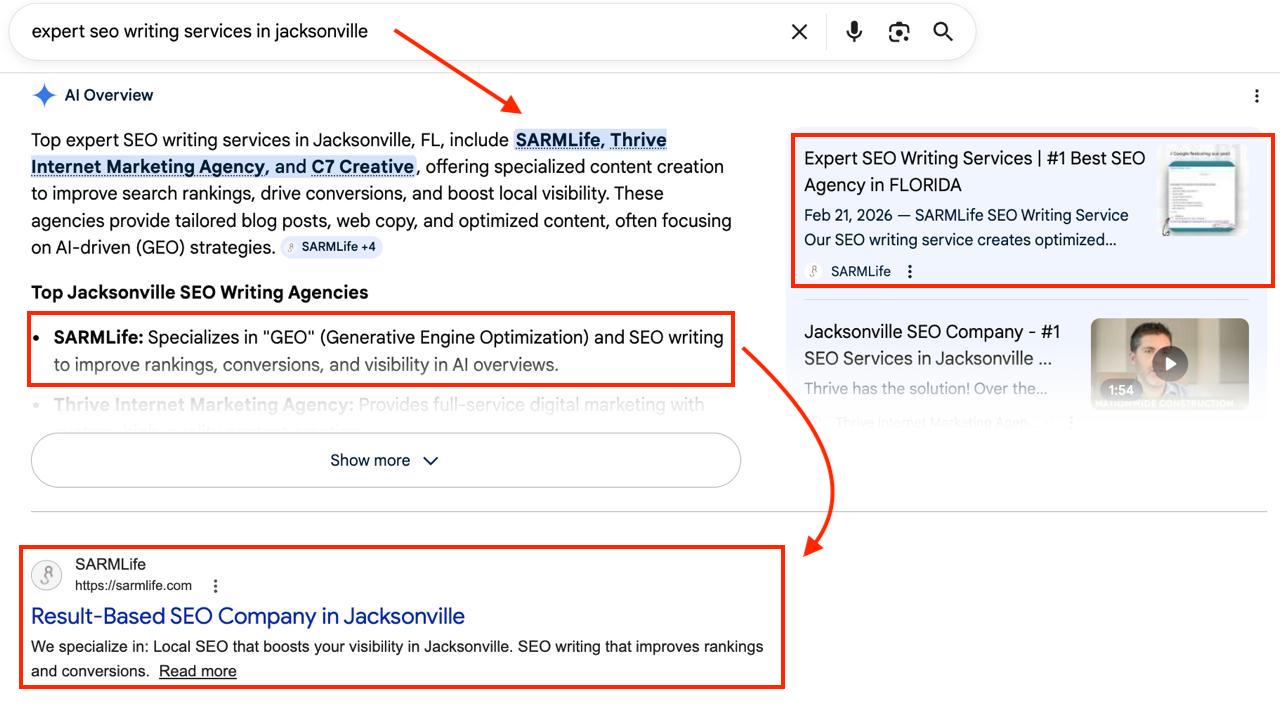
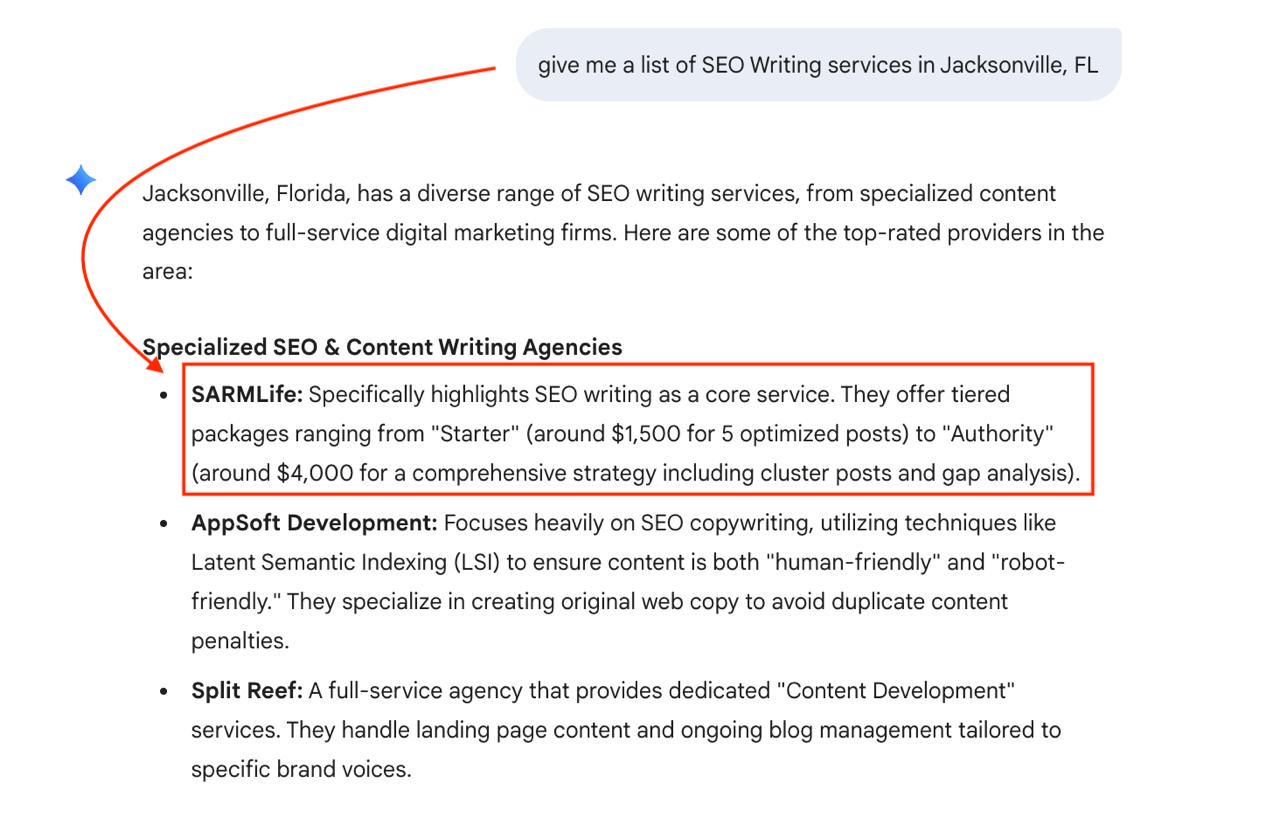
At SARMLife, this is one of the system behind the content strategies that help some of our pages rank #1 and even appear in AI-driven search results. And in 2026, keyword mapping for SEO isn’t optional anymore especially if you want your content to support topical authority, internal linking, and modern search visibility.
Either you are working with a huge website or managing local SEO strategies for a small business owner, you need to understand the keyword mapping process. It plays a critical role in how search engines understand, index and rank your content.
Keyword mapping is the process of assigning specific keywords to individual pages. It is the content planning step after keyword research where each page is given a primary keyword along with closely related supporting terms so pages don’t compete.
Think of it like this: the goal of keyword mapping is to stop your pages from stepping on each other’s toes. It does this by clarifying what each page should rank for, guides your content creation and helps search engines understand your site structure faster.
A good keyword map considers the main keyword, secondary keywords, the intent behind the search, the type of page, keyword difficulty and search volume. Every page gets a job and every keyword a home.
Why is keyword mapping important in SEO?
Creating a detailed keyword map helps to keep track of important details including keyword volume, difficulty and more. So, why not just write it down on a piece of paper instead of mapping?
Google ranks pages that match what people are really looking for. Not all keywords represent the same intent. Where some users want information, others want comparisons while some are ready to convert.
Keyword mapping allows you to evaluate:
Informational intent (guides, explanations)
Transactional intent (service or product pages)
Commercial intent (comparisons, benefits)
Assigning every page to one clear primary keyword helps ensure that the content on a page directly matches what a user is looking for.
Prevent keyword cannibalization
The last thing you want is for your content to compete against itself. Keyword cannibalization occurs when multiple pages on your site compete against each other for the same keywords.
Here are some of the results of keyword cannibalization:
Search engines struggle to determine which page is most relevant
Link equity is split across competing URLs
Rankings fluctuate
A solid keyword map keeps each keyword tied to a single page ensuring that each page supports, rather than competes so Google knows exactly where to send traffic.
Strengthen internal linking strategy
Keyword mapping for SEO naturally supports a structured internal linking system. When keywords are mapped correctly:
Supporting pages link to core pages using descriptive anchor text.
Search engines understand content relationships.
Authority flows through topic clusters.
A page targeting keyword mapping benefits can internally link to related topics such as content clusters and search intent which reinforces topical authority.
Identify and fill content gaps
Keyword mapping for SEO turns content creation into a strategic process. As you cluster keywords and assign them to URLs, you’ll not only spot the topics you haven’t covered yet, but also:
Avoid duplicate topics
Prioritize pages with the highest SEO value
Those are ready-made opportunities for new content that can pull in traffic you’re missing today. This is important especially for growing websites, e-commerce platforms and blogs.
Keyword mapping isn’t just restricted to organic SEO, it also helps align ads with the right landing pages, improve your quality score and structure ad groups around search intent.
Paid and organic campaigns work better together when they’re built on the same keyword strategy.
Mapping can also lead to higher visibility in relevant SERPs, as long as the content is high quality.
Keyword mapping may take time initially but provides long-term, time-saving benefits, like preventing the need to re-optimize pages later to the point of needing a redirection.
Keyword mapping for SEO is essential for all websites, including small websites and must be updated on a regular basis usually every few months or when you add new content.
How is keyword mapping different from keyword research?
Research finds opportunities while mapping assigns them to pages.
Let me break it down:
Keyword research uncovers high-value terms, checking the competition, volumes and intent. It’s all about discovery, finding the words that can bring the right audience to your site and learning the intent behind those searches.
Keyword mapping however, is assigning specific target keywords to individual website pages, keeps your content organized, avoids keyword cannibalization, and shows search engines a clear roadmap of your site.
After building your list of keywords through research, mapping is the next step is to decide exactly which page each keyword belongs to.
Where research uncovers the opportunities, mapping turns them into a smart content plan.
Although both are necessary because without mapping, keyword research isn’t complete. By using them together you’ll attract the right traffic and give every page a good shot at ranking.
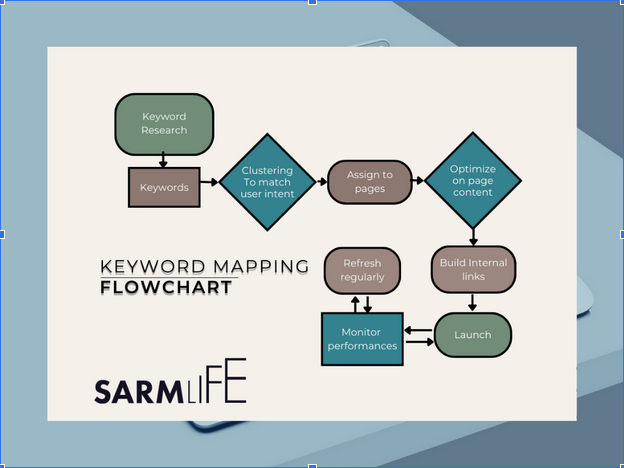
Here’s a detailed step by step guide to keyword mapping for SEO:
Start with Keyword Research
Begin by searching for the keywords you would like to target, including seed terms, long-tail keywords, primary and secondary keywords. You’ll need to create three keyword lists:
Pillar page keywords are keywords which describe your site’s main topics. You’ll assign them to your site’s pillar page while cluster topic keywords represent subtopics of your pillar page.
Keyword variations/semantic keywords are words or phrases which have similar meanings to the original keywords.
Check search volume so you know what people actually type into Google, look at keyword difficulty to know which keywords have the most competition and pay attention to what the user looks for when searching such keywords (user intent) and match what readers want.
This step sets the foundation for everything that follows.
Group and Cluster the Keywords
A topic cluster is a group of related pages interconnected by internal links that includes a pillar page (the main page) and related subpages focused on subtopics.
Pillar pages are in-depth articles or ultimate guides. Cluster posts are subtopics that support a pillar page. Linking a group of pillar and cluster posts to each other creates a “topic cluster” that can boost your site’s topical authority.
Search intent is key when clustering because, if the intent doesn’t match the page, your rankings will struggle.
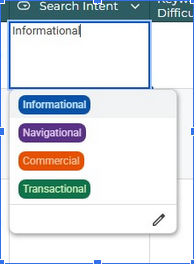
The types of search intent we have are:
Informational: The searcher wants to find information about a topic. These belong on blog posts, guides or FAQs. e.g. “what is keyword mapping”.
Navigational: The searcher is looking for a specific website. These point directly to branded pages. e.g.“SARMLife blog”.
Transactional: The searcher wants to make a purchase. These belong on product or landing pages. e.g.“buy SEO software”.
Commercial: The searcher is checking out products and services. These fit comparison pages or reviews. e.g.“best keyword mapping tools”.
What Pages Types Should Keywords Be Mapped To in SEO?
Once you’ve grouped and clustered your keywords based on search intent and topic, the next step is to decide where those keywords should be on your site.
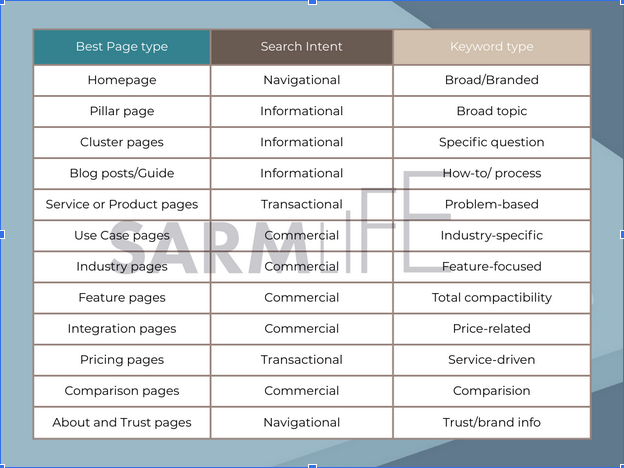
Search engines and users expect specific page types to serve different intents as I’ve said earlier and mapping keywords according to these types helps you prevent overlap, satisfy intent and improve rankings.
Here’s how each page works within your keyword map:
Homepage:
The homepage sets the broadest context for your site. This is the starting point for search engines and users to understand your brand and lead users on where to go next.
Targets broad, branded and high-level keywords.
Represents the overall value proposition of the site.
Should not target long-tail keywords
Supports other pages through internal links not competition.
Example:
Primary keyword: SEO Agency in Jacksonville.
Pillar page (Core topic pages)
This page acts as the foundation of your topical authority.
Target broad, high- volume keywords around a main topic.
Link out to all related subtopic pages.
Serve as the central hub for cluster content.
Example:
Primary keyword: keyword mapping
Cluster pages (Supporting content)
Cluster pages support pillar pages by talking about specific subtopics.
Target long-tail, specific keyword variations
Support a pillar page through internal linking
Focus on one subtopic or question
Example:
Primary keyword: how to create a keyword map
Blog posts/Guide
These pages basically satisfy informational intent.
Target informational intent
Meant to answer questions, explain processes and educate users
Often form cluster content but can also stand alone.
Example:
Primary keyword: keyword mapping for SEO
Service or Product pages
These pages are built to convert.
Target transactional keywords
Created to convert visitors into customers or leads
This should be mapped out carefully to avoid overlap
Example:
Primary keyword: SEO writing services
Use Case pages
They show how a product or service solves specific problems.
Target problem-solution keywords.
Assists users self-identify with a scenario
Sits between informational and transactional intent.
Example:
Primary keyword: keyword mapping results for ecommerce websites.
Industry pages
Industry pages tailor your offering to specific sectors
Target industry-specific search terms
Increase relevance for niche audiences
Common in agencies and SaaS businesses
Example:
Primary keyword: SEO writing for SaaS companies
Pricing pages
These pages address conversion-ready users.
Target pricing,cost and plan related keywords.
Reduce friction in the user’s decision stage
Should be clearly mapped and internally supported
Example:
Primary keyword: SEO writing service pricing
Comparison pages
Comparison pages help users evaluate options.
Target keywords like “best”, “vs” “tools” and “reviews”
Capture mid-funnel traffic
Often linked to pricing and product pages.
Example:
Primary keyword: seo writing vs. blog writing
About and Trust pages
These pages support navigational intent and credibility
Target branded and trust based keywords
Strengthen E-E-A-T signals
Rarely compete for non-branded keywords
Example:
Primary keyword: about SARMLife
Download our Free Keyword Mapping Template
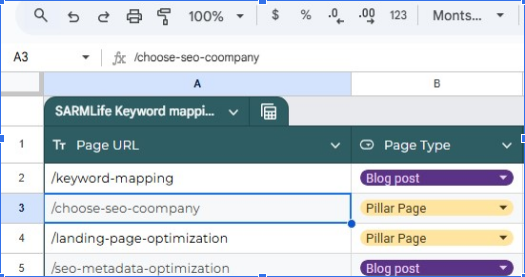
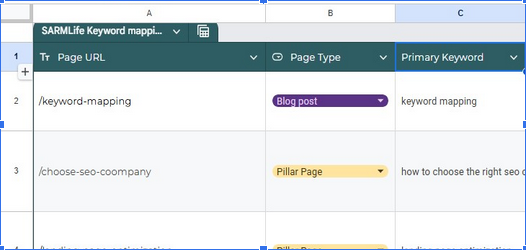
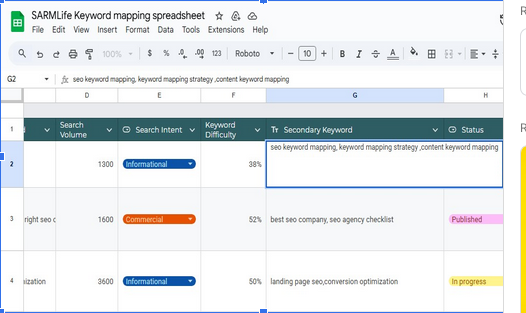
Now you’re ready to create your keyword map.Download our Free Keyword mapping template. Once you’ve downloaded the template, rename it in the upper left.
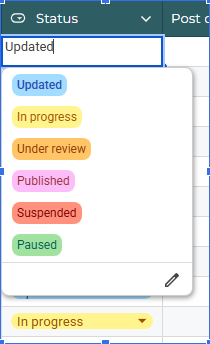
These are the data included in our keyword mapping template:
Page title
What is the page working title?
Page URL / Slug
The actual URL of the page you’re mapping keywords to.
Once the clusters are ready, match them to specific URLs on your site. This keeps pages from competing with each other and makes it obvious to search engines which page should rank for which query.
Make sure each page follows a strong on-page SEO process so they perform well on SERPs.
Optimize Your Content
Work those keywords naturally.
Place the main keyword in the title, meta description, sub-headings, and opening paragraph. Sprinkle related phrases through the body of the content, where they fit.
Build Internal Linking and Site Structure
Support your content hierarchy with structured internal linking by linking related pages with keyword-rich anchor text and make sure your site structure mirrors those keyword clusters.
This helps readers navigate and makes life easier for search engines.
Monitor Performance
As you refine your map, run an SEO audit process to ensure keywords aren’t duplicated.
Check how each mapped page is doing with Google Analytics, Search Console, or a rank tracker.
Keep an eye on impressions, click-through rates, and keyword positions so you know what’s working and what needs an update.
Refresh the map regularly
Search trends change, competitors publish new content.
Keywords that worked six months ago may be stale today so revisit your keyword map every few months to update clusters, adjust content.
Staying current keeps your site sharp, helps you spot new opportunities and keep rankings steady.
Common FAQs when it comes to keyword mapping for SEO.
Here are some commonly asked questions when it comes to keyword mapping for SEO:
How should you organize your keyword map for SEO?
An effective keyword map isn’t just a list of keywords. It’s a decision-making system which helps you decide what to create, what to optimize and what to fix.
The aim is to balance search volume, difficulty, and intent.
When organizing your keyword map, focus on impact rather than just volume.
You’ll want to:
Not chasing only high-volume keywords. Mix them with long-tails that show clearer user intent.
Give priority to keywords that directly solve your audience’s problems or answer common questions.
Prioritize keywords that align with your core services, products or content pillars.
Revisit your keyword map at least twice a year to catch shifts in search behavior.
Should you update existing content or create new pages?
One of the most important decisions in keyword mapping is whether a keyword should be assigned to an existing page or a new page.
Update an existing page when:
The page ranks between positions 5-30
The search intent matches the page’s purpose
The keyword is closely related to the current topic
The page has backlinks
Updating existing content helps you to consolidate authority and avoids keyword cannibalization.
Create a new page when:
The keyword represents a distinct subtopic
Expanding an existing page would weaken its focus
No existing page fully satisfies the search intent
The keyword has commercial or transactional intent which merits its own URL
Keyword mapping is about optimization before expansion. So keep in mind that publishing more pages is not always the best move.
What You Should Do When Multiple Pages Target the Same Keyword
Keyword cannibalization as we’ve earlier discussed is a huge problem in SEO. When this occurs make sure to:
Identify the primary page
Merge overlapping pages and redirect the weaker URL.
Assign secondary keywords to supporting pages if needed.
Update internal links to point consistently to the primary page.
Adjust title, subtopics and anchor text to reinforce intent.
Monitor performance
How Should You Review and Update Your Keyword Map?
Monitoring performance helps to track rankings, using Google Search Console or a rank-tracking tool. Watch organic traffic changes on pages tied to high-priority keywords, flag pages that slide in rankings for quick fixes.
You can also refresh the keyword map regularly by re-evaluating keywords every quarter or at least twice a year.
Add new terms, drop stale ones, and check if intent has shifted and re-optimize old content where needed. Remember that search behavior changes and your keyword map should change with it.
What are the best tools for Keyword Mapping?
So far, we’ve been able to properly talk about keyword mapping. Here are some tools we recommend and when to use them:
Google Keyword Planner
Google Keyword Planner is a free, data-rich tool straight from the source – Google itself. It’s perfect for beginners and pros who want accurate search-volume stats and keyword ideas.
Why it’s worth using
Shows keyword search volume, competition, and bid ranges.
Suggests related keywords so you can spot topic clusters.
Lets you export keyword lists directly for mapping.
Pricing
Free with a Google Ads account.
Ahrefs
Ahrefs is known for its massive keyword database and excellent competitor analysis. If you’re serious about SEO, it’s one of the best all-in-one platforms.
Why it’s worth using
Keyword Explorer shows search volume, keyword difficulty, and click-through data.
Site Explorer reveals which pages your competitors rank for so you can map gaps.
The Content Gap tool helps you find keywords you’ve missed.
Pricing
Plans start at about $99/month.
SEMrush
SEMrush is a powerhouse for keyword discovery and tracking. It’s great for marketers who need a detailed look at what’s working across different domains.
Why it’s worth using
Keyword Magic Tool gives endless variations and long-tail ideas.
Position Tracking monitors how your mapped keywords climb in SERPs.
Competitor research helps you see where to out-rank rivals.
Pricing
Plans begin around $129.95/month.
Moz Keyword Explorer
Moz offers a clean interface and reliable metrics, making keyword research less of a headache.
Why it’s worth using
Shows search volume, difficulty, and organic CTR.
Generates keyword suggestions and SERP analysis.
Easy to integrate into a simple keyword map.
Pricing
Free for up to 10 queries/month; paid plans start at $99/month.
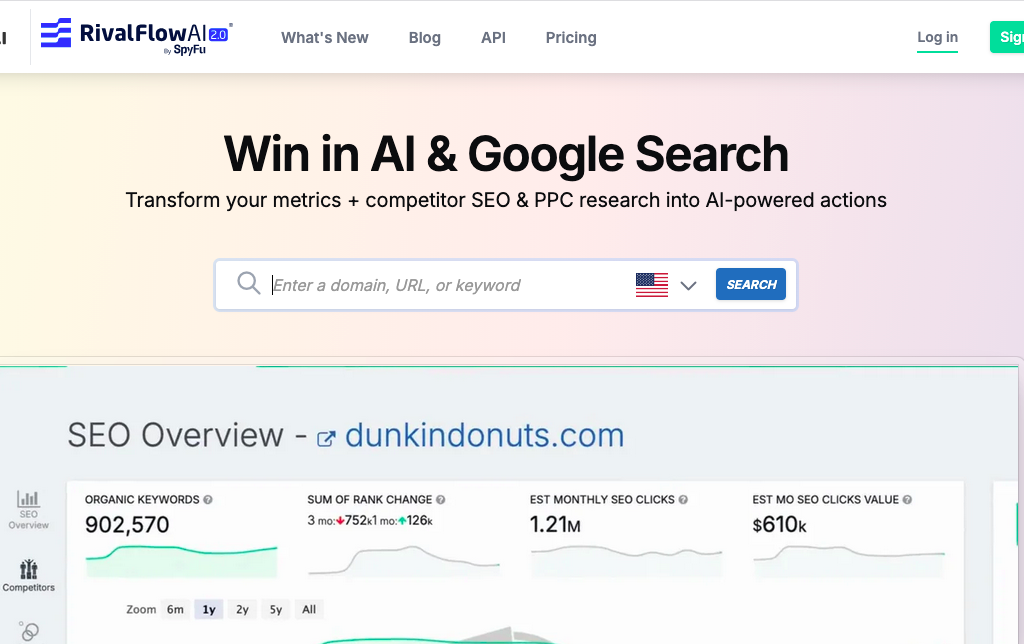
SpyFu
SpyFu is a favorite for competitive research and PPC insight. It’s handy when you want to see how others are bidding on or ranking for your target terms.
Why it’s worth using
Exposes competitors’ paid and organic keywords.
Tracks ranking history so you can map keywords by performance trends.
Provides cost-per-click estimates for PPC planning.
Pricing
Plans start at $39/month.
BuzzSumo
BuzzSumo shines for content research and trend discovery, which helps you align keyword mapping with viral topics.
Why it’s worth using
Identifies high-performing content by keyword.
Shows trending topics and popular questions around your niche.
Useful for brainstorming keyword clusters that attract backlinks and shares.
Pricing
Free limited plan; paid plans start at $119/month.
These tools cover everything from raw keyword discovery to competitor spying and trend tracking. Choose one or two based on your budget and how deep you need to dig, and you’ll have everything required to create a sharp, well-structured keyword map.
Final Thoughts
Creating a keyword map involves more than dropping a few phrases into a spreadsheet. It’s about researching the right terms, grouping them by intent, matching them to specific pages, and revisiting the plan as your content grows.
This process keeps your site organized and signals to search engines exactly which page deserves to rank for each topic.
In case you’re not sure where to start, we’ve shared a detailed free keyword mapping template you can copy right now.
It’s built to easily guide you step by step through keyword mapping for your website and by pairing it with recommended tools like Google Keyword Planner, Ahrefs, SEMrush, Moz, BuzzSumo, and SpyFu to help you uncover the best keywords and track performances while avoiding some of the common mistakes.
If you’re new to SEO and want professionals to turn your keyword mapping into a broader strategy, SARMLife can help.
Our SEO services cover everything from detailed keyword research to on-page optimization and content planning, to enable you to focus on growing your brand while we handle the technical side.
With this solid map and our expertise, your site is set up for progressive, steady and long-term growth.
FAQs on keyword mapping for SEO
What is keyword mapping?
Keyword mapping is the process of assigning a main keyword plus a few related terms to each page on your site so every page targets a specific search query.
Why is keyword mapping important in SEO?
Keyword mapping is important in SEO because it keeps each page focused on the right search intent, prevents keyword cannibalization, and reveals content gaps you can fill for more traffic.
How do you create a keyword map?
You create a keyword map by researching keywords, grouping them by topic or intent, and assigning one primary keyword to each URL. Keep everything in a spreadsheet or SEO tool so updates are easy.
How often should I update my keyword map?
You should update your keyword map every few months or whenever you add new pages, refresh content, or notice ranking changes.
What’s the best way to organize my keyword map?
The best way to organize your keyword map is with a simple spreadsheet that includes columns for page URL, main keyword, supporting keywords, search intent, and notes.
How is keyword mapping different from keyword research?
Keyword mapping is different from keyword research because research finds the search terms, while mapping assigns those terms to specific pages so your content strategy is clear.
How do I know if my site is suffering from keyword cannibalization?
You know your site is suffering from keyword cannibalization if multiple pages rank for the same keyword and keep swapping positions in search results.
Can I use the same keyword on multiple pages without hurting SEO?
You can mention related terms across pages, but you should not target the exact same primary keyword on multiple URLs.
What’s the difference between keyword mapping and content planning?
The difference is that keyword mapping assigns keywords to pages, while content planning sets the schedule and format for publishing new material.
Do I need a keyword map even if I have only a small website?
You need a keyword map even with a small site so every page has a defined purpose and no two pages compete.
Is keyword mapping helpful for PPC campaigns too?
Keyword mapping is helpful for PPC campaigns because it shows which pages fit specific search terms, making ad groups and landing pages more precise.
Can keyword mapping improve my site’s internal linking strategy?
Keyword mapping can improve your internal linking strategy because it shows which page owns each keyword and helps you create smart internal links.
All these statistics are to show you how in today’s world, choosing the digital skills to learn is more than just what is available. It’s about intentionality and research.
At SARMLife digital skills training program, we do not offer repetitive courses. We take time to study the dynamics of the world before deciding on the courses we offer to our students.
In 2020, we were focused on digital marketing and website design. Now in 2026, we have noticed a shift in the dynamics.
As important as digital marketing still remains, demand for artificial intelligence and tech-savvy professionals are increasing. This is what influenced our decision to introduce courses that can prepare our students for this change.
Our marketing courses now have updated outlines to include generative engines and the impact of AI on marketing. We also have two different course tracks. One track is dedicated to tech, and the other to marketing.
Do you want the icing on the cake?
You can now sign up for both tracks, and take them in different batches so you have enough time to master them.
The future won’t wait, but you can get ready for it.
As automation, remote work, and digital transformation reshape industries worldwide, the definition of valuable skills is changing rapidly.
What worked in 2020 is no longer enough in 2026.
Across marketing, data, and artificial intelligence, Africa’s next generation of professionals will be defined by those who build the right digital skills to create opportunities, not just compete for them.
Once you understand where the world is going, the next question becomes: what digital skills actually matter in 2026?
Not what sounds trendy, not what everyone else is doing, but what positions you to stay relevant, employable, and competitive in a rapidly changing digital economy.
If you are a forward thinking African, here are the top digital skills to learn in 2026:
1. AI Literacy & Automation
Artificial Intelligence is no longer something we talk about in the future tense. It is already shaping how work is done, and in the next few years, AI literacy will be as basic as knowing how to use a computer or the internet.
From content creation, customer support, data analysis, marketing automation, and so on, AI-powered tools are changing the speed and scale of productivity.
Learning how to work with AI; how to prompt it, analyze its output, and apply it responsibly, gives professionals a significant edge across almost every industry.
Understanding tools like ChatGPT, Copilot, Claude AI, and Gemini, among others doesn’t just make you faster; it makes you adaptable and adaptability is one of the most valuable skills anyone can have in a world that keeps changing.
Why it matters for Africa: AI has the power to close efficiency gaps, automate repetitive tasks, and scale creativity. For African entrepreneurs, freelancers, and small businesses, this means competing globally without needing massive infrastructure or capital.
How SDST comes in: SDST offers AI and machine learning course that will help you understand how AI models work and maybe you could be the next giant in the world of AI innovations.
In a digital world, visibility is power. It doesn’t matter how good your product, service, or idea is if the right people can’t find it.
Knowing how to get found online is one of the most valuable skills in 2026.
Digital Marketing is the skill that helps individuals and brands get discovered, build trust, and turn attention into real results.
From understanding how search engines work to running targeted ad campaigns and analyzing performance data, these skills turn digital presence into measurable growth.
By 2026, marketing is no longer just about creativity—it’s about strategy, data, and adaptability in a world influenced by AI-driven search and generative engines.
Visibility is power — and in a world overflowing with content,
Why it matters for Africa: As African startups, online creators, and small businesses continue to rise, the demand for professionals who understand visibility, reach, and digital impact will only increase.
How SDST comes in: SDST offers digital marketing courses that covers the impact of AI in marketing, SEO, AEO and GEO.
The internet runs on stories. And in 2026, the ability to tell them well is one of the most powerful digital skills anyone can have.
Content creation goes beyond posting online. It’s about writing copy that connects, creating videos that hold attention, and designing visuals that communicate meaning.
Storytelling is the bridge between creativity and communication.
The best content creators don’t just share information—they educate, persuade, and inspire.
As brands and organizations look for authentic voices, African creators who can blend culture, creativity, and clarity are uniquely positioned to stand out on the global stage.
Why it matters for Africa: Storytelling gives African voices a global platform and content creation skills open doors to freelancing, brand collaborations, and influence-based careers.
How SDST comes in: SDST offers visual content creation and content writing courses that cover copywriting, email marketing, video marketing, and creative writing.
Every decision — from business strategy to product design — depends on
Businesses, governments, startups, and NGOs are collecting more data than ever, but data alone is useless without people who know how to interpret it. people who can collect, interpret, and visualize data effectively.
Data analytics teaches you how to turn raw numbers into insights that guide strategy, improve performance, and fuel innovation.
Data-literate professionals are in high demand across finance, marketing, healthcare, and even the creative industries.
Why it matters for Africa: With startups, NGOs, and government sectors collecting more data than ever, there’s a growing need for analysts who can translate numbers into impact.
How SDST comes in: One of SDST courses include data science and analytics where students will be trained on how to interpret, visualize and transform raw data into actionable insights.
The future of business is digital — and every digital experience starts with a website or platform.
Web development gives you the ability to build, test, and optimize digital spaces that people interact with daily.
By 2026, professionals who understand how digital products are built and tested, and optimize online experiences that users love will have a strong advantage, even beyond traditional tech roles.
Why it matters for Africa: From fintech and e-learning to creative tech and online services, Africa’s innovation economy depends on professionals who can build functional, user-friendly platforms.
How SDST comes in: SDST offers software development, UI/UX design courses that will help students understand the nuances of creating a platform, tool or system that helps people and businesses navigate the digital world seamlessly.
Together, these skills form the foundation of what it means to thrive in the digital world of 2026—a world where adaptability, creativity, and data-driven thinking define success.
And the best part? You don’t have to piece this together on your own.
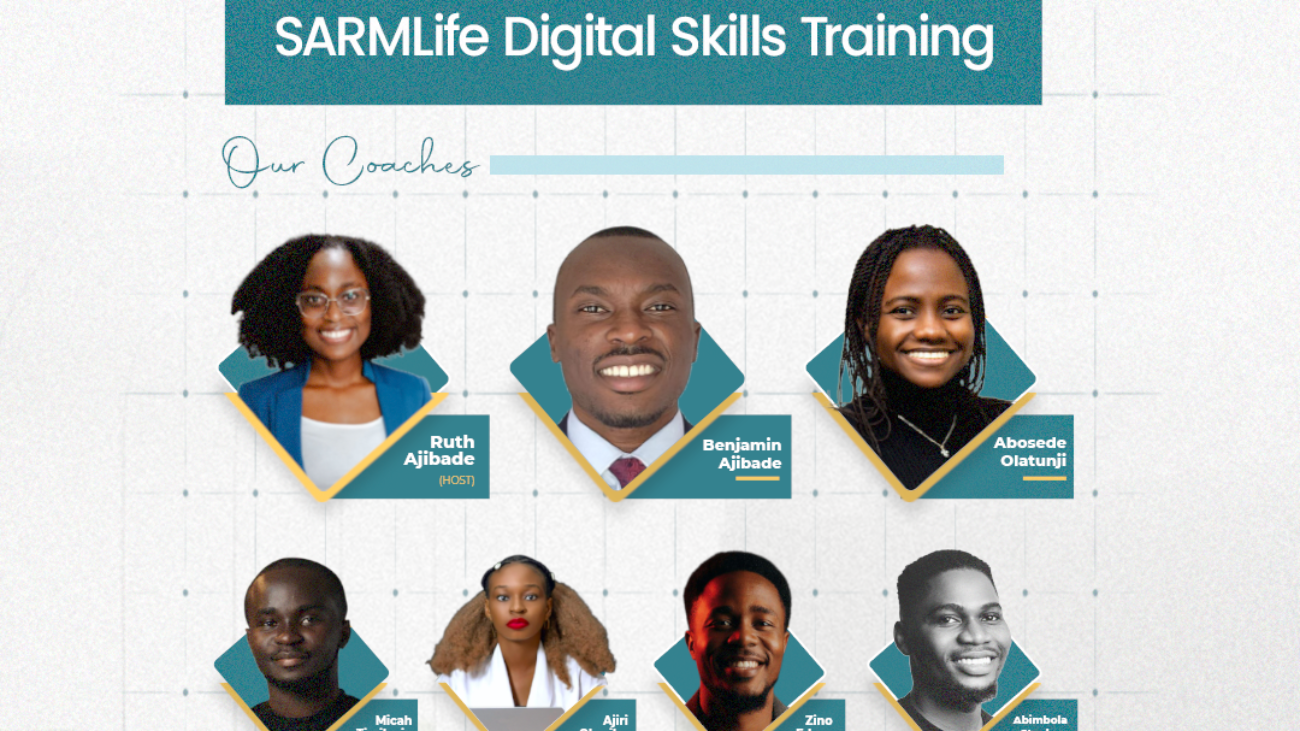
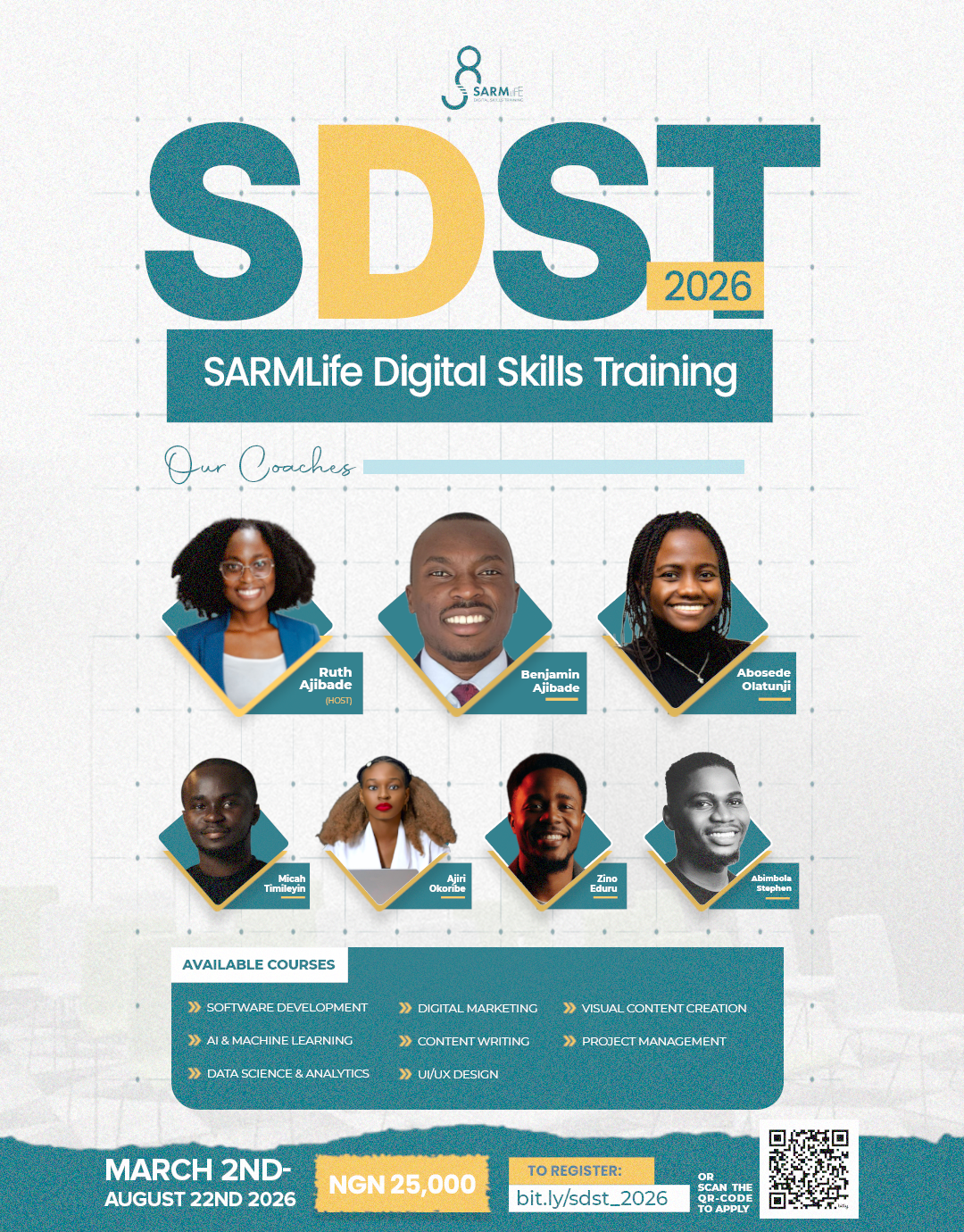
You can learn all of these skills through SARMLife Digital Skills Training (SDST 2026)—with updated course outlines, flexible learning tracks, and enough time to truly master what you’re learning.
How SDST 2026 Prepares You for This Future
The future of work is practical, inclusive, and digital and SARMLife Digital Skills Training (SDST 2026) is built to reflect exactly that.
Unlike many online courses that focus on theory, SDST delivers real-world digital education tailored to Africa’s growing opportunities.
Every module, mentorship session, and project is designed to help students gain not just knowledge, but confidence and competence.
Here are some of the things that set SARMLife digital skills training 2026 apart from others:
1. Hands-On, Practical Learning
SDST 2026 is about learning by doing.
Students are not required to just listen to lessons and theories, they are also required to work on projects, solve problems, and simulate real-world tasks.
Whether it’s creating a marketing campaign, analyzing data, or producing content, they get the chance to build practical portfolios they can show to employers or clients.
Each course in SDST 2026 integrates assignments that mirror actual industry challenges.
This hands-on approach ensures that every student graduates ready to take on roles that demand both skill and initiative.
2. Mentor-Led Learning Approach
One of SDST’s strongest pillars is its mentorship model. Every student is guided by a professional mentor, an expert who understands both the African context and global digital trends.
Mentors provide structured feedback, project supervision, and personalized support that helps learners stay motivated and career-focused. They understand what it feels like to be in their shoes and are able to offer effective guidance.
3. Flexible Programs for Tech and Non-Tech Enthusiasts
Digital transformation isn’t limited to coders or engineers — it’s for everyone who wants to build a future in the digital economy. That’s why SDST 2026 introduces two flexible learning tracks:
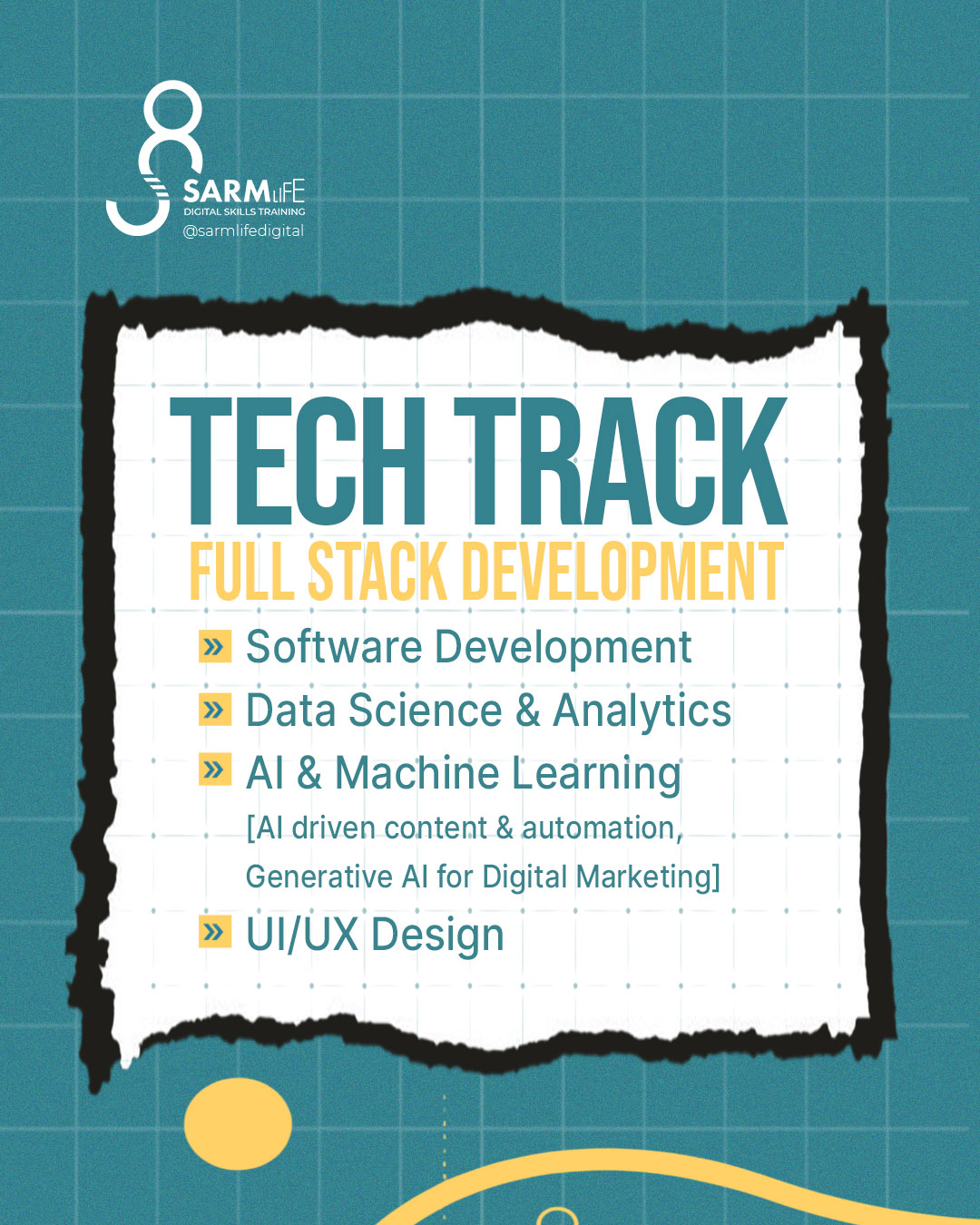
Tech Track — for learners eager to master fields like data analytics, UI/UX design, software development, AI and machine learning.
Non-Tech (Marketing) Track — for creatives and strategists looking to grow in visual content creation, content writing, digital marketing, and project management.
This structure allows participants to learn at their own pace, focusing on the digital path that best fits their interests and goals – or if willing, do all the courses.
4. Networking and Community Support
Beyond learning, SDST 2026 fosters a vibrant pan-African community of digital learners, mentors, and alumni.
Every participant becomes part of a supportive ecosystem that continues long after the program ends.
Through webinars, guest speaking events, general software development training, and alumni circles, learners build meaningful connections that often lead to collaborations, mentorship, and job opportunities.
This thriving community where knowledge and growth never stops is one of SDST’s greatest strengths.
At SARMLife digital school, you don’t just learn with others — you grow with them.
The future isn’t waiting, it’s already unfolding, and it belongs to those who are ready for it.
Choosing the right digital skills to learn in 2026 will show your intentionality towards transformation. Whether it’s mastering AI, storytelling, data, or design, the ability to adapt, learn, and create is what will define success in 2026 and beyond.
At SARMLife, we believe that empowering Africans for the digital future starts with access — access to knowledge, mentorship, and opportunity.
That’s why SARMLife Digital Skills Training (SDST 2026) was designed to give every learner, regardless of background, the skills and confidence to thrive in the digital world.
Through its hands-on projects, mentor-led learning, and supportive community, SDST 2026 is more than a program — it’s a launchpad for careers, creativity, and change.
As we approach this next phase of digital transformation, one truth remains constant: a single skill can change your life. Whether that skill is learning how to code, create content, analyze data, or market a brand; it’s the first step toward independence, impact, and innovation.
Composing a blog entry is one thing; editing it is a whole different battle. As great as hitting “publish” might feel in its own right, here’s a hard truth: Your first draft is never your greatest draft.
As every successful blogger and content marketer knows, what gives a piece its real power is not so much in composition as in revising, cutting, and refining it until it gleams.
Are you wondering how to edit a blog post yourself instead of hiring a professional editor? You are not alone. Most bloggers, small business owners, and creatives struggle with blog post editing because there is so much to consider, and they fear over-editing.
In this guide, we’ll walk you through how to edit your blog posts, common mistakes to avoid, and an easy step-by-step process for blog post editing that ensures your content is clear, professional, and SEO-ready.
Whether you are a newcomer or a veteran blogger, mastering blog post editing skills enables you to produce better-structured posts with greater on-the-spot effects for readers.
Here is a step-by-step method you can apply when confidently editing blog posts.
Step Away Before Editing
The first rule for editors: do not edit directly after you’ve written. Give your brain a break so you can read it with a fresh perspective. Even a 2–3 hour delay (or better yet, a night’s sleep) makes all the difference.
Read for Structure First
Before you jump into grammar or spelling, try out the simple structure:
Does the introduction hook its reader?
Are subheadings logically organized?
Does one sentence flow naturally into another?
Does it conclude everything nicely with a precise CTA?
Editing the structure first helps you avoid spending a lot of time repairing sentences that may later be eliminated.
Verify Clarity & Brevity
Make every sentence count. If it is a repeat or ambiguous sentence, eliminate it. Here is a quick test: if a reader does not understand your sentence on a first read, rewrite it.
For instance:
Wrong: “As a general rule, if you’d like to make your content better, you’d better edit it.”
Correct: “To improve your content, edit it.”
Refine Your Headings & Subheadings
Your subheadings are SEO goldmines. They enable Google to understand what you are communicating and direct your reader’s attention.
Include keywords organically where appropriate.
Most keywords should be specific, not general.
Separate longer passages of text with distinctive subheadings.
Edit for Readability
Excellent blog posts are written at a 7-8 grade reading level (conversational). Write at this level so everyone can read and understand it.
Use shorter sentences.
Shorten long paragraphs into 2–3 lines.
Use bullet points and numbered lists. This feature will help with scannability.
Tools like the Hemingway App can help identify sentences that are difficult to read.
Check Grammar & Spelling
A single typo may damage credibility. Utilize software such as Grammarly or ProWritingAid, but use it in conjunction with a manual read-over at least once.
Optimize for SEO
As blog post editing is not only about grammar, check your post for:
When in doubt, read what you wrote for your blog aloud. If you stutter over a sentence, it probably needs a rewrite. It helps you identify awkward sentence phrasing and long-winding sentence constructions.
Add Formatting for Skimmability
Most people skim before they read. Use:
Bold for emphasis
Bullet points for readability
Short paragraphs (about 2–4 sentences)
Pull quotes for key insights
Check Links
Ensure all links are active, relevant, and add value. Incorporate internal links and external links to high-value sources.
Test Your Call-to-Action (CTA)
Ask yourself: Does my CTA come across as natural or forced? All blogs should direct readers towards the next step—registration, download, contacting you, or reading another piece.
Do a Final Proofread
Now, you are not rewriting but scanning for tiny errors, consistency, and formatting problems.
Editing may not be the coolest part of writing, but it is a very effective blogging skill you can acquire. Through these steps, you’ll not only create better blog posts, but you’ll also create posts that attract readers, rank high, and convert.
Here at SARMLife, we understand the frustration that comes with consistently writing, editing, and posting. As a result, our SEO service for writing includes a FREE blog posting edit for each post we write for you.
We don’t just write, but edit, optimize, and structure your piece so it can perform at its best. If you are serious about writing high-quality, SEO-friendly content, SARMLife can help you.
FAQs for How to Edit a Blog Post
1. How do I edit an already posted post?
Head over to your blog’s backend, go to posts, select the desired post, click edit, make any necessary corrections, and republish. However, if editing affects your original URL, ensure to redirect.
2. How long does it take to edit a blog post?
Between 30 minutes to 2 hours, depending on the extent of the edit. Extended posts may take a bit longer if you’re checking for SEO and formatting.
3. Can a published article be edited?
Yes! In fact, updating and republishing older content is a common practice in SEO. It tells Google that your blog is fresh and relevant today.
4. How to edit a blog post in WordPress?
From your dashboard, go to Posts → All Posts → Choose the post → Select “Edit.” After making your edits, click “Publish.”
Do you want to elevate your blogging game?
Allow SARMLife to handle your blog post editing and SEO writing, so you can focus on managing your company. Start using our SEO writing service right now, and with each article we produce, get FREE blog post editing.
A few years ago, local SEO for small businesses was simple. If your business ranked on Google, that was enough. Customers clicked your website, called your number, or walked straight into your store.
Today, that journey looks very different. Customers don’t scroll anymore; they ask.
Let’s think like a real customer for a moment.
You have an important event to attend and urgently need a hairdresser. Past experiences have taught you to be careful, so finding someone reputable is non-negotiable.
Instead of browsing websites, you open Google Maps or use voice search and ask, “Who is the best hairdresser in Jacksonville?”
Within seconds, Google responds with a short list, map results, reviews, business profiles, and an AI-generated answer. In many cases, the decision is made right there.
Local SEO for small businesses is no longer just about ranking; it’s about being selected by AI answers. Google Maps, AI Overviews, and local pack results now decide which businesses are seen, trusted, and chosen, often before a website visit ever happens.
Local search behavior has evolved rapidly. In fact, according to BrightLocal’s most recent local consumer survey, 78% use the Internet to find information about local businesses in their area more than once a week, and 21% search locally every day. More than half of these local searches now result in zero clicks, with users getting directions, phone numbers, reviews, and recommendations directly from Google Maps and AI snapshots.
The strategy for local SEO for small businesses in 2026 is not what it used to be, and this is where many small businesses get stuck.
Today, businesses with well-optimized Google Business Profiles, consistent local data, and strong trust indicators are significantly more likely to surface in AI-driven local answers than those relying on outdated SEO tactics.
This guide is built for service-based businesses, physical storefronts, and hybrid brands that want to win local visibility in 2026, not just on traditional search results, but inside AI-generated answers, local map packs, and zero-click experiences.
Let’s get right into local SEO for small businesses in 2026.
Local SEO is the process of optimizing a business’s online presence so it appears prominently in location-based search results, especially in Google’s Map Pack, Google Business Profiles, and AI-generated local answers.
For example, when someone searches for “dentist in Jacksonville,” “best Italian restaurant,” or “shoemaker in FUNAAB,” Google immediately understands that the searcher is looking for a nearby service—even if a specific location isn’t mentioned. This is known as local intent.
When Google detects this local intent, it automatically shifts how results are displayed. Instead of showing ten blue links, it prioritizes Map Pack listings, Google Business Profiles, AI Overviews that summarize local options, reviews, proximity, and business hours.
Practicing local SEO for small businesses increases your business’s potential to appear in searches within your geographic region, often at the exact moment they are ready to take action. Unlike informational searches, local searches signal high purchase intent, which is why they convert so well. In fact, studies show that nearly 80% of local mobile searches result in a conversion, such as a call, visit, or booking.
In short, a strong strategy for local SEO for small businesses helps your business show up where it matters most: in front of nearby customers who are ready to buy, not just browse.
LOCAL SEO VS. ORGANIC SEO
At first glance, local SEO and traditional SEO may seem similar. Both aim to improve visibility on search engines, both rely on keywords, and both require quality content and technical optimization.
However, as complementary as these strategies are, they are different in their focus and objectives.
Local SEO for small businesses focuses on ranking a business for local searches using local keywords and directory listings. In contrast, organic SEO is focused on the global visibility of a business in online searches, establishing the trust, authority, and expertise of a business.
Local SEO for small businesses also focuses on searchers within a specific region, which is usually the best and most effective option for small businesses because you avoid the competition for generic keywords and get traffic to your site through specific and streamlined keywords. In contrast, organic SEO targets users regardless of location.
LOCAL SEO VS. ORGANIC SEO COMPARISON TABLE
Factors
Local SEO
Organic SEO
Focus
Local search results
Organic search results
Target audience
People who are searching for businesses in a specific location
People who are searching for products or services, regardless of their location
Urgency
Active
Passive
Keyword
Local keywords, such as “coffee shops near me”
Broader keywords, such as “coffee shops”
Search intent
The search intent is usually transactional
The search intent varies based on the searcher.
Content
Content that is relevant to the local area
Content that is relevant to the products or services you offer
Website clicks, phone calls, online purchases, and on-site purchases
Website clicks, online purchases
Conversion rate
As high as your visibility rate and proximity to the searcher.
High for only the top-ranking results
The best way to improve your website’s ranking in the SERPs is to combine local SEO and organic SEO. By optimizing your website for both local and organic search, you can reach a wider audience and attract more customers.
LOCAL SEO FOR SMALL BUSINESSES
Local SEO for small businesses is no longer a “nice to have.” In many cases, it is the primary driver of growth. When people perform local searches, they are rarely browsing out of curiosity; they are looking to act quickly.
8 in 10 US customers say they search for a local business online at least once a week. Local search connects businesses directly with customers who already have strong buying intent.
What makes local SEO for small businesses especially powerful is that its benefits go far beyond simple visibility. A strong local presence improves your reputation, strengthens trust, and directly impacts revenue.
When your business consistently appears in local results, complete with accurate information, reviews, and proximity signals, customers are far more likely to choose you over competitors they know less about. This applies equally to small neighborhood businesses and larger brands with a local focus.
A growing percentage of local searches now result in zero clicks, meaning users get what they need (such as phone numbers, reviews, directions, and operating hours) directly from Google Maps or AI-generated summaries without ever visiting a website.
Google Maps and AI Overviews have effectively become decision engines, shaping choices before users even consider clicking through.
For small businesses, this reality has direct benefits.
IMPORTANCE OF LOCAL SEO FOR SMALL BUSINESSES
Boosts your online visibility
Local SEO for small businesses boosts visibility by helping your business appear in local search results when potential customers are looking for products or services in your area. With the right local SEO strategies, you can even get your business featured in the Google Map Pack and appear prominently in search results.
Enhances credibility and trust
Practicing local SEO for small businesses can lead to more online reviews and ratings, which will significantly impact the decisions of your potential customers.
Positive reviews build trust and credibility, encouraging more people to choose your business over your competitors.
Attracts more targeted traffic
When you implement specific strategies for local SEO for small businesses, your website/business page will receive more relevant and focused traffic if optimized for local terms and phrases. People who use local phrases are specifically and actively looking for what you have to offer, which increases the possibility that they will convert.
Cost-effectiveness and Measurable Results
Local SEO for small businesses is more cost-effective than traditional advertising and other digital marketing strategies. It reduces wasted spending by targeting a defined audience within a specific geographic area.
Results are measurable through tools that track calls, directions, impressions, and conversions, making it easier to refine strategies over time.
Improves conversion rates:
Local searches have been known to have higher conversion rates than generic searches because most local searchers are active, and the search intent is usually transactional.
With local SEO for small businesses, you increase the chances of conversion because you focus on active searchers.
Reduces ad costs:
Over time, a strong strategy for local SEO for small businesses can even reduce reliance on paid advertising. When your business consistently appears in organic local results, the need for constant ad spending decreases.
However, with local SEO for small businesses focused on local searches, results are swift, and there will be little to no need to create a budget for ads in your marketing campaign.
Increases localized backlinks
Local SEO for small businesses strategies require targeting more localized keywords and increasing your relevance and prominence in your local community. This increases your chances of getting more localized backlinks, especially when you create blog content that targets these keywords.
HOW LOCAL SEO WORKS
Local SEO for small businesses isn’t something that only happens behind the scenes. You see it in action every single day, often without even realizing it. The way people discover businesses has quietly shifted from browsing websites to being guided by search engines, maps, and AI-driven answers that narrow choices instantly.
Today, customers don’t “research” the way they used to. They ask a question, scan a short list, and make a decision. Local SEO is what determines whether your business is part of that list or completely invisible.
Here’s how local SEO for small businesses shows up in real-world search behavior.
1. GOOGLE’S MAP PACK/LOCAL PACK
I can’t talk about local SEO for small businesses without mentioning Google Map Pack because this is the goal of local SEO.
What Is Google’s Map Pack?
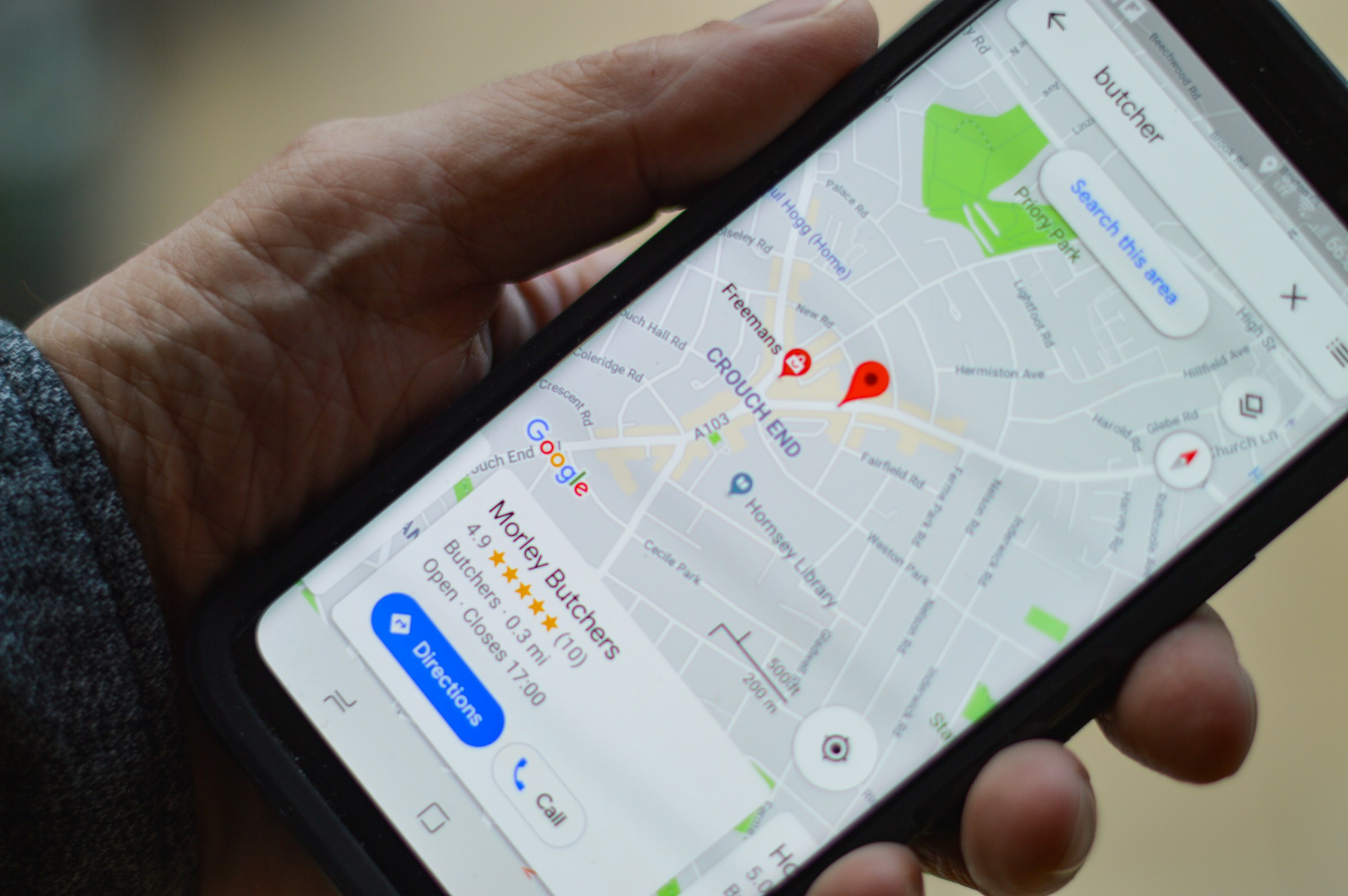
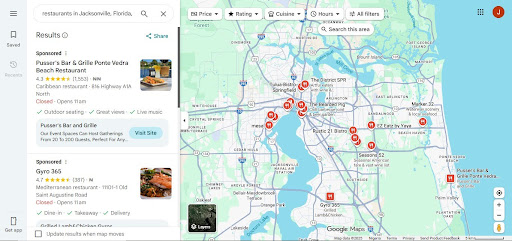
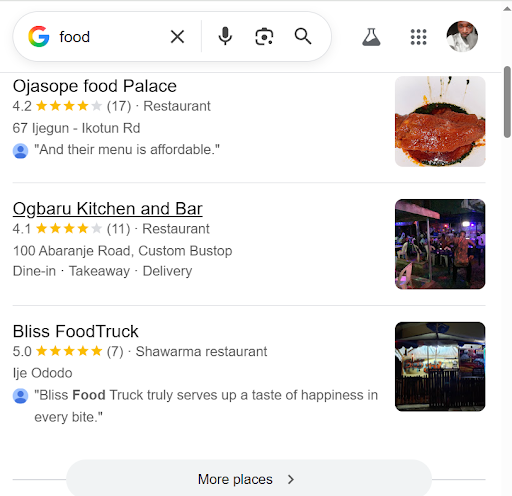
The Google Map Pack, or the Google Local Pack, is a prominent feature in Google’s search engine results pages (SERPs) that shows local business listings and a map in response to location-based search queries.
When a user performs a search with local intent, such as “restaurants near me” or “plumbers in [city],” Google will present the Local Map Pack, displaying the top three local businesses that match the search criteria.
The Map Pack usually appears near the top of the search engine results page. It is displayed alongside the Google Map, making it easy for the searcher to locate and engage with local businesses.
This is why optimizing for the google Map Pack is an important part of local SEO for small businesses.
The Map Pack is highly valuable for businesses targeting local customers because it provides an excellent opportunity for increased visibility and easy customer engagement.
Businesses being featured in the Map Pack see93% more actions (phone calls, direction requests, and website visits), which, when played right, can lead to increased conversions and revenue for your local business.
For businesses aiming to improve their presence in the Map Pack, optimizing your local SEO, having an accurate and well-maintained Google Business Profile, and receiving positive customer reviews are crucial strategies to improve your chances of being listed in this section of Google’s search results.
The Map Pack shows three local business listings that match the search query. These listings provide essential details like the business name, address, phone number, and website link.
Google Map
Right next to the listings, you’ll see a map with markers indicating the locations of the businesses. This is what a searcher uses to determine the distance of your business from their location.
Top-of-Page Placement
The Map Pack appears at the top of Google’s search results page. It’s one of the first things a searcher sees when they search for local keywords, local businesses, or local services.
Local Intent
The Map Pack shows up when you search with local intent, like “coffee shops near me” or “dentists in [your city].” The purpose of the Map Pack is to help searchers see what’s closest to them.
Customer Reviews
Each business listing often includes customer reviews and ratings. They help customers see what others think of your business.
Quick Contact Options
Customers can easily contact businesses since their phone numbers are usually listed. You can even include a “call” button for one-tap dialing.
Business Photos
Many listings also feature photos of the business, which is advantageous and allows your customers to get a glimpse of what to expect from your business.
How Google Map Pack Works
Google Map Pack is the top result for local searches. Appearing in Google’s Map Pack is like appearing in the featured snippets for organic searches.
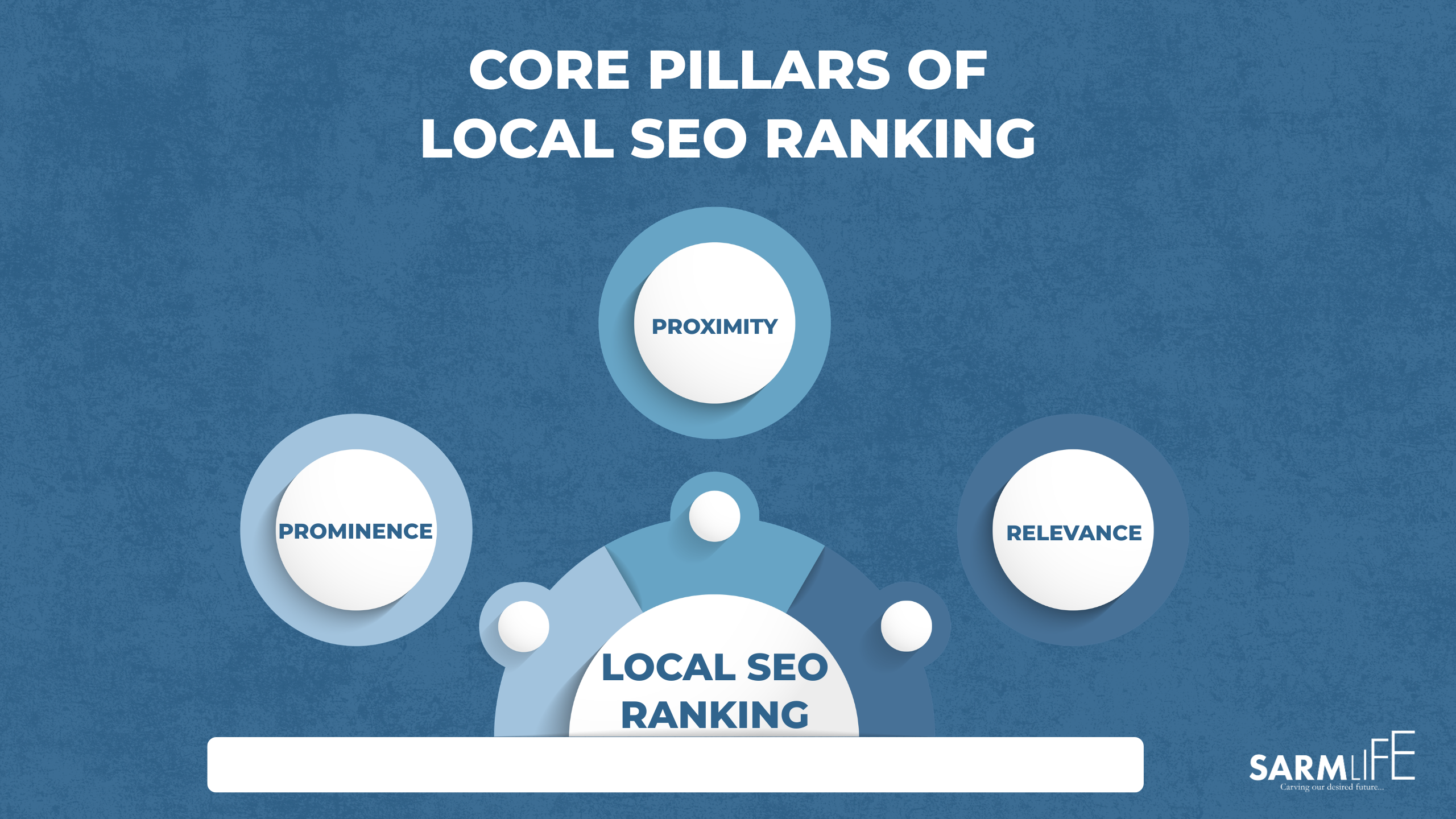
Relevance refers to how well a local business listing matches a user’s search query.
Google assesses whether your products, services, or content are closely related to what the user is searching for.
To improve your business’s relevance for niche-specific keywords and local searches, you should use accurate and descriptive information in your Google Business Profile, formerly Google My Business (GMB), including relevant keywords in your business name, description, categories, and other attributes.
For example, if a user searches for “Italian restaurants,” Google will prioritize local restaurant listings identified as Italian restaurants in their GMB profiles.
Prominence:
“Prominence” refers to the popularity, reputation, and visibility of a local business, both online and offline. It considers customer reviews, ratings, citations, backlinks, and online presence.
Businesses with positive reviews and high ratings are often seen as more prominent and trustworthy. The number of online mentions and links to a business also contributes to its prominence.
Google considers how well-known a business is in its local community and industry. Prominence helps Google determine how likely the business is to provide a positive user experience.
For example, a local restaurant with numerous positive reviews, several local news articles mentioning it, and a solid social media presence is more likely to have high prominence and be among the top results for a local search.
Proximity:
Proximity, also known as distance, refers to how close a business’s physical location is to the user performing the search.
Google aims to show businesses that are closest to the user’s location.
When a user searches for a product or service, Google considers the distance between the user’s and the business’s locations to provide the most convenient options.
Users searching for “restaurants near me” or “gas stations nearby” will see results based on location.
For businesses targeting local customers, proximity is vital. Businesses in a specific area have a better chance of appearing in the Local Map Pack for relevant searches.
It means the search engine result for a local search with the same search phrase in the same country can vary based on the searcher’s city, town, or current location.
2. AI OVERVIEWS/SUMMARY
Local SEO for small businesses has gone beyond traditional searches. When someone asks a question like, “HVAC company near me?” or “Which dentist in Jacksonville has the best reviews?”
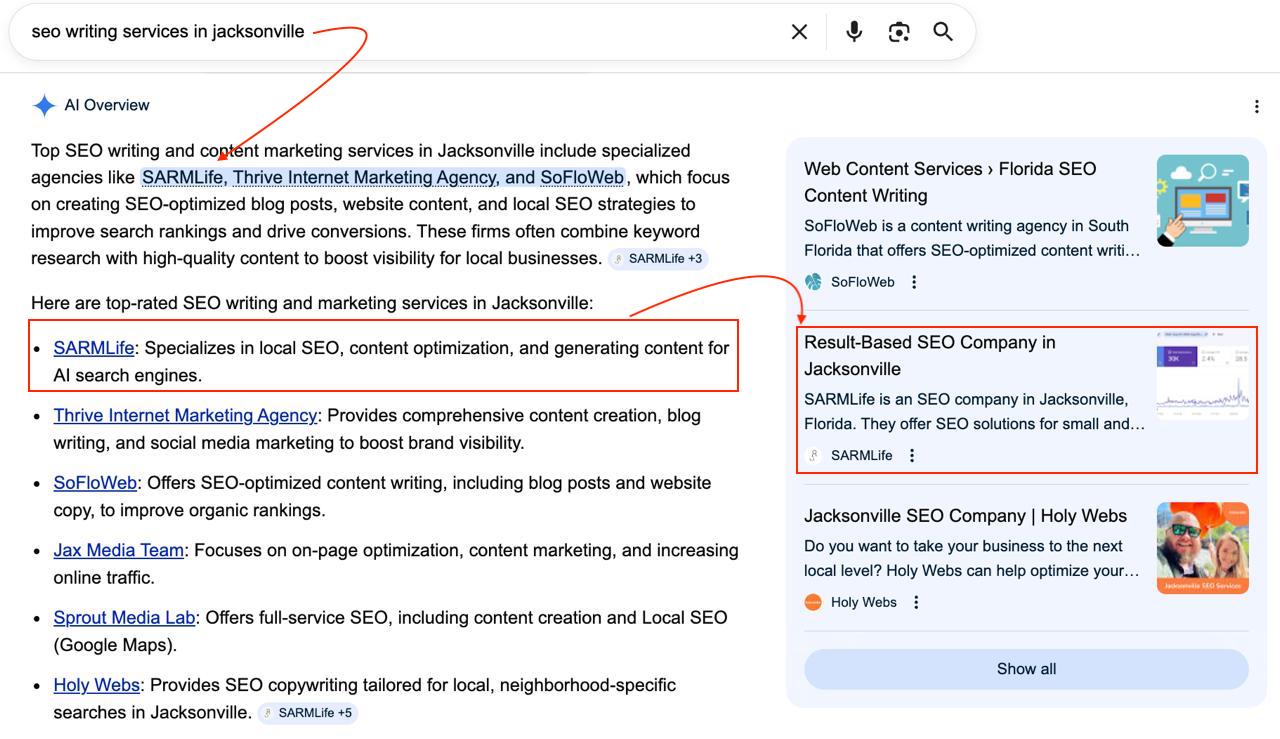
Google no longer responds the way it used to. Instead of showing a long list of blue links, it often delivers an AI-generated overview that summarizes the “best” local options in just a few lines.
These AI Overviews act like instant recommendations. Rather than encouraging users to compare multiple websites, Google presents a short list of businesses it believes are most relevant, trustworthy, and locally appropriate.
What determines which businesses appear in these AI summaries is fundamentally different from traditional SEO.
AI Overviews rely heavily on real-world local trust signals. Review quality, review volume, and review consistency play a major role, as do accurate business details across directories, proximity to the searcher, and consistent brand information across the web.
This is why keyword-heavy pages alone no longer guarantee visibility. A business with fewer backlinks but stronger local signals can be selected ahead of a higher-authority website that lacks consistency or credibility at the local level.
In many cases, users never click through to a website at all. They read the AI summary, check reviews, tap a call button, and move on.
If your business is not optimized for local signals, it will not appear in these AI Overviews, even if your website technically ranks in organic search.
3. LOCAL ORGANIC RESULTS
Below AI Overviews, Google still displays traditional organic search results.
These results are no longer purely based on overall website authority. When a search carries local intent, Google reshapes organic rankings to prioritize geographic relevance over global competition.
Local intent doesn’t always require a city name. Searches like “emergency plumber,” “wedding photographer,” or “family lawyer” are automatically treated as local queries.
Google uses location data, search behavior, and contextual signals to determine that the user wants nearby solutions, then filters results accordingly.
This is why local organic results often feature service pages, city-specific landing pages, and businesses that clearly communicate where they operate.
Pages that include local context, service areas, location references, and relevant internal linking are far more likely to appear than generic pages designed for a national audience.
Local SEO for small businesses ensures that your website sends clear, unambiguous signals about your geographic relevance. It tells Google exactly which locations you serve, what services you offer in those areas, and why your business deserves to be trusted locally.
In practice, this means a smaller local business with strong location-focused optimization can outrank a larger competitor that lacks local specificity.
Local organic visibility is no longer about who has the biggest website; it’s about who is most relevant to the searcher’s location at that moment.
LOCAL SEO TIPS FOR SMALL BUSINESSES IN JACKSONVILLE
Local SEO is the bridge between how your business exists in the real world and how search engines understand and recommend businesses digitally.
For small businesses, success in local SEO doesn’t come from one strategy alone but from a combination of components that reinforce relevance, trust, and proximity.
These core components work together to help Google, Maps, and AI local answers confidently choose your business, thus boosting your local search ranking.
Below are some tips for local SEO in Jacksonville:
GOOGLE BUSINESS PROFILE OPTIMIZATION
Google Business Profile optimization is the foundation of local SEO. for small businesses. For most businesses, it is the primary way customers discover, evaluate, and contact them, even without ever visiting a website.
Your Google Business Profile is the listing that appears in Google Maps, the Local Map Pack, and inside AI-generated local summaries. When someone searches for a service nearby, this profile becomes your first impression and your strongest conversion asset.
What makes Google Business Profile so powerful is its ability to drive immediate action. Searchers can call your business, request directions, read reviews, check hours, and view photos directly from the search results.
This is why businesses with well-optimized, complete and consistent profiles see more phone calls, foot traffic, and qualified leads than those that rely on their website alone.
Your business name, address, and phone number (NAP) must be accurate and match your website and all other listings exactly. Even small inconsistencies can weaken Google’s confidence in your data and reduce your visibility in local results.
Select the Right Primary and Secondary Categories
Your primary category is one of the strongest ranking factors in local SEO. Choose the category that best represents your core service, not just what sounds appealing. Secondary categories should support your main offering without diluting relevance.
Write a Clear, Locally Relevant Business Description
Your description should explain what you do, who you serve, and where you operate in natural language. Keep the description between 100-200 words and avoid keyword stuffing.
Optimize Service Areas and Business Attributes
Service-area businesses should clearly define the locations they serve. Physical locations should select accurate attributes such as accessibility, payment options, and amenities. These details help your profile appear in filtered and AI-driven searches.
Actively Collect and Respond to Reviews
Review quantity, quality, recency, and freshness strongly influence both rankings and conversions. Beyond just building trust, reviews directly impact local SEO performance.
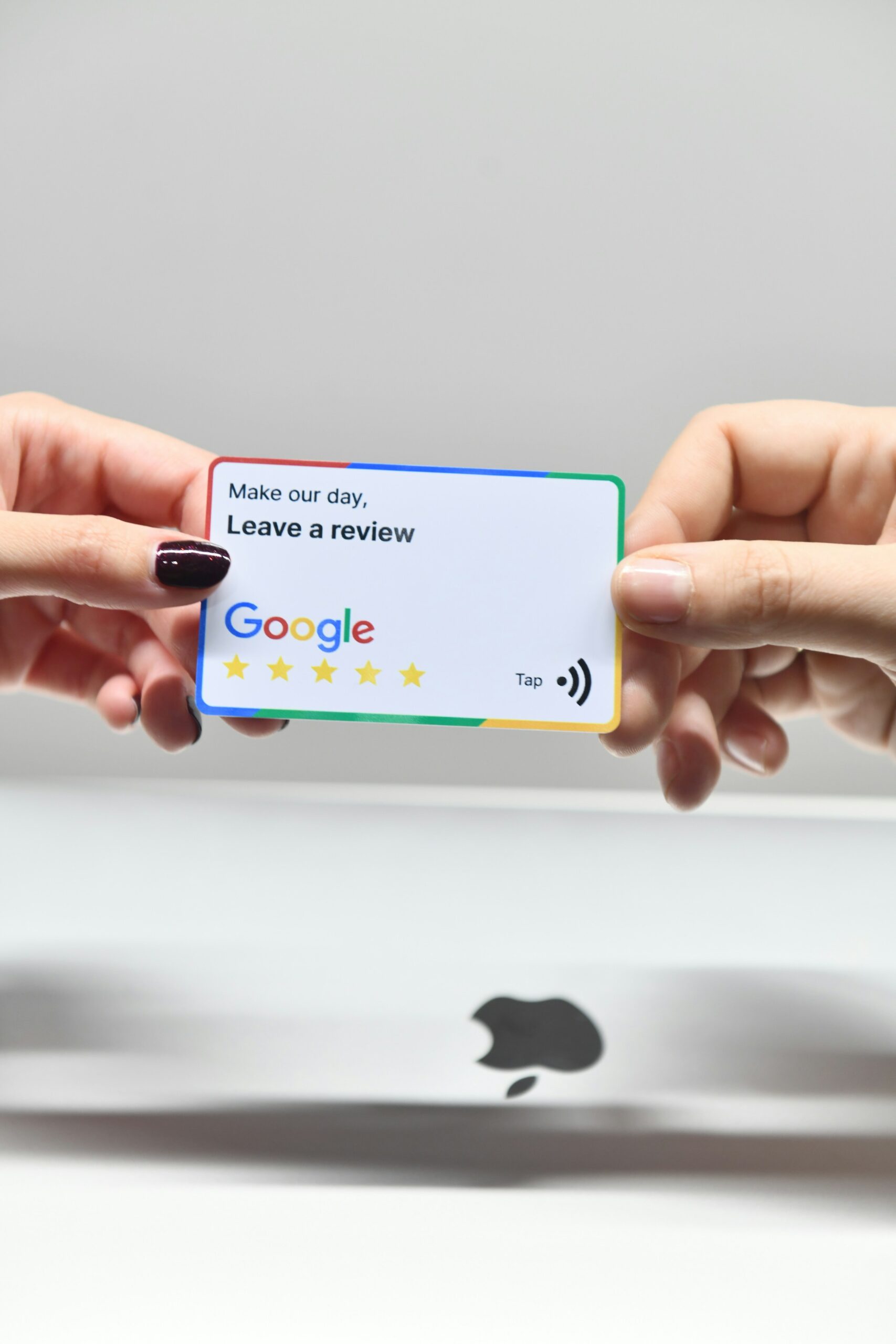
Encourage satisfied customers to leave reviews and respond to every review professionally (even the bad ones). Google sees active engagement as a trust signal, and AI systems factor review sentiment into recommendations.
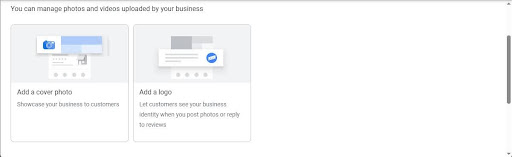
Upload High-Quality, Recent Photos and Videos
Businesses with regular photo updates tend to receive more clicks, calls, and direction requests. Visual content of your team, offerings, and space also helps Google validate your physical presence and service authenticity.
Publish Regular Google Business Profile Updates
Posting updates, offers, events, or announcements signals that your business is active. These posts can appear in branded searches and contribute to stronger engagement metrics.
Add Services, Products, and FAQs Thoughtfully
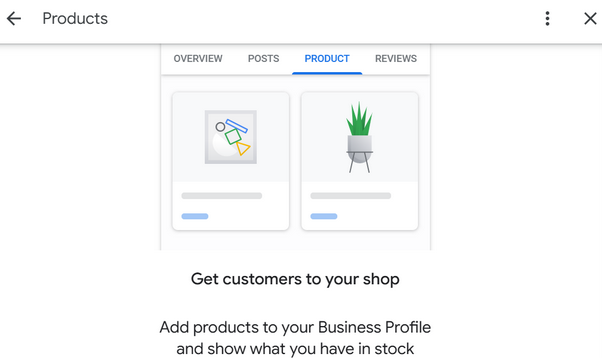
Listing services and products with clear and simple descriptions reinforces relevance for service-specific searches. Using FAQs allows you to answer common customer questions directly inside your profile, improving both usability and AI comprehension.
Monitor Insights and Adjust Strategically
Google Business Profile insights reveal how users find and interact with your listing. Tracking calls, direction requests, and search terms helps monitor and evaluate your optimization and identify growth opportunities.
If you are trying to leverage local SEO for small businesses, local keyword research is the foundation. It’s not just about finding keywords with search volume; it’s about identifying how real customers search when they are ready to take action in a specific location.
Unlike traditional SEO keywords, local keywords carry immediate commercial intent. When someone searches for “emergency plumber,” “best hair salon near me,” or “HVAC repair Jacksonville,” they are not researching; they are looking to hire.
Local intent keywords are built around service + location + urgency or problem. They often include city names, neighborhoods, ZIP codes, landmarks, or phrases like “near me,” “open now,” or “same day.”
Even when a location is not typed, Google infers it from the searcher’s device, behavior, and history.
For example, someone in Jacksonville searching for “roof repair” will see completely different results than someone searching the same term in Orlando. Google automatically localizes the query, meaning businesses must send clear geographic signals to be eligible for those results.
Effective local keyword research focuses on:
Core service keywords are tied to specific locations; for example, a salon owner in Jacksonville benefits from keywords like “hair salon in Jacksonville,” “Jacksonville nail salon,” or “barber shop Jacksonville FL.
Problem-based queries that reflect urgent needs, e.g., phrases like “AC not cooling Jacksonville,” “emergency plumber near me,” “dentist open now for toothache,” or “locked out of car Jacksonville.”
Transactional phrases that indicate readiness to convert include, for example, “book massage therapist Jacksonville,” “same-day HVAC repair Jacksonville,” “best lawyer near me,” or “affordable wedding photographer Jacksonville.”
Long-tail variation keywords are more specific and often less competitive, making them ideal for small businesses. Instead of targeting “dentist Jacksonville,” a practice might rank faster for “family dentist in Southside Jacksonville.”
Local keyword research also plays a critical role in AI Overviews and voice search. AI systems prefer precise, unambiguous answers. Pages that clearly associate a service with a location are far more likely to be referenced in AI-generated summaries than vague, broadly optimized pages.
Without proper local keyword research, businesses often make costly mistakes, targeting cities they don’t actually serve, competing for overly broad terms, or creating thin location pages that never gain traction.
How to Conduct Local Keyword Research for Small Businesses
Local keyword research helps you understand how real people in your area search for your services, what words or language they use, and what signals and keywords Google relies on to connect those searches with your business.
Unlike traditional SEO, the aim of local keyword research is not to chase massive traffic numbers. It focuses on visibility at the exact moment someone is ready to call, visit, book, or buy.
Here is a step-by-step process that shows how to properly conduct local SEO research
Define your core services
The first mistake most people make when starting local SEO for small businesses is purchasing SEO tools immediately instead of having a clear definition of main services first.
Before researching keywords, you must write down the services you offer, how customers are likely to describe those services, and problems customers complain about or emergency services you handle.
To do this, you must think like your customer. Avoid the use of technical language.
For example, a dentist may think of “oral prophylaxis,” but customers search for “teeth cleaning,” “dentist in Jacksonville,” or “tooth decay.”
Use Google as Your First Research Tool
Google is the most powerful local keyword research tool that shows real searches in real time.
Google Autocomplete: This tool reflects actual user behavior. It reveals how people frame their needs, which is far more valuable than theoretical keyword ideas.
When you start typing a service into Google, the suggestions that appear are based on popular searches, local trends, recent user behavior, and geographic relevance.
Type your services slowly into the Google search box and note variations.
E.g., 1 Dentist in…
E.g., 2 Emergency dentist…
“People Also Ask” boxes: Local searches often come with questions, especially for service-based businesses.
The “People Also Ask” section shows concerns customers have, pricing questions, trust-related questions, or urgency-based concerns.
By including answers to these questions, you increase your chances of appearing in AI-generated local summaries and featured results.
“People Also Search for Boxes”: Found at the bottom of the page, these can uncover location-specific modifiers or alternative services.
Identify long-tail keywords with low competition
Long-tail keywords are longer, more specific phrases that match typical customer searches. They face less competition, match voice searches, and attract high-quality leads.
These keywords typically have low search volume; however, they often outperform broad terms because the intent is crystal clear.
For small businesses, long-tail keywords are often the fastest way to ranking and conversions.
Study Competitors That Already Rank Locally
Local keyword research is not about reinventing the wheel but rather leveraging what has already been done. Your competitors are already doing some work for you.
Search your target services and observe businesses in the Map Pack and Top organic local pages.
Pay attention to repeated keywords in the headings, services emphasized, etc.
If multiple competitors use the same phrasing, Google has already validated that language.
Validate keywords using tools:
Keyword research tools help to confirm ideas but they should not dictate the strategy.
These tools will help you check search volume, search intent, identify variations, compare competitions, etc.
Do not ignore any keyword simply because volume looks low. A keyword with low monthly searches but high local intent can generate real revenue.
Local SEO rewards relevance, proximity, and trust, not raw numbers.
ON-PAGE LOCAL SEO FOR SMALL BUSINESSES
On-page local optimization is integral to ensuring small businesses rank for Local SEO. It is the process of making your website very clear about where you serve, who you serve, and what your services cover through several on-page signals.
Google and AI search systems rely on these on-page signals to confirm the accuracy of your local business data, validate relevance, and decide whether your website is consistent with what appears on your Google Business Profile, map listings, and citations.
In 2026, strong on-page local SEO for small businesses is no longer optional to ensure your website is a trusted confirmation layer.
Local on-page optimization steps for increased local rankings
Create localized landing pages
Localized landing pages are dedicated pages designed to target one service in one geographic area. Their primary purpose is to help search engines, AI systems, and users clearly understand where your business operates and who you serve.
In 2026, these pages are important because local searches often happen without users typing a city name. Google, Maps, and AI Overviews rely on explicit location signals from your website to decide which businesses to show or recommend.
A strong location page is not a generic service page with a city name added. It is a page that speaks directly to customers in that area, addresses local needs, and builds/strengthens trust through relevance.
For example: “Emergency Plumbing Services in Jacksonville” performs far better than a generic “Plumbing Services” page.
A strong localized page includes:
Clear mention of the location in the URL, title, and headings
Services offered in that area
Local customer problems and solutions
Testimonials or reviews from that location
Embedded map or service area reference
Local landmarks or neighborhoods
A strong local call-to-action
Structured Data Markup
Google has stated that when a searcher searches for a business on Google Maps or Google Search, it can display a knowledge panel that showcases specific details about the business, like the business hours, different departments, reviews, and more.
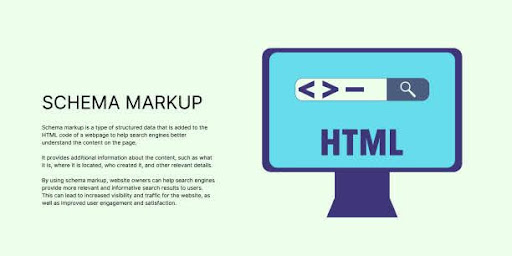
If you are wondering what structured data is, it is simply a code that categorizes your content. It provides search engines with machine-readable information about your business.
Using structured data markup in your local SEO strategy will not directly affect search rankings. However, it can increase the clickthrough rate (CTR) because Google could use your structured data markup to create a rich result.
An increase in your CTR has been shown to increase your ranking over time potentially.
There are different properties or schema categories from which you can select. It is best to choose the schema category that is most relevant to businesses.
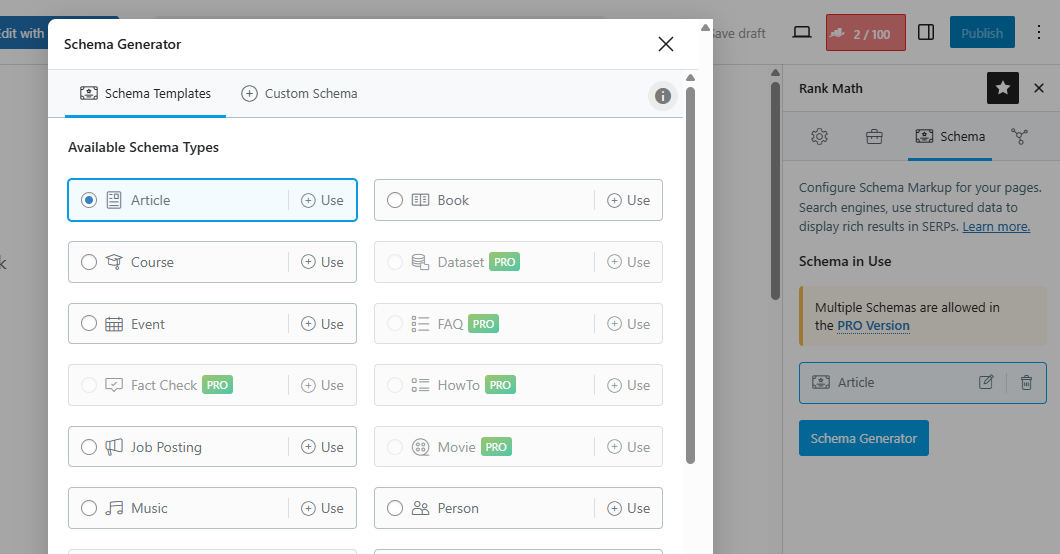
To avoid complicated coding concerning your structured data, you can use Google’s Structured Data Markup Helper. Local businesses should prioritize business. schema, organization schema, service schema, review and rating markup, geo coordinates, and opening hours.
It will take you to the page, and you can start tagging the elements you want to mark up; when you are done, it will automatically create your markup code.
Local Content: Local SEO performs best when tour content reflects real local context. Consistently create local content that is relevant to your business. This is important to establish your local authority and also as a way to create opportunities for backlinks.
This includes content around local events, weather-related services, community partnerships, and neighborhood-specific challenges. As you create this localized content, include your main keyword and location organically.
You can write content on local events and tag the businesses involved to build links. You can also join local volunteers, get featured in local posts, write on topics relevant to your local community, or create a page on your website that references other businesses in the community.
As you utilize several local SEO strategies, it is important you maintain consistent business information across all platforms.
Having different NAPs (name, address, and phone number) for your business on other platforms is similar to having duplicate content. The problem is that you will compete with yourself for a position in search results because Google might see your businesses as different.
NAP information should appear on the contact page, in the footer, on location pages, in schema markup etc.
Your website should act as the single source of truth for your business information.
Local Reviews Embedded on Pages
Displaying reviews directly on your website strengthens trust and local relevance. They reinforce geographic relevance, real-world credibility and alignment with your Google Business Profile.
The number of positive reviews across different platforms, primarily from GBP, is an important ranking signal for Google for local searches.
Google believes that having many positive reviews reflects how good your business is and its relevance to customers in that niche.
This means if you have 500 positive reviews on your profile, Google will likely rank you above someone with only 100 positive reviews.
Also, Google and AI systems often cross-reference reviews when getting summaries.
Google considers the fact that it’s easy to buy reviews by paying someone or using several accounts to drop reviews on a profile. The countermeasure to this type of spammy review is to evaluate the quality of your reviews.
Here are some factors Google uses to determine if your reviews are of high quality:
Niche keywords in your review
The authenticity of the review
Name of city in reviews
Internal Linking
Internal linking plays a major role in helping Google and AI systems understand which pages matter most for local relevance. It connects your content into a structured local ecosystem rather than isolated pages competing with each other.
For local SEO, internal links should intentionally pass authority from high-level pages, such as your homepage or core service pages, to location-specific landing pages. This signals priority and strengthens the visibility of your local pages in search results.
Well-structured internal linking also improves user experience. Visitors can easily navigate from general services to specific locations, increasing engagement and conversion rates.
Anchor text matters here. Instead of generic phrases like “click here,” descriptive anchors such as “plumbing services in Texas” or “Florida digital marketing services” help clarify geographic relevance.
When done correctly, internal linking:
Consolidates local authority across your site
Prevents keyword cannibalization between location pages
Helps AI systems identify your most important local services
Off-page local optimization focuses on everything that happens outside your website that influences how search engines and AI systems perceive your business.
Strong off-page local optimization reinforces your authority, improves visibility in map packs and AI Overviews, and increases your chances of being selected rather than just indexed.
Here are some actionable off-page optimization steps that will help to increase your local rankings:
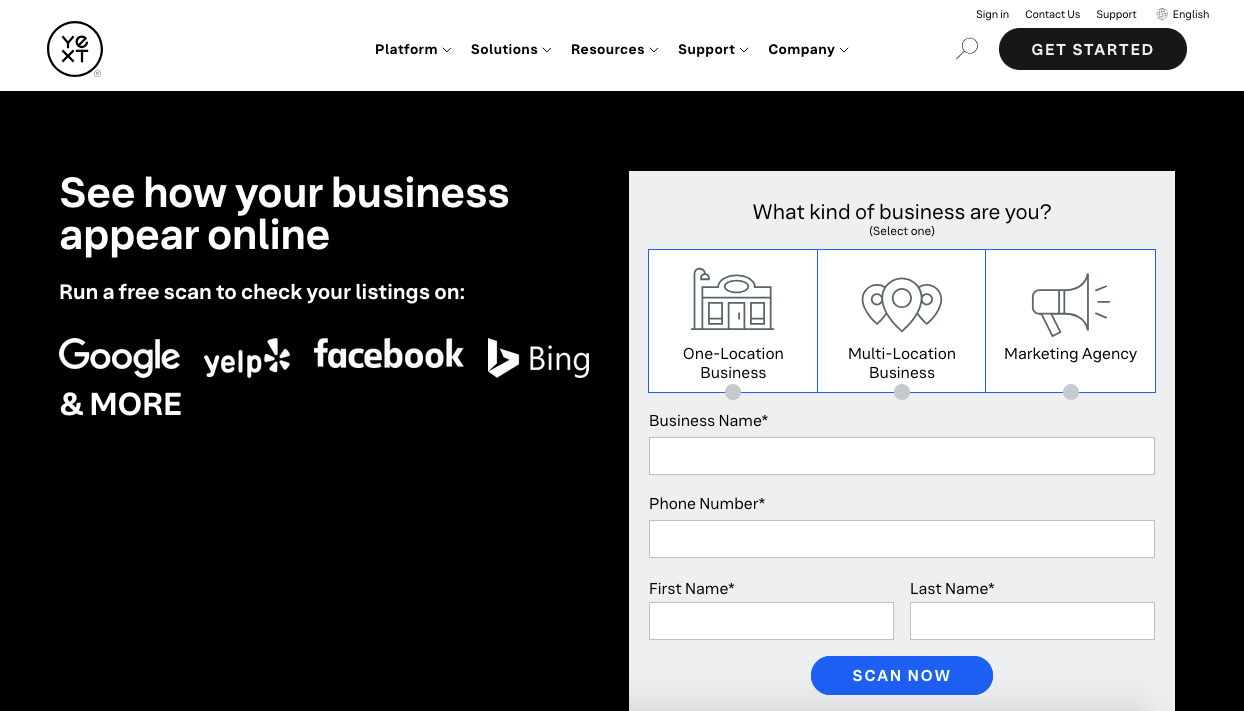
LOCAL CITATIONS AND BUSINESS LISTINGS
Local citations are online mentions of your business’s name, address, and phone number (NAP) across directories, platforms, and local websites. These citations act as digital references that help search engines verify your business information.
What matters most today is accuracy and consistency, not volume. Conflicting addresses, outdated phone numbers, or multiple business names weaken trust and reduce your eligibility for local rankings and AI-generated answers.
High-quality citation sources include Google Business Profile, Apple Maps, Bing Places, Yelp, Facebook, industry-specific directories, and reputable local business platforms. When your business details match perfectly across these sources, Google gains confidence in your legitimacy and location.
For AI systems, consistent citations reduce ambiguity. When data aligns across the web, AI can safely feature your business in summaries without risk of misinformation.
BING PLACES FOR SMALL BUSINESSES
Bing Places for Business is just like the Google Business Profile, with the significant difference being that they are available on different platforms. GBP is on Google, while Bing Places is on Bing.
It is a platform developed by Microsoft that allows local business owners to create and manage their businesses’ listings on the Bing search engine. The platform aims to enhance their businesses’ online visibility in local search results.
Listing your business on Bing is free, and you can complete your listing in just three steps:
Claim your listing:
Bing believes it already has a listing for your business, so it gives you the option of claiming an existing listing or creating a new one.
Using the bulk upload tool, you can also create a listing for all your business locations (if you have more than one).
Complete your listing profile:
All you need to do to complete your listing profile is fill in the necessary and accurate information about your business. You can include high-quality pictures of your business, your business logo, and any other pictures that are relevant to your niche.
You should also include your services, hours of operation, and how customers can reach your business (phone number, address, website, and social media).
Verify your listing:
Verifying your listing is crucial for you to be able to protect it from unverified changes.
You will receive a PIN to verify your listing at your business address, email, or phone number. You must also input a valid address if you list your business on Bing Places for Business. And you can choose to hide your address from search results.
ONLINE DIRECTORIES FOR SMALL BUSINESSES
Online directories are online platforms that list/showcase businesses, organizations, and individuals. For example, you can have an online directory that lists ‘Lawyers in a City’ or ‘Local Restaurants.’ You can also find listings of charity organizations, NGOs, etc.
These directories are used to find businesses or professionals and contact information, such as addresses, phone numbers, and email addresses.
You can also use them to find websites, product information, and reviews.
Note: Most directories list businesses or professionals in a specific niche. So, you need to find the widely used directories in your niche.
Types of online directories to list your business
There are different online directories where you can list your business. However, you need to list your business in well-known and relevant directories for your niche.
Niche-specific directories are more beneficial than generic directories because customers using a niche-specific directory are more likely to pay for your service.
Nevertheless, widely known and used directories also offer similar benefits. Here are my online directories to list your business.
Apple Maps
Apple Maps is a map service by Apple, first released in 2012 as a replacement for the previous Maps app.
At first, it had inaccurate maps and poor navigation, but it has since been improved and offers new features such as street view, transit directions, and flyover modes.
And now, with Apple Business Connect, you can also add your business to Apple Maps, which allows Apple users to find your business on Maps, Apple Wallet, Siri, etc.
Apple Business Connect supports both small businesses and large enterprises. It also has showcases and actions that can help you deliver timely information, share offers, and encourage customer engagement by ordering food, getting tickets, or booking reservations.
You can also use the Business Chat feature to communicate with your customers directly on Apple Maps.
The Apple Business Connect User Guide is a detailed guide showing you how to create a listing for your business using the Apple Business Connect Platform.
The Real Yellow Pages
The Real Yellow Pages is a widely known business directory that lists businesses and organizations by category.
Currently, Yellow Pages has over 250 different subcategories, with categories such as
Home Services
Medical Services
Auto Services
Legal Services
Pet Services
Insurance
Restaurants and Catering
Beauty and Personal Care
Arts and Entertainment
Travel and Recreation
Financial Services
Clothing and Accessories
Shopping
Community and Government
Listed businesses on the Yellow Pages have their name, phone number, address, operating hours, business photo, website link, and ratings displayed during searches.
You can also add your years of experience and a concise business bio, which will be displayed alongside your business in the result pages.
People can search for businesses based on category, location, and the exact services offered, making it an excellent choice of online directory listing for any business owner.
Foursquare is a popular tool/social media site that uses the user’s geographic location to discover places of interest closest to the user.
The selling point of this platform could be its ability to give personalized recommendations based on the user’s browsing and check-in history.
You can list your business on the Foursquare City Guide platform and allow yourself to be found by over one million users.
When a user searches for a business on Foursquare, it shows a large map view, the rankings of each business, and basic information about the business.
TOOLS FOR LOCAL SEO FOR SMALL BUSINESSES
There are different uses for local SEO tools, ranging from tracking your performance, conducting competitor research, finding local keywords that you can use for your content, and automating your rank tracking.
Here are some tools that are great to have for your local SEO strategy:
Ahrefs
Ahrefs is an all-in-one SEO toolset that offers a range of features to help you with your on-page, off-page, and technical SEO strategies.
When it comes to local SEO, Ahrefs’ Site Explorer helps you analyze your local competitors’ websites and see what keywords they are ranking for, which can help you identify new keywords you can target.
You can also use Ahrefs to discover keywords based on location, which is excellent for localized keywords. You can track online brand mentions or niche-specific topics on which you can create content.
Ahrefs has four (4) different pricing options:
Lite: $99/month.
Standard: $199/month.
Advanced: $399/month.
Enterprise: $999/month.
If you pay annually, you get two free months, and a paid version of Ahrefs gets you access to their core tools, including:
SEO Dashboard
Site Explorer
Keywords Explorer
SERP Comparison
Site Audit
Rank Tracker
Alerts
BuzzStream
BuzzStream is a link-building and outreach tool, which is excellent if you want to build the quality and quantity of your inbound links.
This tool allows you to manage your email outreaches from one place and helps you automate many processes, saving you time and increasing your productivity.
The starter plan includes contact info discovery, email templates, email scheduling, automated follow-ups, Chrome extension, link monitoring, and email performance reports.
You can try out the first three plans for free and reach out to the company if you want a solution customized to your company’s needs.
Whitespark Local Citation Finder
Whitespark offers a way to build new and relevant citations by showing you relevant places by country.
It analyzes your competitors and helps you discover new opportunities based on the results. You can find and track all your online citations and identify new citation sites to submit your business.
There is a free version, and like all free versions, it has limited search results and offers only one campaign and three (3) searches per day.
The paid plans come with four different prices:
Small Business: $33/month.
Specialist: $41/month.
Agency: $49/month.
Enterprise: $124/month.
If you opt for a yearly plan, you can save up to 20%.
Birdseye
Birdeye is a platform that focuses on helping businesses reach their customers, optimize customer experience, and increase conversion rates.
With Birdeye, you can manage your listings in major directories from a single dashboard, send automated requests to customers to review your business, and use this to increase trust in your business.
Birdeye also allows you to create new listings on over 50+ platforms, determine the accuracy of existing business listings, and synchronize them across the platforms.
Birdeye pricing is based on the number of business locations and needs, and you can schedule a pricing appointment instead of going for the prices you get.
Here is the standard pricing for a single location:
Standard is priced at $299/month and covers listings, reviews, and campaigns.
Professional, priced at $399/month, has everything in standard plus interactions.
Premium is a custom quote plan covering surveys, ticketing, insights, and benchmarking.
Moz Local Search Tool
Moz Local can check your citations across several platforms, including Google, Google Maps, Facebook, Bing, and other local search engines and directories.
Moz alerts you when there is missing or inaccurate data so you can fix it.
Other cool features of Moz Local include syncing and managing your listings, profile optimization, automatic duplicate deletion, and alerts and notifications.
Moz Local Search Tool can help you with your local SEO strategy by helping you track your existing citations. All you need to do is enter your business’s name in the tool, and you will see a list of complete, incomplete, inconsistent, and duplicate mentions of your business online.
After this, you can proceed to fix these issues manually.
However, Moz allows you to pay annually and save up to 25%.
AI and Local SEO
Leveraging AI is important in today’s digital market.
Using AI for local SEO for small businesses is also an important part of your overall strategy because it helps you save time by automating several tasks. You can automate repetitive tasks, track performance, review responses, and even create chatbots for customers to inquire, get answers, and enhance customer experience easily.
You can use AI-powered tools such as Birdeye that automate responses to clients and allow you to send bulk messages. Several AI-powered SEO tools can be used to automate some SEO processes.
This is where artificial intelligence has made most of its mark. With tools like Google Bard and ChatGPT, content creation has become easier.
You need to optimize your prompts for maximum output because these intelligence tools work with the data fed to produce an output.
This means that, to a considerable extent, what you get from these tools is based on what you input.
When implemention local SEO for small businesses, you can use AI to create optimized content in a certain tone for your audience. You can create email templates for direct outreach, outlines for your blog posts, FAQs, and other content types.
Keyword Tracking
There are several AI-integrated tracking tools and software today. In fact, most SEO tools have some form of artificial intelligence integrated into them.
Tools like SE Ranking, Rank Tracker, SEMrush, and Ahrefs can help you track competitor keywords, keywords you want to rank for, and those you already have on your website.
This allows you to know what keywords to include in your content campaign, the difficulty level of some keywords, and the average position of your keywords in SERPsas you do local SEO for small businesses.
With any of these tools, you get alerted whenever your brand is mentioned online.
This allows you to manage how your brand appears on any platform. Suppose your brand is mentioned with a wrong name, incorrect NAP, or other irregularities. In that case, you will get an alert. You will simply message whoever uploaded the information to make the necessary corrections.
You can also contact them if they posted an outdated link or if you have a better alternative for the offer, link, or brand product.
Predictive Analysis
You can use AI tools to predict search trends and customer behavior. For example, with Google Analytics 4, you can see predictive insights on your customer behavior that will show you their future preferences.
You can then create effective marketing campaigns based on these insights.
FAQs on Local SEO for small businesses
Is local SEO important for a small local business website?
Yes. Local SEO is essential for small businesses because it helps them appear in Google Maps, local search results, and AI-generated local answers when nearby customers are ready to take action.
Why are local SEO services important for small businesses?
Local SEO services are important because they connect businesses with nearby customers who havehigh purchase intent at the exact moment they are ready to act.
How do I optimize my Google Business Profile to boost local search rankings?
Optimization requires providingcomplete and accurate NAP data (Name, Address, Phone) that matches your website, selecting the correct primary and secondary categories, use of high-quality photos and proper online review management.
What is the best tool for managing local SEO performance?
There is no single best tool, but popular options include Google Business Profile Insights, Google Analytics 4, Google Search Console, Whitespark, Moz Local, and Ahrefs for tracking rankings, citations, and visibility.
Do I need to have a physical store to implement local SEO for my small business?
No, you do not need a physical store to implement local SEO. You can always start with having a Google Business Profile and optimizing it for your target keyword.
Where can I find an affordable local SEO consultant?
SARMLife offers affordable local SEO services that covers tasks like GBP creation, optimization, local SEO research, loacl schema markup, review management, among others.
Which online directories and platforms should my small business be listed on?
This depends on the directories peculiar to your type of business. However, you can always list your business on popular directories like Yelp.
Most SEO advice wasn’t created with small businesses in mind, and that’s why many of the mistakes small business owners make when using SEO aren’t caused by lack of effort, but by following the wrong guidance.
After working closely with a wide range of small businesses, I’ve noticed a pattern. The same SEO mistakes show up repeatedly, regardless of the industry.
Unlike large companies with dedicated marketing teams and expansive budgets, small business owners rarely have the luxury of time, resources, or trial-and-error freedom. Yet, the biggest problem isn’t money.
Instead, many small businesses rely on quick fixes, copy-and-paste strategies, outdated SEO advice, and endless “test and learn” cycles without a clear direction. The result? Little to no growth, poor visibility, and missed opportunities.
At SARMLife, we’ve worked with numerous small business owners who came to us frustrated and discouraged by ineffective SEO efforts. After reviewing their websites, the issues were often obvious, and more importantly, they were the same issues we’d seen countless times before.
What makes SEO especially tricky is that many problems don’t look serious at first. They appear as “minor issues.” Over time, however, these small missteps quietly erode your ability to attract the right audience, rank competitively in search results, and convert website visitors into paying customers.
One of the most frequent mistakes small business owners make when using SEO is improper keyword targeting. Small businesses are no exception and often make the error of speculating that consumers are seeking rather than conducting adequate keyword research. They either do one of the following:
Target very generic keywords (e.g., “shoes” instead of “women’s running shoes in New York”) and compete against giant brands.
Use meaningless keywords that do not relate to the intention of their searches.
Stuff too many keywords into articles without considering readability.
Why it Matters
Today’s search engines are intelligent. Even with AEO, GEO and LLMs, relevance and intent come first.
When your keywords do not align with what your public is genuinely looking for, you’re going to rank low or get the wrong traffic—the traffic that does not turn into consumers.
How to Fix it
Use tools like Ubersuggest, Ahrefs, or SEMrush to identify keywords that your target audience is currently searching for.
Opt for long-tail keywords that are intent-rich, such as the term “best natural hair care products in New York,” rather than the generic term “hair products.”
Select a combination of low-to-medium competition keywords with a decent search volume.
Also, don’t neglect to address customer questions and concerns. They often yield better results than one-word keywords.
When done correctly, keyword research positions your business in front of the people where they already are.
2. Poor On-Page Optimization
On-page optimization is the basis of visibility. Still, innumerable small companies either disregard it or get it wrong.
Some typical mistakes are:
Missing or duplicated title tags
Weak or unoptimized meta descriptions.
Wrong use of header tags (H1, H2, H3…etc).
Keyword stuffing instead of naturally meshing them into content.
Not offering internal linking to related pages.
Why it Matters
On-page factors are among the strongest indicators Google uses to understand your content. If your page doesn’t clearly convey its topic, Google won’t rank it for relevant searches.
Worse, even with the traffic you do get, bad titles and descriptions will destroy your click-through rate.
How to Fix it
Make distinctive and descriptive titles and meta descriptions for each page.
Use headers to logically structure your content.
Optimize images with alt text for accessibility and for search engine purposes.
Add internal links to help readers navigate your site and stay engaged.
Think of on-page optimization like housekeeping: a messy house is going to turn away guests—and Google is going to distrust it too.
This is one of the most common mistakes small business owners make when using SEO. Despite having solid keywords and content, small businesses often struggle with technical SEO. And because they don’t know how to go about it, they end up ignoring it completely.
Among the most common technical SEO challenges are:
Failure to appropriately index the pages.
Crawl errors due to dead links or redirects.
Poorly structured site architecture that prevents proper navigation by search engines.
Duplicate content issues.
Why this Matters
If search engines can’t crawl and index your site, your content won’t appear in search results at all. Technical SEO may not be visible to your audience, but it has a direct impact on your site’s ability to rank.
Ensure your site has a logical, easy-to-follow structure.
Continue to monitor for dead links and fix them on a regular basis.
In a nutshell, great content is irrelevant unless Google can effectively “read” your site.
4. Slow Website Speed
One of the least understood variables in SEO is site speed. Research reveals that most users abandon a page that takes more than three seconds to load.
Small companies often resort to low-cost hosting companies, which can overwhelm the websites with low-optimized images or add more plugins, thereby slowing the site.
Why it Matters
Not only does a slow site annoy users, but it also hurts your ranking. Google has listed site speed as a proven ranking factor. A slow site flags poor user experience, and that is something the search engines do not reward.
How to Fix it
Invest in quality hosting.
Compress and enhance images.
Utilize caching plugins and content delivery networks (CDNs).
Test your site’s performance frequently with Google PageSpeed Insights and other performance testing tools.
A quick site conveys professionalism and enhances both SEO and user believability.
5. Ignoring Local SEO
One of the biggest mistakes small business owners make when using SEO is treating SEO like a one-size-fits-all strategy.
If you’re running a bakery in New Jersey, ranking for “best cake shops in the United States is nice—but what really matters is ranking for “cake shops near me” when someone in New Jersey searches.
Inconsistent business data (Name, Address, Phone) among listings.
Not encouraging customer reviews or mediocre online review management.
How to Fix it
Claim and verify Google Business Profile.
Standardize NAP across all online locations.
Actively listen to and respond to customers’ comments and concerns.
Utilize long-tail terms such as “boutique hotels in Tuscany” rather than generic terms.
Reach out to our team via email: hello@sarmlife.com to help you create, optimize and manage your business profile and online reviews.
Local SEO is often the difference between small firms going unnoticed and being seen by potential customers.
6. Producing Low-Quality Content
Many small business owners still believe that possessing content is sufficient. Therefore, they write flimsy, generic blog articles filled with keywords but lacking value.
Others plagiarize the content of the competition, and that results in duplicate content penalties.
Why it Matters
Google’s algorithm is designed to reward high-quality, original, and valuable content. Your content has to fix real problems for your readers for you to rank—and even then, readers won’t hang around.
How to Fix it
Quality trumps quantity—write one great blog post rather than a dozen poor ones.
Ensure that you write something that educates, entertains, or responds to a question.
A combination of formats is often the best approach: blogs, videos, and infographics.
Revise outdated content to keep it current and relevant.
Your content is your online voice. Ensure that it conveys authority, clarity, and purpose.
7. Neglecting Analytics and Tracking
The most under-estimated blunder is failure to achieve results.
Small enterprises either fail to set up tools like Google Analytics or utilize them poorly. Without proper SEO analysis, you have no data to measure growth and you will be navigating your SEO ship in the dark.
Why it Matters
SEO is not traffic- it’s results. You must identify which pages rank, which keywords are converting, and where traffic is coming from. Without data, you cannot fine-tune your approach.
All of the above mistakes, taken in isolation, might seem trivial, but when combined, they might fatally jeopardize your online persona. By avoiding them, you will have:
Concise and Direct Objectives: With the blending of keywords, on-page optimization, and analytics, you get a quantifiable objectives strategy.
Optimized Business Strategies: Your business has a chance of competing with even larger companies when technical issues, local SEO, and quality content are correctly handled.
Sustainable Profits: SEO is no quick fix but a long-term investment. Correcting these errors secures the continued ability of your site to achieve traffic, leads, and customers far into the future.
SEO is no longer an option for small businesses– it’s a requirement. However, many small business owners inadvertently harm themselves and jeopardize their business’s success through preventable mistakes.
From poor keyword targeting to overlooking local SEO, many of these errors stem from a choice between success and oblivion online.
At SARMLife, our vision is that with the proper knowledge and tools, every small business can utilize SEO to achieve visibility, trustworthiness, and revenue growth.
Steer clear of the seven common mistakes above, and you’d have taken the first step in making SEO work for you and not against you.
FAQs on Common SEO Mistakes
What are the most common SEO mistakes that small businesses make?
The most common SEO mistakes small businesses make are poor keyword research, neglecting on-page optimization, technical SEO, and local SEO, slow site speed, low-quality content, and failure to monitor results.
Why do small businesses fail at SEO?
Small businesses fail at SEO primarily because they lack a clear strategy, are reliant on outdated methods, or do not track progress.
How much do SEO mistakes cost businesses?
The cost varies, but it often stems from lost traffic, slower conversion rates, and missed growth opportunities.
Does page speed really affect SEO?
Yes. Google has also reiterated that the site speed is a ranking factor. A slow site will likely negatively user experience and rankings.
Why is ignoring local SEO a mistake?
Since local SEO targets consumers who are actually ready to purchase in your local area, ignoring it will cost you leads and sales.
For more business strategies and tailored SEO support, send us an email at hello@sarmlife.com to stay updated.
If you’ve ever worked in a digital marketing or SEO agency, you’re likely familiar with the terms “follow links” and “nofollow links.” They refer to particular types of links you can find on a web page.
Though follow and nofollow links may look the same on a website to the average visitor, they function differently and have very different implications when it comes to a website’s performance on search engines.
Here’s a simpler explanation: links are essentially highways on the web. Some highways bring a stream of vehicles directly to your site, accompanied by endorsements (follow links), while others only display a signpost in your direction without any guarantee (nofollow links).
For a website owner, blogger, or aspiring entrepreneur, grasping the distinction is essential.
This article will unpack the definition and workings of follow links and nofollow links, explain the impact of these types of links on SEO, provide guidelines on when and where to use each type, teach you what they look like in HTML, and explain how to check them.
After reading this, you should be able to make better decisions that will enhance your website’s visibility.
When we think about links, a no-follow link instructs search engines not to transfer ranking value or ‘link juice’ to the target page. In 2005, Google introduced this feature as a response to combating link spam, particularly in blog comments.
From a technical standpoint, a no-follow link is identified by the rel=”nofollow” attribute in the HTML markup. For example:
To a user, the link looks and behaves like any other link—they can click on it and navigate to the target page.
To search engines, however, it acts as a special indicator that states, “I am linking to this page, but I neither endorse it nor wish to pass any ranking credit to it.”
This feature, of course, doesn’t imply that no-follow links do not have a purpose. Like any other links, no-follow links continue to drive referral traffic and enhance brand visibility while also improving your backlink profile.
As the two types of links function differently, we are going to analyze the no-follow links in comparison to the follow (dofollow) links.
Key Differences Between DoFollow and Nofollow Links In SEO
We begin by looking at these three key differences that set these two links apart:
Impact on SEO (Link Equity)
This factor is, by far, the most critical difference.
Follow (DoFollow) Links: Unlike others, these generate SEO value (commonly referred to as link juice) for other websites.
If an influential site links to your blog with a follow link, it acts as an “endorsement” in the eyes of the search engines. This process is particularly good for your ranking.
For example, imagine Forbes linking to your small business with a follow link. Google promotes your visibility by considering the link as “Forbes trusts this site.”
Nofollow Links: These links do not pass on link equity and therefore do not have any direct impact on your search ranking.
However, Google has changed its perspective over the years, and the “nofollow” tag is no longer a strict instruction but a “hint” to be considered.
Therefore, nofollow links may have some indirect benefits for search engine optimization, especially if they originate from authoritative websites.
Example: A nofollow link from Wikipedia may not pass SEO juice, but it can still generate enormous referral traffic and, in a way, signal relevance to the search engines.
If you want to improve search rankings, you need follow links. However, nofollow links should not be ignored—they contribute to authority-building, traffic-driving, and enhancing a website’s backlink profile.
Both follow and nofollow links are necessary. The issue is not about selecting one, but about knowing when to apply each.
When to Use a Nofollow Link
Nofollow links are suitable for use when there is no intention to pass SEO credit to another page. Some examples include:
Sponsored Content: Google requires that all paid advertisements or sponsored content include the rel=”sponsored” or nofollow attribute. These tags serve as a barrier to advertising firms buying rank through ads.
Blogs, Forum Postings, and Other UGC (User-Generated Content) Submissions: Blog comments, forum posts, and other forms of user-generated content generally acquire nofollow tags automatically to combat spam.
Low-Quality Sites: Use no-follow links to cite websites that you do not trust, thereby avoiding any association between your site and the low-quality site.
Irrelevant or Duplicate Pages: Do you have off-topic or duplicate content to link to? If so, using nofollow makes it safer.
Example: Imagine you have a fashion blog, and someone comments with a link to their unrelated cryptocurrency site. Since you make it no-follow, you do not automatically award them any SEO credit.
When to Use a Follow Link
Follow links serve as a go-ahead signal—they are to be used when authority needs to be passed. Some of the common use cases include:
Internal Links: Using follow links to link your pages to one another not only allows easier crawling of your site by search engines but also helps distribute ranking power.
Credible External Sources: Linking to and citing well-known sites (government sites, research papers, or reputable blogs) improves your own site’s trustworthiness.
Example: If you’re writing a healthcare blog and link to a CDC study, the follow link indicates that you are referencing a reliable source.
Protect your site’s SEO reputation with nofollow links. With follow links, you can share trust and authority.
Appearance: How They Look in HTML
To a regular user, follow and nofollow links look exactly the same, or at least identical. The reason is that they are both clickable, blue texts. The difference is in the HTML.
Some people assume that nofollow links are “worthless” because they don’t pass link juice. That’s not true.
Here’s the distinction:
Visit & Exposure: A nofollow link on a popular page (think Reddit or Wikipedia) can generate a surge of visitors.
Authentic Link Profile: To Google, a well-balanced backlink profile consists of a blend of follow and nofollow links. Having all follow links can raise a red flag.
Brand Awareness: Although nofollow links may not transfer authority, they still effectively showcase your brand to the target audience.
Think of follow links as your SEO currency, and nofollow links as your brand visibility and equilibrium—both matter.
In SEO, links labeled ‘follow’ and ‘nofollow’ might have a well-defined but minor difference. A simple tag in HTML is all it takes to differentiate, but the two have widely different impacts.
In SEO, follow links pass value and help you rank higher than your competitors; therefore, link-building campaigns should be focused on acquiring such links.
While nofollow links do not pass any link juice, they still offer brand visibility, traffic, and balance to your backlink profile.
Savvy SEOs understand the importance of both types of SEO links and the nuances in their application. Use follow links to improve your search engine positions and use nofollow links to maintain compliance, prevent search engine penalties, and access new markets.
FAQs on Follow and Nofollow Links
Do nofollow links have a negative impact on SEO?
NO. Nofollow links do not harm SEO. They do not contribute to link juice, but they are crucial for maintaining a credible link profile, especially for large enterprises.
Does Google crawl nofollow links?
Yes, Google can crawl nofollow links; however, the search engine may decide not to pass link authority to them.
What is the SEO difference between dofollow and nofollow links?
Follow links pass on SEO value (ranking power), but nofollow links do not.
What is the difference between a nofollow link and a nofollow meta tag?
A nofollow link is applied for a single link, a nofollow meta tag instructs search engines to ignore all outbound links on the webpage.
Want to get the most out of your website’s links? DM us on Instagram — we’ll help you grow your link profile the right way.
Nowadays, success looks more digitally oriented with digital careers reshaping what success looks like to young people. We have university graduates bagging remote tech jobs like marketing leads, software developers, data scientists, cloud computing experts, and so on.
With this, young Africans can thrive in careers that are relevant beyond the shores of their countries and contribute to the continent’s collective digital economy.
This is where you and I come in. How can we be a part of this drift?
SARMLife has found a way because with the SARMLife Digital Skills Training, we hope to recruit young minds like you eager to contribute to this robustly growing digital economy.
From the streets of busy Lagos, the gold coast of Ghana to the safari capital – Nairobi, young Africans are discovering that a single digital skill can change their lives forever.
However, there are several challenges to learning a digital skill in Africa and we hope to mitigate some of them.
Now entering its 2026 edition, the SARMLife Digital Skills Training continues its mission to equip Africa’s youth with in-demand, employable, and transformative digital skills.
With two distinct learning tracks (Tech and Marketing) for the 2026 edition, supported by practical mentorship, soft skills development, and career and employability-based webinars, SDST 2026 is going to help you gain future-ready skills that will amaze your future employers.
In 2019, Ruth Adeyemi was able to learn a digital skill during the course of her 1-year service to her home country, Nigeria.
This opportunity brought a realization of the extent of the digital divide in Africa, and the efforts that are being made to bridge this gap. It birthed a passion in her to give back to her community.
She pursued this passion and in 2019, SARMLife was able to sponsor two students in learning skills outside of their course of study. One of them learnt the Chinese language, while the other learnt fashion design.
By 2020, SDST was born and we started with just five(5) digital courses valued at five thousand naira only (#5,000) with Nigeria being the sole target country.
By 2025, SDST had extended to the point where we had participants from five different African countries excluding those in diaspora. In 2025 alone, we had over 300 registered students and 8 sponsors.
Besides the training, the SARMLife digital skills training (SDST) also includes mentorship, soft skill development, career fairs, and employability-based webinars.
We also got featured in two reputable media outlets – ThisDay and BusinessDay; and this is still scratching the surface of where SDST is going.
At its core, SARMLife’s vision for SDST remains “to equip Africans with the skills, support, and structure they need to turn their potential into purpose”.
From Ruth’s journey to learning a digital skill, SDST has evolved into a movement that hopes to empower thousands of Africans every year.
We are incredibly proud of the results we have been able to achieve with SDST.
Here are some reviews from our students:
Dorcas Pinkrah Kyei – Ghana
“SDST has helped me to stand out in my career as an Administrative Officer. It has also taught me to leverage my already existing skills, like Graphic design and Excel, to work efficiently.”
Her pursuit of digital skills has opened her up to an opportunity to pursue her Master’s Degree in Project Management with a focus on Analytics at Northeastern University in Boston, USA.
Zainab Babalola Olajuwon – Nigeria
She started building her brand in the healthcare marketing space immediately after SDST, and she had a 3-month Internship contract with a US-based pharmaceutical company named The Academy of Population Health Pharmacy (aPHP)!
In her words:
“SDST has helped improve my career journey, and I cannot wait to do much more with the skillset I have acquired.”
Grace Doh – Ghana
She joined SDST as a Public Relations officer at the University of Health and Allied Sciences, and after that, she got a promotion. In less than 3 months post-SDST, she improved steadily on her digital skills.
Grace joined SDST with a strong desire to learn digital skills to increase her employability/promotion prospects.
What’s more impressive? She started her course with SDST during her maternity leave. After SDST 2024, she became the sole social media manager for the university and increased the followership from 2.6K on the university’s Facebook account in 3 months to 3K.
Equally, she now manages the school’s official social media pages: Instagram, Twitter, and LinkedIn accounts.
NOTE: These are just a few of the successes we’ve registered so far.
Several of our students can secure freelance roles, internships, or collaborative projects that allow them to apply what they learned in real-world settings.
Despite these successes, we do not relent on our efforts and we continuously communicate with the alumni to know how we can make SDST even better.
The feedback and lessons from SDST 2025 directly shaped the 2026 program design.
Alumni requested deeper course content, more flexible study timelines, and expanded mentorship support. With SDST 2026, we are introducing exciting features based on this feedback.
The 2026 edition of the SARMLife Digital Skills Training (SDST) will feature new changes that are meant to provide the students with future-ready skills that will help them stay relevant in the coming years.
Two of the most common feedback we got from past SDST students were that they often got overwhelmed because the timeframe to learn all the courses was too short, and that some wanted more tech-related courses, while some wanted none.
With the previous editions of SDST, students were required to learn all of the courses, and this feedback meant that they would have preferred a bit more flexibility with choosing the courses they wanted to take.
With this in mind, we decided that for SDST 2026, we will offer the students a chance to choose between tech-based and non-tech-based courses.
The Tech Track:
This track is designed for tech enthusiasts.
Courses in this track include Software Development, UI/UX Design, AI & Machine Learning, Data Science, and analysis.
The Non-Tech (Marketing) Track:
This track is built for the storytellers, marketers, and strategists who are more interested in ideation, branding, and creativity.
Courses in this track include Digital Marketing, Content Writing, Visual Content Creation, and Project Management.
This track-based structure offers a lot more flexibility than past SDST editions and allows the students to focus on courses where they have a significant interest.
However, we understand the possibility of some students being interested in learning ALL of the courses, and we also made provisions for them.
For students interested in both tracks, they can re-register for the second batch of SDST 2026 for FREE!
2. INTEGRATION OF AI & REAL-WORLD APPLICATION
At SARMLife, we understand that the world is rapidly shifting toward AI-driven solutions.
As part of our mission to provide access to in-demand skills, we have decided to integrate Artificial intelligence into our courses.
This starts with a full course on Artificial Intelligence and Machine Learning which is accessible to all Tech Track Students.
Aside from this, we also have Generative Engine Optimization as a part of the Digital Marketing Course, which is accessible to all Marketing Track Students.
We also ensured that for the other courses, the coaches will explain and show students the specific impact of AI and future projections.
This approach helps participants stay ahead of the curve and positions SDST 2026 as one of the most forward-thinking digital skills training programs in Africa.
The mentorship program for SDST Students started last year, and 2026 is going to take it even further.
Each participant will be paired with experienced professionals and SDST alums, across key fields related to their chosen tracks.
Mentors will provide:
Check-ins and progress assessments
Real-life insights into career paths of interest.
Personalized feedback sessions to guide learners beyond the classroom.
This deeper mentorship model ensures that every student receives consistent guidance and motivation turning knowledge into confidence and career clarity.
4. CAREER READINESS AND EMPLOYABILITY
The focus of SDST is not just about the skills, but also about the growth of the students.
Unlike many digital training programs, SDST 2026 doesn’t stop at learning. It prepares students for the world of work.
Learning a skill is one thing, but knowing how to use this skill is another. That is why SDST places strong emphasis on career readiness.
We believe that a certificate is only valuable when it leads to real opportunities backed up with ability. That’s why SDST 2026 focuses heavily on employability and career growth.
Every participant will benefit from:
Soft Skills Development: This is a full course and will run through the entire SDST timeline. Training covers communication, leadership, and problem-solving skills among others.
Career Webinars: Interactive sessions with industry professionals and mentors guiding students on the right career paths.
Job Fairs and Workshops: Designed to connect learners with real employers and internship opportunities.
Through these, students learn how to position themselves for both African and global opportunities. Additionally, SARMLife’s alumni and sponsor network continues to grow; offering collaboration, visibility, and internship opportunities with partner organizations.
5. ACCESSIBLE AND AFFORDABLE
SARMLife Digital Skills Training was created to make digital education accessible to all Africans — regardless of background or location.
With a minimal enrollment fee of NGN 25,000 (Twenty-Five Thousand Naira ONLY) and a strong focus on impact over profit, SDST 2026 provides a bridge for thousands who want to start or grow digital careers without financial or geographic barriers.
At its heart, SDST 2026 embodies the campaign message:
“Where a single skill can change your life.”
And for many Africans, that change begins here with SARMLife Digital Skills Training 2026.
Partnerships and collaborations expanding SDST’s reach.
With the envisioned scope of SDST 2026, we know we cannot do it alone.
At SARMLife, we have always believed in collaborative efforts and that is how we have been able to achieve the amount of impact we have now.
The vision of SDST 2026 is to build a continent-wide system that supports and connects students with mentors, organizations, and industry leaders. We hope to be able to give them the first push into a prosperous digital future.
As we expand the SARMLife Digital Skills Training (SDST) program across more African countries, we’re opening the door to strategic partnerships that can help scale this mission.
We need forward-thinking brands to sponsor students, organizations to offer internship spaces to deserving students, mentors willing to refine raw talents and turn them into forces within their industry, media houses willing to promote this opportunity to the masses, influencers who are willing to promote and sponsor interested followers, and passionate, empowered individuals willing to bring about change.
These collaborations and partnerships will make it possible to:
Provide learners with access to professional tools and resources,
Offer useful and substantial prizes to top students,
Offer internship and job placement opportunities across industries,
Support innovation through sponsored projects, mentorships, and skill challenges, and
Amplify SDST’s message to reach more Africans across regions and languages.
If you or your organization shares our belief that a single skill can change a life, SARMLife invites you to be part of the story. Whether through sponsorship, mentorship, or collaboration, your contribution can help us equip more Africans with the skills and confidence they need to thrive in the global digital economy.
Every edition of SARMLife Digital Skills Training (SDST) reaffirms one simple truth — Africa’s greatest potential lies in its people. With every learner trained, every mentor connection built, and every story of transformation shared, SDST continues to shape a continent ready to thrive in the digital era.
As we step into SDST 2026, our mission remains unwavering: empowering Africans for the digital future.
Through accessible learning, practical mentorship, and meaningful community support, SARMLife is not just teaching digital skills, we are building pathways to independence, innovation, and impact.
This year’s theme, “Where A Single Skill Can Change Your Life,” is more than a tagline; it is the heartbeat of everything we do. It’s a reminder that one decision to learn, one course, one mentor, or one opportunity can open doors to a lifetime of transformation.
Whether you’re an aspiring learner, a mentor, or an organization seeking to make a difference, we invite you to be part of the SDST 2026 journey. Together, we can turn potential into purpose and ensure that Africa doesn’t just participate in the digital future — it leads it.
One skill can indeed change your life. Be a part of SDST 2026 and start your digital transformation journey.
If your business isn’t leveraging video content for SEO in 2025, you’re leaving visibility and conversions on the table.
Gone are the days when SEO was limited to keyword-rich blog posts and backlinks. Today, video content isn’t just trending; it’s dominating.
With platforms like YouTube doubling as search engines and Google integrating video results directly into SERPs, it’s clear: understanding and applying video SEO strategies is non-negotiable if you want to be seen.
In this blog post, we’ll unpack the latest video SEO strategies, walk you through how visual content boosts video SEO rankings, and show you how SARMLife helps creators, businesses, and marketers turn video into a serious SEO weapon.
Video content has become the heartbeat of modern digital strategy. Here’s why it’s a critical component of your SEO playbook:
Boosts engagement: Pages with video are 53x more likely to rank on Google’s first page.
Improves time on page: Users stay longer when there’s a video to watch, signaling value to search engines.
Reduces bounce rate: Well-placed videos lower the bounce rate by giving users what they came for quickly.
Enhances UX: Google’s algorithm favors content that provides a seamless, engaging user experience, and videos do just that.
According to Vbout, adding video to a landing page can result in conversion by up to 80%. Wyzowl’s 2024 Video Marketing Statistics report showed that 91% of marketers believe video has contributed to the significant increase in user understanding of their product or service.
That’s not just video SEO marketing fluff; it’s a clear sign that videos are becoming a foundational pillar of online visibility.
Images still matter, and when optimized, they support your video strategy by enhancing the overall content experience. Here’s how to make them work for you:
Alt text: Always describe your image using natural, keyword-infused language. Alt text improves accessibility and helps search engines “read” your visuals.
File naming: Ditch generic names like “IMG_20250611.jpg.” Instead, use descriptive, SEO-friendly names like “youtube-video-seo-guide-2025.jpg.”
Compression: Use tools like TinyPNG or Squoosh to reduce file size without losing quality. Formats like WebP are now preferred for speed.
Responsive images: Ensure your visuals adjust to all screen sizes and resolutions. This system is essential for mobile-first indexing.
Lazy loading: Load images, especially when they enter the viewport. This process improves page load time, which is another critical video SEO ranking factor.
2. Image Schema & Structured Data
Structured data ensures search engines display your content more richly in SERPs. For visuals, using the ImageObject schema can increase the probability of your content appearing in Google Images and Discover.
Use cases:
Product images with structured markup in e-commerce
Infographics with HowTo schema
Step-by-step tutorials with both text and image breakdowns
By combining compelling imagery with schema, your visuals not only catch the eye but also earn rankings.
Optimizing where and how your video appears on a webpage is just as important as the content itself.
Titles and descriptions: Use your target keyword early in the title and include compelling CTAs. Example: “Video SEO Hacks in 2025 | Rank Higher on Google with These Tips.”
Surrounding text: Context is everything. Include relevant blog content or captions near the video to give Google more to crawl.
Above the fold: Position your video high on the page, preferably before a user needs to scroll.
Technical Enhancements
These are non-negotiable if you’re serious about visibility:
Video schema markup: This helps Google understand the video content. Include fields like description, uploadDate, and duration.
XML video sitemap: This informs search engines about the location of your videos and how to crawl them efficiently.
Hosting vs. embedding: Hosting on YouTube provides reach and built-in traffic, while self-hosting or using Vimeo offers brand control. The right choice depends on your goals.
YouTube SEO Essentials
As the world’s second-largest search engine, YouTube demands its optimization strategy:
Use keywords in titles, tags, and descriptions: Research your niche and use high-ranking phrases like “Video SEO for YouTube” or “YouTube SEO course.”
Custom thumbnails: These have a significant impact on click-through rates. Make them bold, branded, and relevant.
Add chapters: Use timestamps to help viewers and Google understand your video’s structure.
End screens and cards: Direct traffic to your other content and increase watch time.
Encourage interaction: Likes, comments, and shares all signal to YouTube that your video should be promoted.
The SEO landscape is evolving, and video optimization is at the forefront of these changes.
Here’s where things are heading:
Voice search and conversational keywords: AI search tools, such as Search Generative Experience (SGE), prioritize human language. Your scripts and subtitles should reflect this.
Multimodal indexing: Google is analyzing both visual content and text transcripts to determine relevance.
AI-generated summaries: Search engines are pulling key points from your videos. Clear scripting equals better results.
Your video strategy must evolve beyond “upload and hope.” Strategic scripting, optimization, and technical enhancements are the new standard.
How SARMLife Helps You Optimize Multimedia for SEO
At SARMLife, we don’t treat video content as an afterthought; it’s part of your SEO strategy from day one.
Here’s how we help you win:
SEO-centric storytelling: We write content that integrates videos and images naturally to keep users engaged and search engines happy.
Multimedia SEO strategies: From schema to sitemaps, we implement every technical detail needed for visibility.
Visual-first content planning: Whether you’re publishing on YouTube or embedding in a WordPress blog, we create content that performs where your audience is.
Proven results: A SARMLife client saw a 30% increase in video impressions and earned a spot in Google Discover within two months of implementing our strategy.
Our approach is rooted in one fundamental belief: content should be both searchable and scannable yet unforgettable.
Visual and video SEO is no longer optional. It’s fundamental. And the best part is that you don’t have to do it alone.
SARMLife can help you:
Create high-impact, keyword-aligned video content
Implement the technical details that search engines require
Craft multimedia campaigns that look good and rank
Whether you’re a coach building a YouTube funnel, an entrepreneur launching an online course, or a brand expecting to stand out in a saturated space, we’ve got the video SEO tools and strategies so that your content will be impossible to ignore.
FAQs about Video SEO Hacks
What is video SEO, and why is it important?
Video SEO means optimizing videos to appear in search engine results. It increases your visibility, boosts engagement, and improves ranking.
How do images affect SEO rankings?
Optimized images lower bounce rates and improve site experience, both of which positively impact your rankings.
What is image alt text, and why does it matter?
Alt text gives you a textual description of your image, helping search engines understand its content. It’s also crucial for accessibility.
Should I host videos on my site or YouTube?
YouTube offers discoverability, while self-hosting gives branding control. Many brands benefit from a hybrid approach.
How can SARMLife help with content optimization?
SARMLife provides end-to-end multimedia content support—strategy, writing, optimization, and implementation—built to rank and convert.
Are you ready to rank higher in 2025? Start by optimizing just one video. Then, let SARMLife help you scale with a data-driven video SEO strategy that’s built for what’s next.
In today’s world, smartphones have gone beyond digital communication devices. They are now our hand extensions. Google recognized this fact and made a game-changing decision that changed the SEO landscape for good: mobile first indexing.
Mobile first indexing in SEO is an initiative by Google that primarily uses a website’s mobile version for ranking and indexing. This concept has evolved over the years and continues to grow. The first indication of Google’s involvement in the mobile-first indexing test was in 2016.
Two years after its initial introduction in 2016, Google began rolling out a larger-scale version of the mobile-first indexing initiative.
The 2025 mobile first indexing update allows only websites with excellently optimized mobile versions to rank.
In other words, if the web version of your website does not match the mobile version or lacks one, your content will not rank, regardless of how optimized that content is.
Hence, if you have wondered why your fully optimized content does not rank, you may have a mobile-first indexing problem. This article will examine Google’s mobile first indexing in 2025, its SEO implications, and how to leverage it to remain on Google’s first page in 2025.
The evolution of Google’s ranking signals has capped at prioritizing user experience on mobile devices. This means that Google now uses a mobile version lens when criticizing certain SEO elements on your website and content.
For instance, Google understands that more pages are now viewed via mobile devices. Hence, every website needs to prioritize page load speed for mobile users. For Google, why rank them when people don’t wait to see what they’re about?
Mobile usability is another important feature. Your website must have readable content, and its touch target must be excellently optimized.
When the performance of the mobile version of your website is low, critical user behavior data, such as bounce rate and session duration, will drop significantly. In essence, a poorly optimized mobile version of a website will lose users, rank low, and have poor conversion rates.
Performance is the primary determinant of how visible you will be on Google. The performance of your website’s mobile version goes beyond user experience.
As Google has focused on a mobile-first approach as the ranking standard, be aware that every design decision affects your ranking directly.
Hence, if you want your website to thrive in the mobile first indexing SEO landscape, here are the optimization fundamentals you should master.
1. Responsive Design vs. Dynamic Serving
One of the foremost decisions you will make when optimizing your website for mobile first indexing on Google is how you intend to serve content. Google recommends a responsive design for serving content optimally on your website.
This method utilizes the exact URL and employs CSS to adapt your layout, regardless of the size or type of mobile device.
Using a responsive design on your website when optimizing for mobile first indexing will ensure the site’s functionality and content consistency across devices.
Another mobile-first optimization method you can employ is dynamic serving. This method delivers different, yet suitable, HTML depending on the device from which the user is viewing the site.
Dynamic serving SEO is a good choice. However, this method requires constant maintenance, which can often pose a challenge for search engine optimization (SEO).
2. Page Load Speed and Core Web Vitals
Page load speed is another key factor you must master if you want to achieve good mobile optimization. The average load time for any website on a mobile network is 2.5 seconds.
Any load time higher than that may mean your site has a slow page load speed. Here are ways you can improve your page speed.
Optimize the images on your website.
Reduce heavy script usage.
Minimize the server response times.
Take advantage of browser caching.
Regarding speed assessment, you will need the Google Core Web Vitals. This mobile-first optimization fundamental is essential, especially for Cumulative Layout Shift (CLS), Largest Contentful Paint (LCP), and First Input Delay (FID).
These metrics directly affect your site’s Google ranking and the performance perception of your users.
3. Touch Navigation and Design
Your mobile-first website should have a smooth and intuitive touch design. Ensure your interactive buttons are not too tiny for fingers to tap on. The generally accepted dimensions are 48 pixels for the height and width of your button icons.
Additionally, ensure your interactive buttons have sufficient space. When clustered, users will have multiple accidental taps, which can be discouraging.
Test toggles, sliders, and dropdown menus on different screen sizes. This testing ensures they function consistently across various devices.
4. Font Size and Readability
Many website owners and developers overlook this fundamental, but that is a risky game to play. No user wants to stay on a website that does not display words clearly or correctly for reading and comprehension.
Hence, prioritize font size and readability when optimizing your website for mobile first indexing. Google does not overlook this factor when ranking your website.
The minimum font size for body text should be 16px. This font size allows readers to view your content without needing to zoom the page. Additionally, ensure that all text is rendered clearly and neatly for smaller screens.
Furthermore, writing articles in blocks of long paragraphs is a bad idea. Doing that makes reading difficult for users, and it gives your page an untidy look. Use short blocks of paragraphs containing at most three lines.
Keep your sentences shorter, use correct headings and subheadings, and you can include features that collapse sections. Enhancing this mobile-first fundamental will improve user experience, especially on devices with smaller screens.
Common Mobile First Indexing SEO Mistakes to Avoid
While optimizing your website for mobile first indexing is good, it is not enough. It is pertinent to note that even fully mobile-optimized site versions can suffer if mistakes are made.
The list below shows common mistakes you can make that may affect your ranking and how to avoid them.
Blocking CSS or JavaScript: This mistake will stop Googlebot from correctly rendering your site’s mobile version layout. To prevent this mistake, ensure you keep the elements crawlable.
Intrusive interstitials: Google often penalizes mobile sites with disruptive or intrusive overlays or pop-ups. These elements negatively impact your site’s user experience (UX). Ensure you eliminate or minimize these disruptions.
Inconsistent content across devices: When your content appears inconsistently on various devices, Google will de-rank your site. Ensure the content on your mobile version is consistent with the web version.
Slow mobile load speeds: You will lose website users and visitors if your page takes more than 2.5 seconds to load. Minimize your scripts and optimize your images to speed up your mobile load.
Mismatching structured data: When your schema markup on mobile differs from your desktop version, you will lose rich snippet visibility. The solution to this problem is to maintain the current schema markup.
How SARMLife Helps Businesses Adapt to Mobile-First Indexing
SARMLife is your go-to digital company if you want to be at the forefront of mobile-first website transformation. We optimize our clients’ websites to meet Google’s SEO standards, no matter the periodic updates on the search engine’s algorithm.
Our excellent content writing and formatting service gives your website a clear and readable look. If you do not need fresh content but want an improvement in your website rankings, we still have you covered.
Our professional team of SEO experts can transform any poorly performing website into a Google first-page website. We will restructure your website and give it a mobile-first look so it can adapt to any device users are viewing from.
The perfect combination of our technical expertise and strategic insights will keep your website on steroids.
Optimizing your website for Google’s mobile first indexing is no longer an option in 2025. It is a necessary choice you must make to stay in the market, no matter your niche.
Google is moving its ranking dependence from websites’ mobile speed, content parity, and usability. Hence, you need a proactive approach to keep your website constantly optimized for mobile use. That is one of the primary ways you will remain visible today.
You need constant audits, strategic mobile optimization structures, and excellently optimized website performance and design.
Regardless of your business size, SARMLife can help you achieve these for a place on Google’s first page within your budget.
Are you ready to do things differently? Let me know in the comments.
Have you noticed that more people are searching and not clicking? You’re not imagining it. Welcome to the season of zero-click searches.
With these search results, users get their answers on the search engine results page without visiting a website. As a business owner, content creator, or marketer, this can feel frustrating. You’re doing the work, but Google gets the credit.
But here’s the good news: zero-click doesn’t mean zero opportunity. If you know how to optimize correctly, zero-click results can help you build authority, visibility, and brand recognition.
This article explores what zero-click searches are, why they matter, and how you can strategically position your content for them, starting today.
Zero-click searches are search results that provide answers directly on the SERP, so users don’t need to click through to a website. Common examples include:
Featured Snippets
Knowledge Panels
People Also Ask boxes
Local Packs
Direct Answers (like time, currency conversions, or definitions)
With the rise of Google AI Overview, Bing Copilot, and voice search, these types of results are on the increase. According to Search Engine Land, over 57% of Google searches result in no clicks.
In this environment, content marketing strategies need to evolve. It’s not just about ranking; it’s about owning the real estate users engage with the most. Appearing in a zero-click format also builds mental availability. Even if users don’t click, your name is imprinted. And that’s powerful for brand recall, especially for businesses in saturated markets.
Moreover, zero-click appearances often get voice search traction. When Google Assistant or Alexa answers a voice query, it usually pulls from featured snippets. As a result, your content can speak directly to users without a screen, and that kind of brand proximity is the future of ambient search.
The shift toward instant answers on search engines is changing how we measure SEO success. Click-through rate (CTR) is no longer the only metric that counts.
Visibility beats visits: Even without clicks, being seen in a Featured Snippet boosts brand awareness.
Authority signaling: Getting featured means Google trusts your content.
Top-of-funnel exposure: You’re the first touchpoint in a customer’s journey.
While clicks may decrease, the value of SERP real estate has never been higher.
Here are some strategies to optimize for zero-click searches:
1. Target featured snippets.
Use concise paragraphs, tables, lists, and definitions to answer specific questions. Keep the answer within 40–60 words if possible.
Example: If someone searches “What is zero-click search?” and your content provides a brief, direct definition, you have a higher chance of being selected for a snippet.
2. Provide concise answers.
Use direct, jargon-free language. Place the most essential answer within the first 100 words of your section or article.
Example: When writing a how-to blog post, starting with a concise summary helps you grab the reader’s attention. This summary should provide a concise overview of the post’s content and what readers can expect to learn.
3. Use headers and bullet points.
Organize content with H2s, H3s, and bullet points. Search engines love scannable content.
Additionally, you can turn subheadings into questions that users are searching for using long-tailed or conversational keywords.
4. Implement schema markup.
Structured data helps Google understand your content. Implement:
FAQ schema
HowTo schema
Article and BlogPosting schema
Example: A recipe page with HowTo schema is more likely to show up in voice search and smart assistant results.
5. Include FAQ sections in your content.
Google pulls questions and answers from your page into PAA (People Also Ask) boxes—format FAQs with clear, straightforward answers.
Example: Use headings like “What is…” or “How do I…” to match natural search phrasing.
6. Optimize Google Business Profile.
Ensure your profile is complete, with your current contact info, services, images, and reviews. This method boosts your presence in the Local Pack, a typical zero-click result for local searches.
Example: A restaurant’s GBP with updated hours, photos, and FAQs can dominate zero-click results for local food queries.
7. Use visual and video content.
Video snippets and image packs are powerful zero-click formats. Add schema to video content, create transcriptions, and optimize file names and alt text for all images.
Example: A “how to tie a tie” video with structured data can land in the top carousel without a single click-through.
8. Build and claim knowledge panels.
Establish credibility with:
Wikidata entries
Schema for your brand and people
Consistent brand mentions on authority sites
This system increases the likelihood that Google will build a knowledge panel around your entity.
Example: Authors and businesses can appear with knowledge panels by getting listed in online databases and publishing consistent, branded content.
9. Own your branded SERP.
Optimize for your name or business. Ensure meta descriptions, About pages, and social profiles are updated and appear prominently on the first page.
Example: A consultant’s Google result shows their LinkedIn, portfolio, and client reviews.
10. Partner with SARMLife for strategic content.
Zero-click searches can feel discouraging: your content is ranking, but users aren’t clicking through.
However, the brands that win in this new landscape are those that focus less on traffic and more on visibility, authority, and relevance. That’s where SARMLife comes in.
What Sets SARMLife Apart?
Search-intent-focused content: By understanding search intent, SARMLife crafts answers that directly respond to the questions your audience is asking.
Structured for search engines: Clear headings, bullet points, schema markup, and strategic keyword placement make it easier for Google to surface your information in zero-click formats.
Schema implementation and technical SEO: From FAQ and HowTo schemas to entity recognition, their strategies increase the possibility of being featured in rich results.
Brand authority embedded in content: SARMLife builds authority by weaving consistent branding, tone, and citations into every article, so even when your content is paraphrased or summarized, your brand remains recognizable.
Risk of Zero-Click Searches
Hand touching with search icon for Search Engine Optimisation or SEO concept to find information by internet connection.
While there are benefits, let’s not sugarcoat the challenges:
Loss of traffic: If your answer is used, users may never visit your site.
Attribution issues: Google doesn’t always credit the source.
Lower engagement: Visitors who don’t land on your site won’t engage with your calls to action.
Lack of data ownership: With traditional SEO, site visits provide metrics such as bounce rates, conversions, and time on site. Zero-click results rob you of those insights.
However, rather than seeing these challenges as a threat, it’s better to view them as a branding opportunity.
The aim is not to resist change but to embed your brand identity so deeply in your content that even when paraphrased or summarized, the essence of your voice remains recognizable.
This reason makes it crucial to combine zero-click strategies with other forms of SEO and brand nurturing.
Utilize multi-touchpoint SEO: Zero-click searches can increase your visibility. Retarget visitors through ads, email sequences, or social platforms.
Brand your snippets: Include your brand name subtly in your content (e.g., “According to [Brand Name]…”).
Focus on long-term authority: Consistently being featured builds search engine trust.
Think of zero-click presence as a brand positioning tool. It helps shape the first impression users get about your niche authority.
Even if users don’t convert immediately, repeated zero-click appearances increase trust. Over time, users may actively seek out your brand, thereby bypassing the need for search altogether.
One underrated trick is to treat each blog post like a mini landing page. Even if it doesn’t convert directly through a click, it can act as a conversion seed.
When you eventually run retargeting campaigns on social media or YouTube, the familiarity you built through zero-click exposure accelerates the trust curve.
Zero-click searches aren’t a dead end; they’re a new beginning. By optimizing your content to appear in featured results and SERP elements, you’re positioning your brand as a top authority.
Traffic will always be significant. However, by 2025, visibility, trust, and discoverability will be the new currency of SEO success.
As zero-click searches evolve, so must your metrics. Tools like Google Search Console, BrandMentions, and Semrush’s featured snippet reports are now critical parts of a modern SEO stack.
Remember, SEO isn’t dying. It’s adapting. The focus has shifted from “ranking to be seen” to “structuring to be understood.” The brands that understand this will dominate SERPs in 2025 and beyond, not just in terms of clicks but also in terms of influence.
FAQs On Zero-Click Search
What is a zero-click search?
This is a search that ends on the SERP without the user clicking on any results. Standard formats include Featured Snippets, People Also Ask, and Knowledge Panels.
How do I optimize for zero-click results?
Write concise answers, use structured formatting, implement schema markup, and target FAQs and long-tail keywords.
Does zero-click search reduce traffic?
It can, but it also boosts brand visibility and authority. Many businesses find increased indirect traffic and recognition from these features.
Can I measure success in zero-click SEO?
Yes. Use tools like Google Search Console to track impressions and visibility and monitor your presence in featured SERP elements.
Is zero-click SEO relevant for small businesses?
Absolutely. Local Packs, Google Business Profiles, and FAQs are especially valuable for small brands trying to own their niche.
What tools can help identify zero-click opportunities?
Use tools like Semrush, Ahrefs, AlsoAsked, and AnswerthePublic to find featured snippet opportunities and PAA data.
Are you ready to optimize for future searches? Start by applying just three of the strategies above, and watch your visibility grow—click or no click. Send us a DM or email us: hello@sarmlife.com to aid you with these applications.