
Landing page optimization (LPO) is the process of improving the content and performance of your landing page(s). The goal is to increase conversions, such as people making purchases or signing up for your newsletters.
You can follow several best practices to optimize your landing pages, and this post simplifies them.
Before delving into landing page optimization, you should understand that you can have more than one landing page on your website, you can have a landing page without a website, and you can also convert a webpage into a landing page.
The main purpose of a landing page is to drive conversion through targeted messaging. To convert traffic from multiple sources like emails and ads into tangible results.
Some people also use landing pages as a way to collect data and generate leads.
Hence, you can have a landing page focused on people signing up for your newsletter, another landing page for selling one of your courses, and another for scheduling a meeting with you.
No matter how many landing pages you have, the intent remains to have tangible results.
Now, how do you optimize your landing page to have these tangible results?
What is landing page optimization (LPO)?
Landing page optimization involves improving a landing page’s design, messaging, and user experience to achieve specific conversion goals that align with your overall marketing goals.
These conversion goals could include:
- Signing up for a free trial
- Downloading a lead magnet
- Booking a consultation
- Purchasing a product
- Signing up to a newsletter
Unlike traditional website pages, landing pages are built for a single objective. Every design decision, from headlines to forms should guide visitors toward that action.
A well-optimized landing page aligns three critical elements:
- User intent
- Clear value proposition
- Low-friction conversion path
When these elements work together, landing pages consistently outperform standard web pages in generating leads and revenue.
RELATED BLOG POSTS:
Why is landing page optimization important?
Landing page optimization is vital because it helps make your marketing efforts effective.
Here’s a breakdown of how this happens:
1. Higher conversions
Landing page optimization (LPO) is crucial for driving higher conversion rates. Your website visits can become valuable leads and customers when your landing pages are optimized, ultimately increasing your overall success.
2. Improved ROI
When you optimize your landing pages for conversion, the results are directly proportional to your increased return on investment (ROI) for your marketing campaigns.
By increasing your conversion rates with landing page optimization, you get more out of the money you spend on advertising, social media, and other marketing efforts.
3. Cost-efficiency
Landing page optimization is a cost-effective way to improve your website’s performance. Compared to investing in expensive paid advertising campaigns, LPO helps you achieve better results by optimizing what you already have.
You can get better financial outcomes by focusing on your existing traffic, creating lead magnets tailored to your traffic profile, and maximizing its potential.
4. Competitive advantage
Only a few people focus on or give enough attention to landing page optimization. Therefore, improving your landing pages can give you the distinct advantage you need to stand out.
5. Enhanced user engagement
A well-optimized landing page is designed to engage users and keep them interested in your offers.
Clear messaging, enticing visuals, and relevant content can contribute to a positive and engaging experience that will encourage your visitors to explore further and take the desired actions.
6. Tracking campaigns
LPO allows you to track the performance of your marketing campaigns with greater accuracy.
By analyzing your users’ behavior on each of your landing pages, you can identify the exact campaigns driving the most conversions and optimize your efforts accordingly.
7. Specificity
Unlike your other generic website pages, landing pages are designed for a specific purpose and target audience.
This enables you to precisely tailor the messages and offers on the landing page to the needs and interests of your visitors, resulting in higher relevance and, ultimately, higher conversion rates.
The Anatomy of a High-Converting Landing Page
Typical high-converting landing page structure includes:
| Section | Purpose |
|---|---|
| Hero section | Introduces the offer and primary CTA |
| Value proposition | Explains why the offer matters |
| Benefits/features | Shows how the product solves a problem |
| Social proof | Builds trust with testimonials and reviews |
| CTA section | Encourages users to take action |

Photo by Igor Miske on Unsplash
Elements like headlines, visuals, value propositions, and CTAs all play key roles in converting visitors into customers.
Landing page optimization best practices
Here are some of the best practices for landing page optimization you can use:
1. Create a clear and concise message.
Your landing page must have a clear and concise message that immediately communicates the value proposition to the visitor.
Ensure your visitors know what you want them to know, see, or do. The landing page’s purpose should be clear and concise.
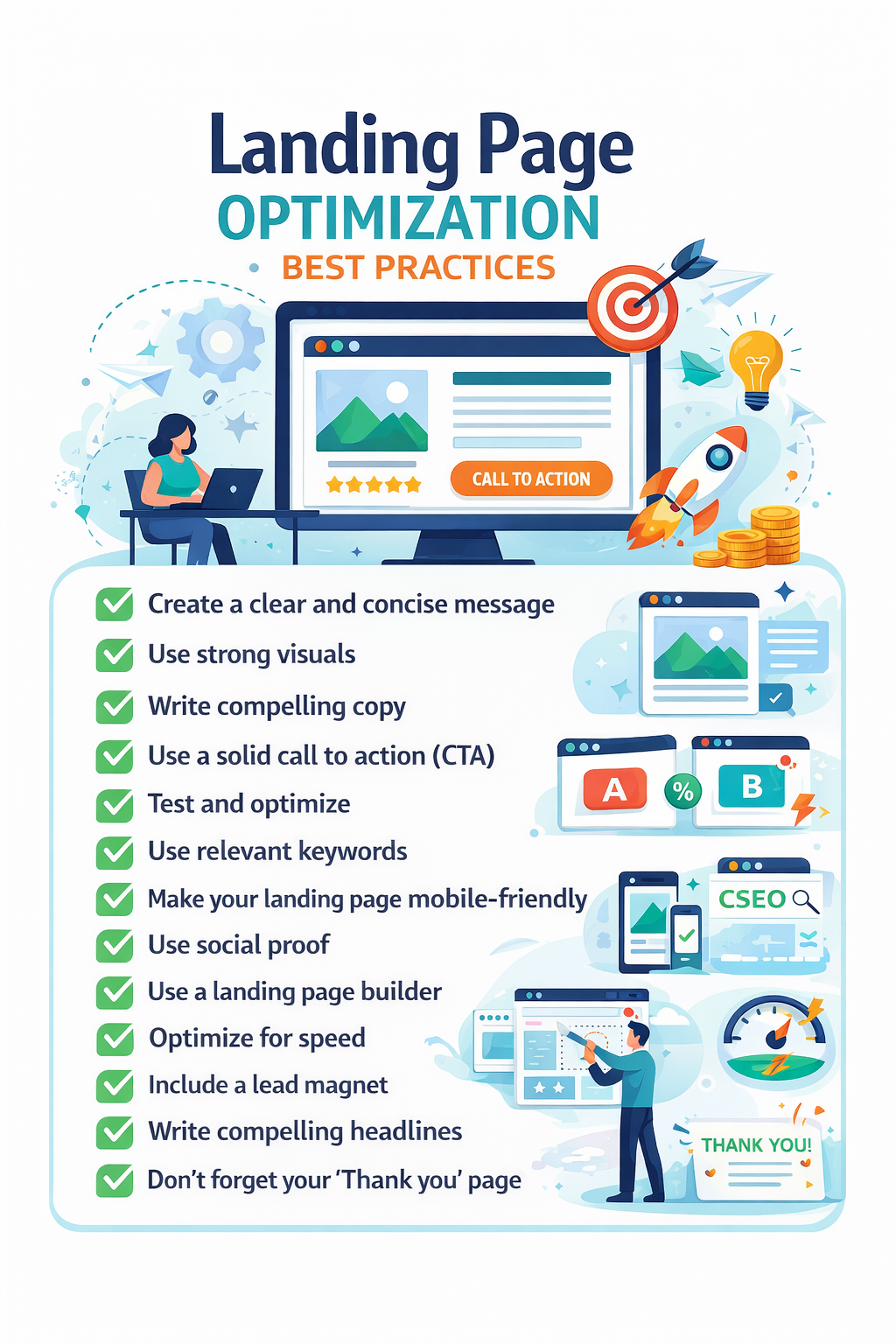
Photo by ChatGPT
2. Write a Clear Value Proposition Above the Fold
Visitors should understand what you offer, who it’s for, and why it’s better within the first few seconds of landing on your page.
If a visitor cannot answer those three questions immediately, the chances of them leaving the page increases.
High-performing landing pages communicate their unique value proposition within 5 – 10 seconds of arrival.
3. Use strong visuals.
Of course, we all know that the key to human attention is to captivate, and what better way to do this than with good visuals?
Visuals are practical tools for capturing attention, communicating information quickly, and increasing the emotional impact of your message.
Use high-quality images, videos, and infographics relevant to your offer and appeal to your target audience. Also, avoid using stock photos or generic visuals that lack personality.
4. Match Landing Page Messaging With Traffic Source
One of the most overlooked landing page optimization best practices is message match.
Your landing page headline should closely reflect the messaging used in:
- Ads
- Email campaigns
- Social promotions
- Search results
When the messaging is consistent, users feel confident they are in the right place, which reduces bounce rates and improves conversions.
5. Write compelling copy.
Your landing page should have compelling sales copy, mainly if the page aims to sell.
Write concise copy that speaks directly to your target audience’s needs and desires.
Use strong verbs and powerful language to highlight the value of your offer. Also, focus on your product or service’s benefits and how they can solve your audience’s problems.
6. Use a single, solid call-to-action (CTA).
Tell your visitors exactly what you want them to do next. Use clear, concise, and action-oriented language for your call-to-action buttons and avoid using multiple CTAs on a landing page.
High-converting landing pages typically focus on one primary action, such as:
- “Start Free Trial”
- “Book a Demo”
- “Download the Guide”
Also, make your CTAs prominent and visually appealing, and place them strategically throughout your landing page.
7. Test and optimize.
Don’t assume you’ve created the perfect landing page on the first try. Test and optimize everything on your landing page.
Compare various landing page versions using A/B testing to determine which works better.
Test different headlines, images, CTAs, and copy variations to find the combination that drives the most conversions.
8. Use relevant keywords.
Use relevant keywords throughout your landing page content, including the title, headings, and body text.
This increases the amount of organic traffic and possible conversions to your page by helping search engines understand your content better and rank it higher in search results.
9. Make your landing page mobile-friendly.
The number of people using mobile devices to access the internet is increasing.
Ensuring your landing page loads quickly and displays properly across all platforms, including tablets and smartphones, is essential.
A mobile-friendly landing page offers all the benefits that mobile-friendliness gives a website.
A responsive design on your landing page is vital to providing a seamless and user-friendly experience for all visitors, regardless of how they access your page.
10. Use social proof.
Visitors trust other users more than marketing claims. Use case studies, testimonials, and other social proofs to build credibility and trust with prospective customers.
Showcase positive customer experiences and highlight the benefits others have achieved by using your product or service.
Social proof can significantly increase conversion rates by promoting inclusivity and reducing doubts.
11. Limit distractions.
If your landing page has many distracting elements, the visitor might get confused about its primary purpose, or they will be distracted and forget what they came to the page to do.
For example, having too many form fields can reduce conversions by 4 – 5%
Keep your landing page simple and free of irrelevant elements to avoid diverting visitors’ attention from the primary message and call to action.
Instead, focus on providing a clear and focused experience that guides visitors toward taking the desired action.
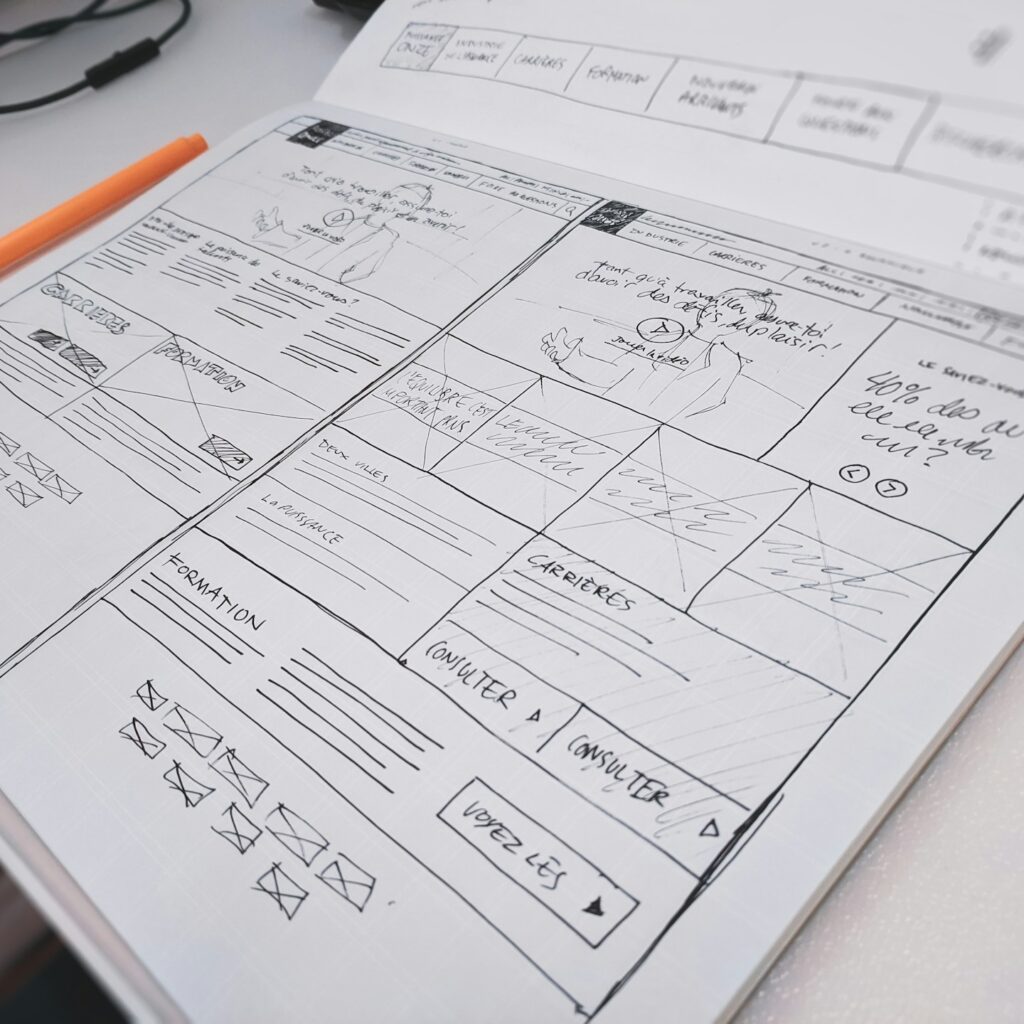
12. Use a landing page builder.
If you want to create and manage landing pages, consider using a builder.
These tools offer a user-friendly interface, drag-and-drop functionality, and various pre-designed templates to help you build high-converting landing pages without extensive coding knowledge.
This is a better option, especially for a beginner, because it provides an optimized template you can customize.
Check out Zapier’s list of landing page builders you can use.
13. Optimize for speed.
When it comes to learning how to optimize landing pages, you cannot ignore page speed.
A website’s user experience and conversion rates greatly depend on its speed.
Ensure your landing page loads on all devices quickly and effectively. This will prevent visitors from getting frustrated and abandoning your page before taking action.
14. Include a lead magnet.
You can include a lead magnet on your landing page to encourage visitors to take your desired action.
For example, you can promise to give them a free ebook if they sign up for your upcoming webinar or offer a free 5-minute consultation if they make a particular sale.
15. Write compelling headlines.
Your headline is the first thing people will see, so make it count.
Create a headline that catches readers’ attention, piques their interest, and conveys your offer’s value.
16. Build links to your landing pages.
While optimizing your landing page is crucial, please pay attention to the importance of building links to it.
Building links to your page increases its visibility and conversion potential by bringing in more targeted traffic.
You can build links to your landing pages by creating high-quality content, guest blogging on relevant websites, collaborating with partners, promoting on social media, and considering targeted advertising to increase visibility and reach.
17. Don’t forget your ‘Thank you’ page.
The “Thank you” page is sometimes disregarded, but it promotes continued engagement and positive brand perception.
Express gratitude, provide confirmation, offer next steps, personalize the message, and ensure mobile-friendliness.
Optimizing your ‘Thank you’ page can turn a one-time interaction into a long-lasting business relationship.
FAQs on how to optimize a landing page
What is landing page optimization?
Landing page optimization involves improving a landing page’s design, messaging, and user experience to achieve specific conversion goals that align with your overall marketing goals.
Why is landing page optimization important?
Landing page optimization helps businesses convert more visitors into leads or customers. By improving elements like headlines, calls-to-action, page speed, and forms, businesses can increase conversion rates and maximize their ROI.
What makes a landing page high-converting?
A high-converting landing page typically includes clear value proposition, a single call-to-action, trust signals such as testimonials, fast loading speed, and a mobile-friendly design.
FINAL THOUGHTS
Any marketing strategy must include landing page optimization. You can make landing pages that are more effective and assist you in reaching your business objectives by following the best practices described in this blog post.
If you are serious about increasing your conversions, you should implement these practices on your landing pages today.
How optimized is your landing page on a scale of 1-10?
READ ALSO: Link Building for SEO: The Ultimate Guide + Email Template
Add a Comment